

Murahari Parajuli
The stock market is a part of modern society. We have failed to develop the understanding that those who are interested, knowledge, skills and experience can benefit from the market. We have not been able to get enough benefit from it as we have not developed the general consciousness that certain knowledge and experience is needed for the stock market just like other professions require for business.
The title of this article has two meanings. This means that there is a lack of futures and options in the derivatives market in our market. In other words, there is no diversity in our market and the future is uncertain. This gives us a partial glimpse into the character of our market. Before we discuss this subject in any detail, let us look at some contexts.
First episode: “There are six million people behind so-and-so! There’s a lot of money! Really?” a leader who always runs after votes and money asked me. He was referring to the leader of another party who was said to have won the election by manipulating the stock market.
Second context: “There is so much movement in the market. You are sitting with your eyes closed. Investors have been robbed. “Journalists ask me this question repeatedly. Their wording is different, but the implication is that the regulator is inactive.
Third context: “The world has gone so far that you are running a ‘one-way market’. Where’s the intraday? Lost options? Where is the future?” asks a young man who studied in a foreign university and returned from doing business in the local market for some time.
Fourth: “Not to write news! Tell me which shares are the best to buy right now? And will you throw away such and such shares or will you keep it?”
The references are representative of our society’s understanding and practice of the stock market. The questions people ask about the stock market at formal events and meetings are common and expected. However, in informal meetings, they talk about strange and sometimes criminal things.
This article is a practical discussion only. It only presents my perspective on how the stakeholders are perceiving the stock market and what is the reality. In this, I have identified four types of stakeholders: policy makers, media, investors, businessmen and others.
Nepal’TAG_OPEN_span_107 s stock market has gone through many stages of maturity and ups and downs in the last three decades to reach its present position. This market is not just a “playground for the rich.” It has reached the stage of becoming an integral part of the national economy. In this context, it is natural for different stakeholders to understand the nature, regulation, risks and opportunities of the market from different perspectives.
Markets in the eyes of the big
The saddest part is the lack of understanding of the stock market at the upper echelons of the state structure. Most of the characters at that level of policy-making still do not understand what the ‘stock market’ is, which has a broad meaning, and they should be referred to as ‘stock market’ in a limited sense. Even after doing so, they perceive it only as a mechanism to “manipulate” it at their convenience, or they are doomed to understand it that way.
The same is true of the bureaucracy. Therefore, they are involved in formulating policies to facilitate the market, building institutional structures, introducing modern technology, emphasizing short-term gains rather than putting forward qualified characters, making policies and regulations in favor of interest groups, spoiling existing institutions, irregularities in procurement in the name of bringing in procedures, putting forward unqualified characters and indulging in corruption.
Nepal’TAG_OPEN_strong_113 s stock market has gone through many stages of maturity and volatility in the last three decades and has reached its present position. This market is not just a “playground for the rich”. It has reached the stage of becoming an integral part of the national economy.
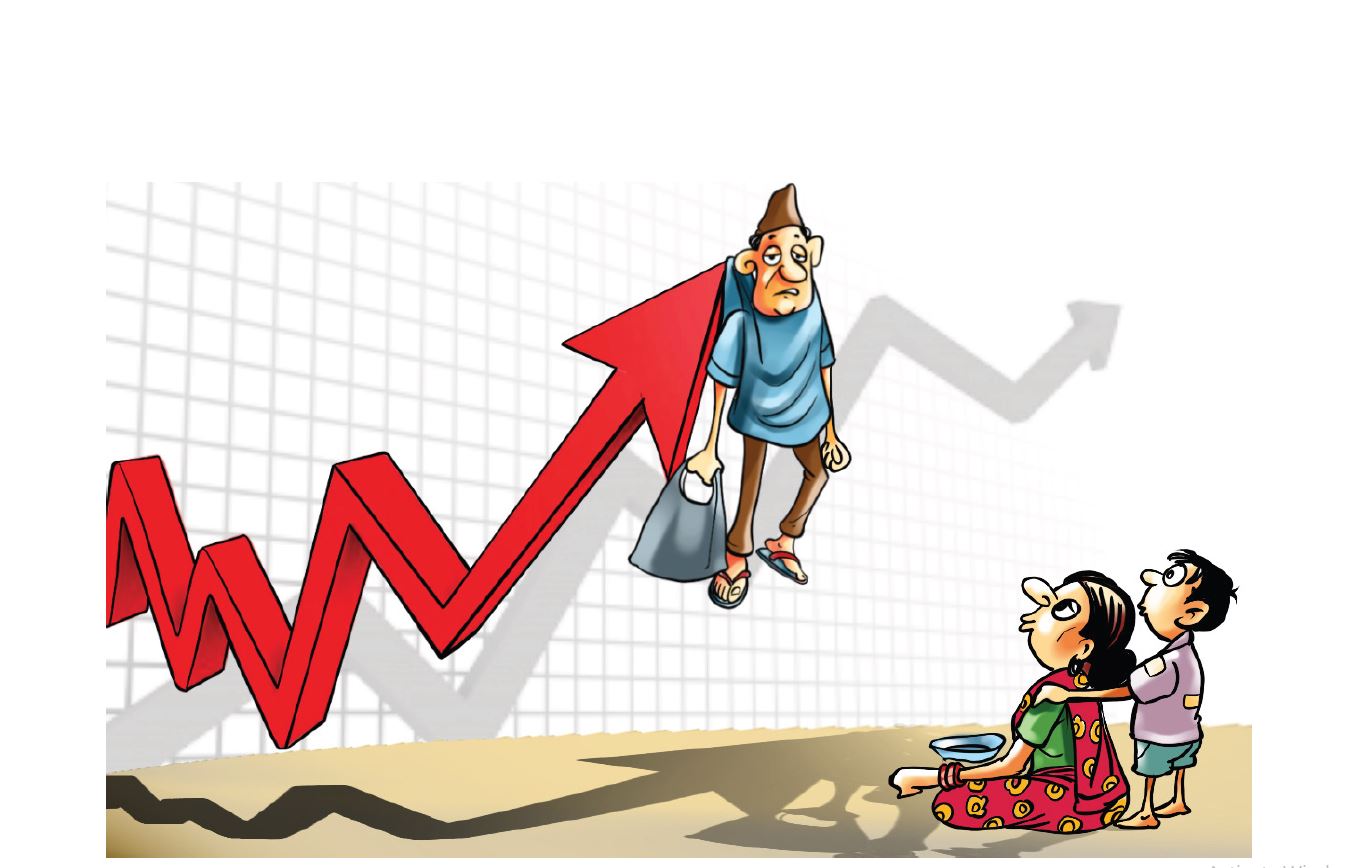
That is why the ground reality is on one side, the need of the hour is on one side and our political and administrative leadership is doing something else. This has led to repeated conflicts. The capital market has not been utilized to the maximum extent in Nepal’s economic development. Neither do good entrepreneurs see the capital market as a reliable source of long-term financial investment, nor do ordinary savers see it as a reliable field for high returns.
Unless we have the understanding that the stock market is a mechanism to transfer capital from the excess sector to the scarcity sector, give high returns to both sides, increase the production of goods and services and help create jobs, and they are not honest and committed to it, various types of distortions will continue to be exposed one after the other. If the market is not controlled by good leadership, it is controlled by interest groups and mobs.
Political or administrative. The interest of a qualified leader should not be on whether the market index has increased or decreased, how much money has been traded or how much revenue has been collected. Whether the market is sustainable or not, whether the business is fair or not, fair, proportional and accessible to all. Ironically, few have paid attention to such issues. They are not ready to listen to what needs to be done for the long-term development of the market. They don’t care what is in the interest of the people at the grassroots level.
They listen to those who have access, they talk about the immediate benefits. If someone comes in a crowd, they will fulfill their demands. They only talk about cheap popularity if they do something for the people at the grassroots level. What is brought in for cheap popularity ultimately harms the same people at the lower level.
The leadership is not interested in boosting the morale of investors, attracting foreign investment, making technical improvements, bringing in transactionable tools, simplifying the process and restructuring the institution. They don’t have the knowledge and don’t prioritize such things.
The emphasis of the leadership is on policy stability, systemic risk management, structural reform. The aim is to modernize and make the market transparent. However, due to lack of foresight and political instability, concrete progress has not been made in these areas.
The leadership is also obliged to manage systemic risks such as money market liquidity, interest rates and money laundering issues. Informed participants bring stability to the market. Therefore, financial literacy should be emphasized. There is only ostentatious work in this.
The diversification of the market is limited. The market is dominated by companies in the financial sector. There is a one-way trading in the market. The secondary bond market is almost idle. No other transactionable tools are available. The corporate governance of the listed companies is weak.
Media Watch
The role of the media in the above developments seems to be very weak. The stock market has become an area for the media to write news. The media that gives the right information, the wrong information and the wrong information have not been separated. The media has not been able to identify the main issues of the stock market. The media is obsessed with information created by market participants with diverse interests.
Where is the flaw in the policy? What are the weaknesses of institutions? What are the flaws of the characters? The media has not been able to detect it. The flood of online media has further blurred the flow of information.
Due to the separation of the management and editorial team of the media house, many types of agreements have been made in the news. The news has not been able to be fair and credible. The minimum rules and conduct of news production and dissemination have also not been followed.
The weak role of the media is evident from the fact that there is not a single media house that provides credible news, opinion and analysis on capital market even when almost one-third of the country’s population is connected to the capital market and the market capitalization reached close to the GDP at some point of time.
Media houses do not invest in the capacity development of journalists. There are very few journalists who believe that they can move ahead by developing their own capacity. Few have shown any interest in exploiting the opportunities provided by the unprecedented development of information and communication technology. The abundance of bad characters is fueling the dissemination of substandard news and information.
The mass media has not only failed to help with market understanding and mature investment decisions, but has also failed to warn and intimidate policymakers and administrators. The entry of bad characters in the media has overshadowed the real journalists.
Most of the media reports are limited by the fluctuations in the market index, the size of the turnover. Some have sensationalized the news. Some have deliberately publicized material that supports market manipulation, while some have done so unknowingly.
The pervasiveness of social media has accelerated the spread of verifiable, ongoing and superficial information. Some journalists have chosen the easy way to turn such information into news. Few have paid attention to verifying news or in-depth analysis of the information on social media.
Making news with the exception of the stock market as the main trend undermines the credibility of the entire system. The morale of the general public is weak. It seems that in order to balance this, it is necessary to talk to experts, produce and disseminate news with the statements of responsible people.
Some media persons have also exaggerated the small fluctuations in the market to create fear or greed among the public. Most of the reporters who write about the market do not seem to be able to keep themselves neutral with the ups and downs of the market. Some seem to be trying to put themselves in the role of protectors of investors. Investors were also seen to be miserable. Still, some people posing as journalists have used the information they have collected on behalf of investors and the general public in their investment business.
The journalists, who are supposed to help the public make informed investment decisions through news and other materials, have limited knowledge about the basic and technical aspects of the market. Very few journalists present in-depth analysis of the listed companies, markets and the national economy. Most of the news content is superficial and the tendency to present market rumors as it is, is harmful.
The news has not revealed market risks. Little has been written about the potential impact of policy changes and regulatory directives.
Investor-business perspective
We have a tradition of putting investors and businessmen in the same basket. These two market participants are different. They are traders who actively participate in the market to take immediate advantage of market fluctuations. They emphasize market value and the size of the transaction, based on technical analysis. On the other hand, there are those who enter the market for a long time and emphasize the fundamental aspects of the securities, which can be called investors.
If policies and regulations are not made to address both types of market participants, if the institutional structure is not created and the technology is not developed, it will be inadequate. The media should also take note of this. For investors and businessmen, Nepal’s stock market is a mix of opportunities and risks. Short-term transactions and long-term investments are complementary to each other. One is right and the other is wrong.
There is more risk in the transaction and less in the investment. Similarly, the potential return on the transaction is high, the investment is low. But if the business or investment is not objective, then the loss is more than the profit.
A long-term investor should look at the company’s fundamentals, management capacity, corporate governance, dividend history, and future prospects. They should adopt a strategy of buying and holding securities for the long term and focus on portfolio diversification. Short-term traders are interested in the technical aspect. They call the stock market a ‘game of information’. Small people try to follow the footsteps of big businessmen. They see risk as an opportunity.
They demand that the broker commission should be reduced because of the continuous transactions. They hope that if the bank interest rate is low, they will be able to do business by borrowing cheaply. In the secondary market, those who demand intraday, options and futures are also traders of this group.
They make the movement of market indicators, market psychology and rumors the main basis of trading. They look for profit in the ups and downs of every day. Short-term transactions are suitable for those with high risk appetite. Nepali society has not accepted this kind of transaction. In some cases, it is seen as a crime.
The focus of the businessman is to get rich fast. Various studies have shown that 90 percent of businesses lose. When the amount of money lost is small, the majority of traders survive in the market. On the other hand, there are investors who choose the path of patience and discipline. They believe that the size of wealth expands at a slow rate through cyclicals. Emphasis on investment diversification. It analyzes the financial health of the securities issuer, the nature of the business, the board of directors and management, earnings per share, earnings and price ratio, debt-share ratio, dividend return, etc.
View
Beyond policy makers, regulators, market operators, media and market participants, there are the general public. They see the market as a mysterious mechanism. It’s for those who get rich overnight. The risk is very high. There is a widespread perception that the stock market is only for a limited number of people. Policymakers, regulators, market operators, media and other market participants have contributed to this kind of understanding.
The stock market is a part of modern society. We have failed to develop the understanding that those who are interested, knowledge, skills and experience can benefit from the market. We have not been able to reap adequate benefits from this as we have not developed the general consciousness that certain knowledge and experience is required for the stock market, just as other professions require certain knowledge and experience.
It may take time to understand the market, but it is not impossible to understand it. There is risk in the market, but it is not impossible to manage and mitigate the risk. The simple truth that risk exists in all areas and aspects of human life has not been established.
Due to poor understanding, the general public sees primary exit as a sure way to get rich quickly. It is called a ‘lottery’ or a ‘game of luck’. This kind of understanding is created by our regulatory arrangements, not by government slogans. It has been further amplified by the media.
The law has been formulated to give 10 units of shares to all because it is a market for all those who understand the risk and cannot ÷afford it. The quota has been allocated to local residents and those who have gone for foreign employment. While making these provisions, the risks inherent in the investment have not been taken into account.
People who come after hearing rumors, neighbors, friends or relatives earning from shares, or following news in the media often get into an accident. Learning about the market is expensive for them. Second, when the market is high, it comes in a hurry and when it falls, it is a loss.
For those who do not understand the market and cannot give enough time, there is no development of the idea that indirect investment is a means of investment, it should be emphasized from top to bottom. People who are looking for investment opportunities should be involved in the market through professional investment managers. There should be policy and institutional arrangements with the intention that a financially illiterate person cannot easily understand the risk of the market, cannot maximize the profit and minimize the loss.
Although the four parties mentioned in Nepal’s stock market understand differently, there is a negative feeling in everyone’s conscience. The market is understood in a very narrow sense as a mechanism for trading only securities. No one has ever thought that it will help in capital mobilization, maintain fair value of assets, reduce transaction costs, and maintain good governance and transparency in business organizations. There has not been a broad vision that the essence of the stock market operation is to be grasped and that it will increase the production of goods and services, create jobs, justify economic distribution and guide the economy as a whole. Our entire society has failed in this.
The goal should be market stability
The stock market is a complex system. Policymakers and executives should focus on systemic risk management. It has to be seen whether the purpose for which the capital market system has been established and operated has been fulfilled or not. Is the structure of the system itself problematic? Is the system going to break down from within? The leadership should pay attention to this.
The leadership should see whether the laws framed for the operation of the market are contradictory or not. Is the institutional structure efficient or not? Have you been selected to run the market? Has modern technology been adopted or not? The leadership has to look at it. The leadership should emphasize the cleanliness of the business.
Media reporting, like any other bit, has to be fair and factual in the stock market. It is not necessary to take the side of the establishment, the investors or the general public. Investors should not be treated as a protector by making them an object of pity. The issue should not be generalized. Each case should be reported on the merits.
Investors and businessmen should invest on the basis of knowledge and discipline. If they can inculcate deep financial literacy among the public, they will decide whether or not to invest in the stock market. If all parties move in the mentioned direction, the market will get stability. If we do not do this, if we do not correct our understanding of the stock market and act accordingly, the market will neither give us options nor shape our financial future.
(From the Economic Policy of the Society of Economic Journalists (SEJON))
Parajuli is an expert on capital markets.







प्रतिक्रिया दिनुहोस्