

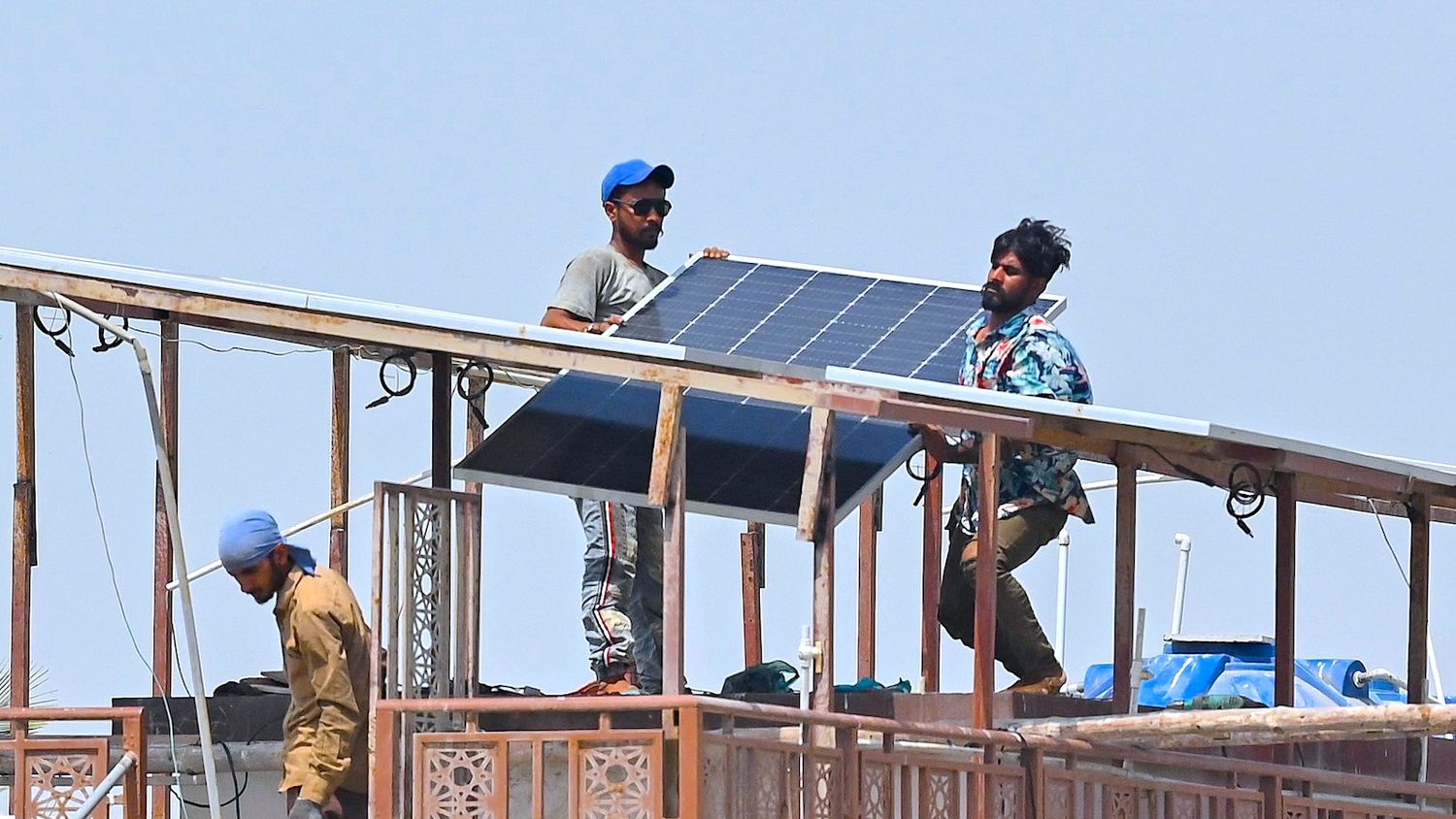
The popularity of solar energy in Pakistan has been growing rapidly in recent years.TAG_OPEN_p_33 Traditionally, women hoarded gold ornaments as an investment, but now many of them have started selling gold and installing solar panels on rooftops. According to Waqas Musa, an entrepreneur and member of the Solar Energy Association of Pakistan, people are beginning to understand that solar energy is an excellent investment in the long run.
This rise of solar energy is spreading across Pakistan to classes, communities and communities. Solar panels, like refrigerators, have become a necessity in homes built today. Young people are saving up to buy solar equipment before buying a car. It has become a huge market for hundreds of importers to thousands of installers. Orphanages and schools have also begun to provide loans for small solar systems.
The main reasons for the proliferation of such solar energy in Pakistan are the unreliable national electricity system, increased electricity rates due to pressure from the International Monetary Fund, and the availability of highly affordable solar equipment coming from neighboring China.TAG_OPEN_p_31 According to Muhammad Mustafa Amjad, programme director of Renewable Energy First, this massive energy transition was made possible by the coming together of the will of the market, industry and the public.
The Rising Solar Revolution in the Global South
Solar energy is now expanding rapidly in many countries in the Global South. In Africa, solar panel imports from China have increased by 60 percent. But Pakistan’s growth is still rapid — Pakistan imports more panels than 20 African countries combined.
In the last four years, Pakistan imported solar panels worth $4.1 billion.TAG_OPEN_p_29 It was only in 2024 that the capacity of the panels was doubled. According to an analysis by Renewable Energy First, the price of solar panels fell from 32 cents per watt to 17 cents in 2024, which made the market even more dynamic.
According to Musa, co-founder of Lahore-based Hadron Solar, their business is doubling every two to three years.TAG_OPEN_p_28 Tax exemptions provided by the government and easy loans for household consumers have also helped in the expansion. The Pakistan Solar Energy Association has 400-500 member companies, and thousands of installers spread across the country.
Conversion from energy user to ‘producer-consumer’
}
Solar expansion gained momentum after a 2015 rule change paved the way for consumers to easily connect small renewable energy systems. As solar panels became cheaper, electricity system rates became more expensive. At present, ordinary household solar systems are in a position to recover the cost in 2-4 years.
Industry and agriculture are also attracted to solar energy.TAG_OPEN_p_26 Agriculture accounts for 25% of Pakistan’s GDP, with solar-powered tubewells becoming a substitute for diesel or expensive electricity.
Reducing dependence on energy imports, but also challenging
With the rapid solar expansion, there are some challenges. In particular, the trend of thousands of consumers using solar power during the day, but returning to the system in the evening, has exacerbated demand patterns such as a ‘duck’s neck’. This has put pressure on the stability of the power system.
After Nepal proposes to reduce the net measurement rate, it is estimated that many consumers may alternatively turn to private battery solutions.TAG_OPEN_p_24 Experts assess that this could lead to a major change in the role of the central power system in the future.
According to Musa, it is battery technology that will determine what the energy architecture of the future will look like—whether to support a consumer-centric system or choose a completely independent “outside the core system” system will become clear in the coming years.TAG_OPEN_p_23
Pakistan’s experience for the Global South
Analysts say other countries in the Global South can learn from the experience as Pakistan has made an “on-the-go” energy transition amid an acute economic and energy crisis.
According to Moses, “The stone age is coming to an end, the iron age is coming to an end, and the oil age is coming to an end, because new technology is ready to take over the throne.”TAG_OPEN_p_21 Today, renewable energy is in the same place. ”
Source: Pakistan Media












प्रतिक्रिया दिनुहोस्