


Many systems changed in the country, but the situation did not change. If we look at the 75 years since 2007, there have been many political changes. The system has changed in almost all of them, but the situation has not changed. This has weakened the morale of investors. The decline in private sector production and continued decline in consumption will have an impact on the overall economy. The economy cannot be strong unless the morale of the private sector is strong.
Nepal’s economy has reached a critical juncture. The World Bank has projected a growth rate of 2.1 percent in the current fiscal year (2082-83) and 4.7 percent in the next fiscal year (2083-84). Earlier, it was estimated to be 5.2 percent in 2082-83 and 5.5 percent in 2083-84. The slowdown in economic growth seems to have pushed the economy to a critical juncture after the movement. The country’s economic activity is likely to come to a standstill for a long time.
If we look at the current situation, there is liquidity in the bank but there is no investment environment. The accumulation of liquidity in the bank means that economic activities are stopped along with development. The economic growth, which had come to a halt after the Covid period, was just getting back to normal. However, the economy was again the target of the movement.
The Zenji movement was against the lack of good governance, increasing corruption and increasing individualistic thinking in the country. After September 23 and 24, the country felt that the country had collapsed, in a way, because the movement had gone beyond what it was intended to be. The burning of the country by the movement and the attack on physical property means that the economy is weakened again. Supply has been affected due to damage to infrastructure.
Strengthening the economy requires practical reforms, not big speeches. A common commitment from the government, private sector and citizens is required. Discouragement of the private sector will not help in advancing the economy. If we do not understand the economy, we will not be able to assess its impact. Therefore, there is always a need for leadership that understands the economy and is engaged in sustainable development.
It is natural for the movement to seek a new form of the country, to bring about change and to seek transparency in the development of the country. However, it will take a long time to recover the financial damage it has caused. We should have made a lot of efforts to improve the economy. The current pace of the economy shows that this is not the case.
The government’s policy has also become unstable due to unstable politics. Political misunderstanding is hampering long-term economic planning. Even the attitude towards the private sector has not changed. From the ward to the center, the thinking has developed that the work of the general public will be confused, troubled, delayed, not prioritized and will be done. This will have an impact on the economy as a whole.
It’s not a big talk about strengthening the economy. Practical reforms are needed. A common commitment from the government, private sector and citizens is required. The government does not seem to be trying to help and facilitate the private sector. Some time ago, the government did not listen to the private sector and used to take action by catching them directly and only then listening. After that behavior, we said that the government did the opposite, instead of listening first and imprisoning it. This and similar actions further discourage the private sector.
Discouragement of the private sector certainly does not help the economy to move forward. Lately, it seems that the industrialists have been targeted due to the vendetta. The government cannot always ignore the private sector that works for the country and the economy. We have advised the government in writing time and again. It has not been allowed to be implemented. If the government works for peace, security and stability, then the country will definitely gain momentum.
In the past, if we look at the different periods, it has not been given priority in any way to facilitate and encourage the private sector and that the country is the basis of development. From the Panchayat era to the movement of 2062-63, the private sector has been exploited.
It is not true that the economic policy, annual budget and laws brought by the government are bad. The private sector does not mean that the economic policies that have been made so far are bad. The private sector has been complaining for a long time that there were no agencies and individuals to implement it, no efforts were made to understand the economy and it was not given the priority it deserved.
Our economic policy is still limited to revenue collection. The government’s priority is to collect taxes, not production. For the long-term strengthening of the economy, production-oriented thinking is necessary not revenue-oriented{{
}
Political instability hindering economic empowerment
}
Our economy has experienced repeated political instability over the last two decades. Within 6 months to a year, the government has been changed every year. If policies change every year, it is certainly very challenging for the industrialists to deal with it, to follow the legal aspect of the government and regulatory bodies.
Instability in policy and lack of implementation will have a long-term impact. The Public Procurement Act, which has been amended 14 times in 20 years, is a recent example. It is still not private sector-friendly. The government is not trying to facilitate the government even though it knows that this act is an obstacle to the work of the government. One reason for this is political instability.
If there was a government that could lead for a long time, it could have implemented its long-term vision. We have neither been able to work on a long-term vision and mission, nor are the laws and regulations private sector-friendly. A study report submitted by the High Level Economic Reform Commission, headed by Rameshwor Khanal, who became the finance minister after the Jenji movement, has said that 15 laws are unnecessary and should be repealed. The implementation of that report will also be a big economic reform. No attention has been paid to its implementation. Although there have been repeated demands for long-term economic development through private sector-friendly proposals and facilitation in government bodies, it has not been able to do so.
Policy stability is essential for the private sector to make long-term plans, expand production or invest in new industries. But even if we have a policy, it will not be implemented. Projects start but don’t continue. The government formulates and announces projects of national pride. However, the projects brought with the promise of immediate completion and expeditious development have remained in limbo for three decades. Most of the current projects are more than 15 years old. Where has it been implemented and developed? This weakens the confidence of the investors and the development of the country lags further behind.
With the change of government, its priorities also change. One government imposes industry-friendly policies while the other imposes revenue-oriented policies. Due to such fluctuations, the private sector is always trapped in a cycle of uncertainty. As a result, not only domestic investment but also foreign investment has been discouraged. If domestic investment is not secured, foreign investment will not come. Therefore, foreign investment will come only if there is confidence that the industries, factories and economic sectors in the country are in the priority of the government and there will be security.
The private sector can be both a developer and a partner in the economy. The contribution of the private sector to the gross domestic product (GDP) is significant. The private sector is the sector that has a big role to play in strengthening the country’s economy. The contribution of the private sector to the total economic structure has reached 81 percent while the remaining 19 percent is occupied by the public sector. This shows that the contribution of the government sector to the national economy is low and the contribution of the private sector is significant.
The private sector has always been at the forefront of job creation. The role of the private sector is also important in import-export and revenue. Therefore, while talking about strengthening the economy, the private sector must be at the center. The economy cannot grow without the private sector. However, the government has been looking at the private sector with suspicion and not with help.
Instead of encouraging entrepreneurs, they are subjected to administrative pressure and regulatory complexities. As a result, the private sector is being discouraged and discouraged at every step. When encouraging the private sector, we need to see how much it contributes to the economy.
This does not mean that the private sector is trying to compete with the government. The private sector and the government are like two wheels in the same chariot. If you try to walk together, you can reach your destination. Otherwise, both will be harmed. In the case of cooperation, the policies made by the state can be easily implemented by the private sector and put into practice. If there is cooperation, the government can take the ego, crush it, and think that it is the supreme authority, then the policy can be counterproductive. Therefore, the voice of the private sector should be heard in policy making. In most of the policy-making, the private sector is involved only in the name of consultation.
A strong economy seeks production-oriented policies, not revenue-oriented
Our economic policy is still limited to revenue collection. The government’s priority is to collect taxes, not production. For the long-term strengthening of the economy, a production-oriented approach is necessary instead of revenue-oriented. Instead of taking more revenue from an industry, if the government allows it to be produced as a mass product and seeks profit from it, then the country can get many times the return.
The government, which wants to develop the economy, does not do business on its own. The government should create an environment for the industry to run. If the industry continues, employs thousands of people, and displaces imports and starts exporting, the production will be more effective than the revenue of a certain percentage of the coveted ones.
The economy will not be strong if the government depends only on imports. The government should pay attention to increasing domestic production, increasing exports and strengthening the service sector technologically. This will pave the way for the state to take it towards long-term development.
If the country is to develop industrially, the price of energy should be competitive. Investment in transport and physical infrastructure should be increased. Even now, the cost of electricity and fuel is too high to run the industry, which is increasing the cost of production. The government is not able to provide electricity, the industries and businesses are shutting down on many pretexts.
However, it is a big loss for the state that there is no investment in the banks even when there is enough liquidity. This raises the suspicion that those who do not get long-term benefits will have to flee without return.
The policy of the state should be to invest and get returns rather than increasing liquidity. The reason why businessmen are afraid to expand investment and do business is that the loan taken today will incur a loss when the interest rate increases tomorrow, due to which the mobility of capital decreases. For this, an investment environment should be created in the country.
To create an investment environment in Nepal, first of all, policy, stability and judicial assurance are needed. The private sector should get the assurance of legal protection when deciding to invest. For this, the Investment Act and Industrial Policy should be reviewed as soon as possible.
Another reason for the decline in the country’s production is the migration of skilled manpower abroad. Millions of youths go abroad every year. They are compelled to go abroad as they do not see opportunities in the country. This is considered natural. However, the result will be unnatural for the country, so it should be considered on time.
If we do not strengthen the domestic industry and service sector, migration will gradually increase. Therefore, the government should provide programs to make the youth self-reliant, policies to encourage startups and access to affordable finance. Nepal’s youth have ideas, skills and courage, but development cannot take place without policy and environment. The economy cannot be strong either.
After the implementation of federalism in the country, the economic rights have been distributed among the three tiers of government. However, the lack of clear coordination has led to duplication in the policy and complexity in its implementation. At present, permission is required from the central, state and local levels to open industries. This makes the process cumbersome and expensive.
Administrative facilitation is equally important for strengthening the economy. If we can implement the ‘single window’ system that we have been saying time and again by the private sector, then the administrative hassle will be removed. This saves both time and resources of the industrialists. The results will definitely be significant.
If you seek only the support of the government but do nothing on your own, then there will be no development of the private sector. The private sector should also embrace its role. There is a need to improve transparency, competitiveness and social responsibility. We should develop the mindset that business is not only for profit but also for the prosperity of the society and the nation.
Government support and support alone cannot strengthen the economy. It is equally important for the businessmen to pay taxes, give justice to the workers and always pay attention to quality production. This can further help in strengthening the economy. Work should be done to restore trust between the state and the private sector and create a business environment.
Therefore, for any industry, business or investment, the government and the private sector should move ahead with cooperation and cooperation, not blaming each other. There should always be cooperation between the Federation of Nepalese Chambers of Commerce and Industry, Confederation of Nepalese Industries (CNI), Nepal Chamber of Commerce, Investment Board and the concerned ministries.
The government should form a task force in coordination with the private sector and seek support for big projects. So that both the country and the business environment can be created. We should stop politicizing the development issues. The government should work in the long-term national interest of energy, tourism, information technology, agriculture, infrastructure and manufacturing sectors. If we can work by making a stable policy for at least 5 to 10 years by prioritizing these areas, it will definitely give a blueprint for the development of the country.
Political stability, mutual trust and cooperation are the key to strengthening Nepal’s economy. Economic reform is not possible without political stability. Investment cannot be increased without trust in the private sector. No long-term development policy can be implemented without collaboration between the government and the private sector.
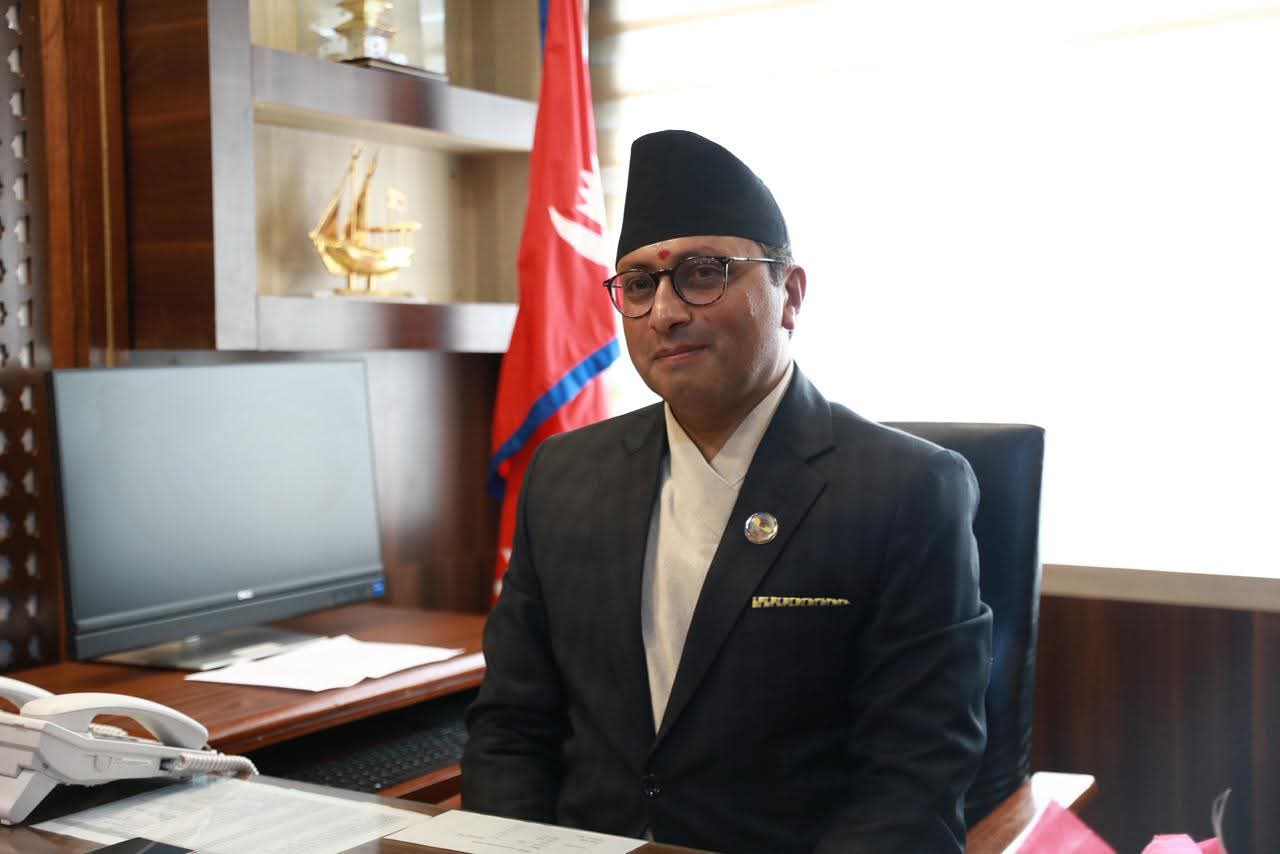
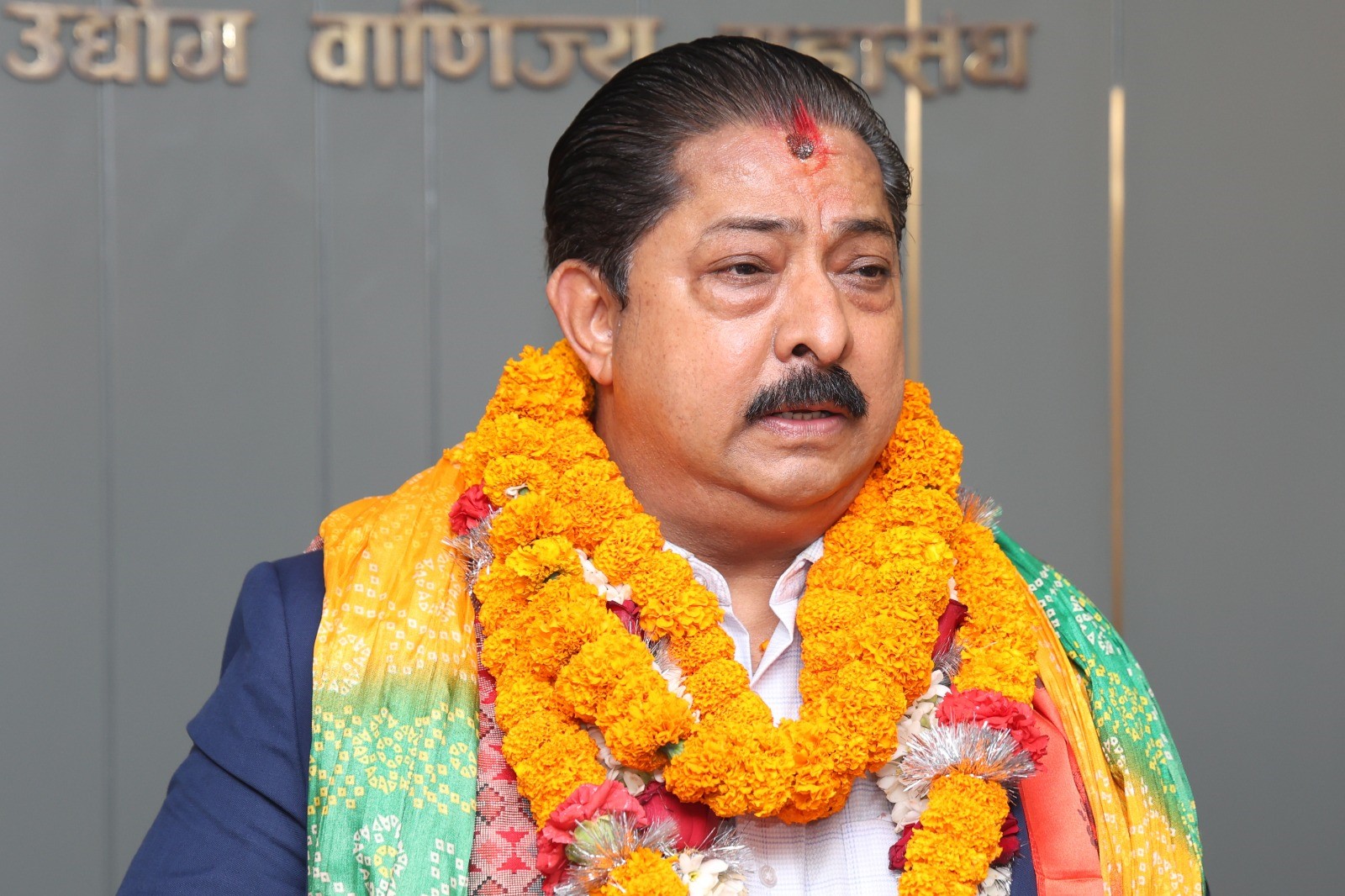
Shrestha is the Senior Vice President of the Federation of Nepalese Chambers of Commerce and Industry (FNCCI).TAG_OPEN_strong_74
from the economics of the Society of Economic Journalists of Nepal (SEJON)







प्रतिक्रिया दिनुहोस्