

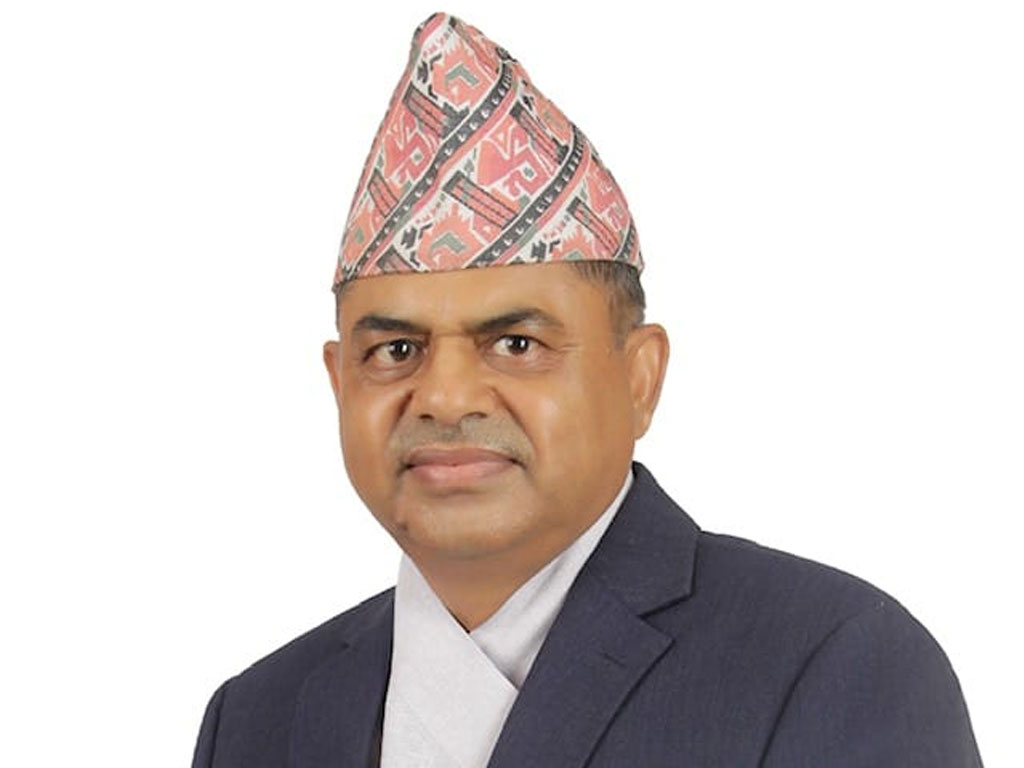
Kathmandu. Minister for Energy, Water Resources and Irrigation, Anil Kumar Sinha, has questioned why the Independent Power Producers’ Association of Nepal (IPPAN) has not taken concrete steps to amend the laws even after completing 26 years.
He questioned why no concrete initiatives have been taken to amend the laws in the energy sector when IPPAN is celebrating its 26th anniversary.
He said that even after the IPPAN has completed 26 years, there is talk of amending the law and there are some shortcomings in the initiative of IPPAN to amend the law so far.
On the occasion, Minister Sinha said that the active participation of the private sector has made Nepal load-shedding free and it has reached the position of exporting electricity. Currently, around 4,000 megawatts of electricity production has reached the country, of which more than 3300 megawatts is contributed by the private sector, which is a matter of great pride.
According to Minister Sinha, the journey of the private sector that started from 5-10 MW small projects has now reached to bigger projects of 100 MW. The development in energy sector has helped a lot in education, health and local development as well, he said, adding that the government has set an ambitious target of producing 28,500 megawatts power in the next 10 years.
“We have already signed an agreement with India to export 10,000 megawatts of electricity within 10 years,” he said. He, however, admitted that challenges such as legal and policy reforms, power purchase agreement, expansion of transmission line and complexities in forest and land acquisition still remain. He also pointed out the need for clarity on policy such as ‘take and pay’ and ‘take or pay’ and ease the environmental impact assessment process.
Minister Sinha also stressed that the private sector should invest in research, legal competence and human resource development along with physical infrastructure. He also suggested that the people’s representatives should be elected in the upcoming elections which are development-loving and understand the importance of energy sector.
On the occasion, Chairman of Confederation of Nepalese Industries (CNI), Birendra Raj Pandey, reminded that Nepal’s hydropower project was the oldest in South Asia and noted that the 500-kilowatt hydropower project was established in 1911 (1967 BS). According to him, the situation taking 10-12 years for the construction of hydropower projects, including survey license, PPA, and completion of construction is the result of complex legal and procedural problems.
Stating that the situation of visiting 16 ministries for a project has discouraged investors, he demanded the government to immediately implement the ‘single window system’. “In today’s situation, hydropower has become the safest and most lucrative sector compared to agriculture and tourism,” he said. ”
Stressing that the incumbent government focused on election preparation should seriously address these problems after the election, he said, “A situation might arise for the industrialists and entrepreneurs to move ahead unitedly if the problem is not resolved.” Stating that more than 10 million general shareholders are involved in the hydropower sector, he said this sector is a matter of common concern of all.
Acting President of Nepal Chamber of Commerce Dipak Malhotra underscored the need to increase electricity consumption in the country for the proper utilization of increasing hydropower generation in Nepal.
He was of the view that hydropower sector should be developed as a backbone for Nepal’s economy and rapid economic growth could be achieved through electricity consumption. “We have not been able to pay enough attention to other options other than export when supply is increasing in Nepal than demand,” he said, adding that policy-level initiatives are needed to increase electricity consumption in industry, transport and other sectors. ”
According to him, although the industry is a large consumer of electricity, its contribution to the GDP has fallen from 9 percent in 1996 to less than 5 percent now. However, of the total electricity consumption, more than 35 percent is from the industrial sector and of the 1,800 MW demand during peak hours, about 33-35 percent will come from industries.
Malhotra said that the energy sector was important to earn foreign currency and reduce trade deficit, adding that Nepal’s private sector was taking risk and showing remarkable entrepreneurship in the hydropower sector. He argued that the government has set a target to produce 28,500 megawatts electricity by 2035, and foreign investment would be necessary to meet the target. He stressed on attracting foreign investment through public-private partnership model.
Recalling that the government has long demanded opening up of private sector in electricity trade, he welcomed the directive on open access to transmission and distribution recently issued by the Electricity Regulatory Commission as a positive step. He further said that the hulling charge should be made scientific, practical and affordable to create an environment conducive for internal and inter-country electricity trade for the private sector.











प्रतिक्रिया दिनुहोस्