



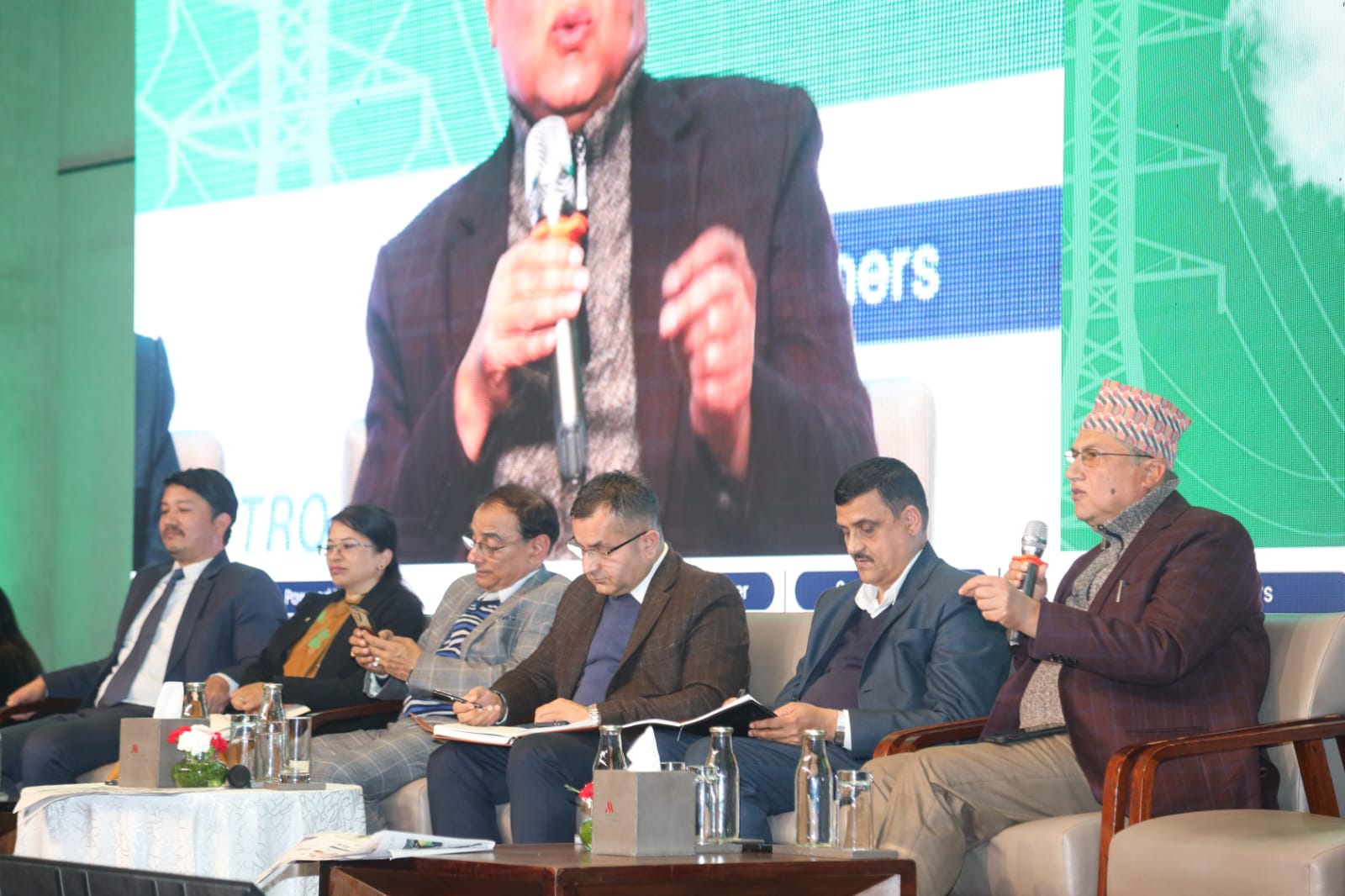
. The stakeholders have stressed on the need to involve the private sector in the construction of transmission lines and electricity trade along with power generation for the sustainable development of the hydropower sector. Speaking at a program organized on the occasion of the 26th anniversary of the Independent Power Producers’ Association of Nepal (IPPAN) here today, the speakers said that it has been delayed to bring the private sector into the transmission and electricity trade.
Chairman of the Electricity Regulatory Commission Ram Prasad Dhital said that non-discriminatory access to transmission and distribution network is essential for the development of liberalized electricity market in Nepal.TAG_OPEN_p_23 Stating that electricity is not only a service but also a tradable commodity, he was of the view that a competitive and inclusive market would be possible only through the balance of demand-supply and participation of multilateral buyers and sellers.
Stating that the legal provisions from the Electricity Act of 2049 BS to the present have prepared adequate basis for the participation of the private sector and the open market, he clarified that the main philosophy of liberal electricity market is to provide equal and non-discriminatory access to network business like broadcasting as per the global practice.TAG_OPEN_p_22
Chairman Dhital said that the directive on open access to the broadcasting and distribution system recently issued by the Commission was not a draft but a policy guideline issued by exercising the powers of the Commission.TAG_OPEN_p_21 He said that the directive was prepared after receiving suggestions from the stakeholders including the private sector, the Nepal Electricity Authority and the National Transmission Grid Company. He said that the directive has set clear bases for the type of open access, criteria, application process, quantity of electricity and determination of cost. Cost determination will be done on ‘cost plus’ model and the actual cost of the service provider will be verified and the fee will be approved.
Chiranjivi Chataut, secretary at the Ministry of Energy, Water Resources and Irrigation, said that the process of allowing the private sector to trade electricity has been stalled after the dissolution of the House of Representatives.TAG_OPEN_p_20 Preparations are underway to open electricity trade through amendment to the regulations in the interim and the proposal would be taken to the Council of Ministers after consensus of the Ministry of Finance and Law, he said. He said that the government was working seriously as the entire system would be affected if all three aspects of production, transmission and distribution were not balanced.
Secretary Chataut said that the process has been forwarded to involve the private sector through tariff-based competitive bidding for the expansion of the transmission system.TAG_OPEN_p_19 He said that legal and policy reforms have been made to address the problems related to right of way, forest regulations and environmental clearance.
Hitendra Dev Shakya, executive director of Nepal Electricity Authority (NEA), said that NEA was open to bring the private sector into power trade and construction of transmission lines.TAG_OPEN_p_18 He said that the approval of Open Access Directive, TB Model Framework and Guidelines is an important achievement for the private sector. He said that with the implementation of open access, issues such as transmission charge, pass-through mechanism and postage stamp method are yet to be finalized.
Shakya said that Nepal Power Trading Company will now be fully implemented and electricity can be traded in domestic and international market through two models.TAG_OPEN_p_17 He stressed the need to develop domestic electricity market to attract the private sector to power trading.
Energy trade expert Prabal Adhikari said that although there has been progress in power generation, the challenge has increased due to weak transmission structure and trade mechanism.TAG_OPEN_p_16 Pointing out the need to modify the current generation tariff system according to the actual cost, he stressed the need of developing a cost-based and transparent mechanism. According to him, the main problem was the lack of implementation and decision-making capacity despite having adequate policies and laws.
Chief Executive Officer of Investment Board Nepal Sushil Gyawali said that there is no discrimination between domestic and foreign investors in the energy sector.TAG_OPEN_p_15 Stating that the power produced during the rainy season is on the verge of wastage due to weak transmission and distribution infrastructure, he said the participation of the private sector was imperative as the government resources were insufficient.
Sagar Shrestha, CEO of the National Transmission Grid Company, said that policy confusion is the reason for the company’s failure to move forward as expected.TAG_OPEN_p_14 Energy law expert Semanta Dahal said that the Electricity Act has provided legal basis for the participation of the private sector in the electricity trade.
IPPAN Vice-President Uttam Blon Lama said that the main problem at present is the wastage of electricity during the rainy season due to the delay in the construction of transmission lines and not allowing the private sector to trade electricity.TAG_OPEN_p_13 Nepal has a surplus of about 1850 MW of electricity at present and in the next four years, additional 5,000 MW will be connected to the system.
At the end of the program, the organizers expressed their commitment to continue dialogue and collaboration with the stakeholders in the coming days and take initiatives for the sustainable development of the energy sector.TAG_OPEN_p_12














प्रतिक्रिया दिनुहोस्