

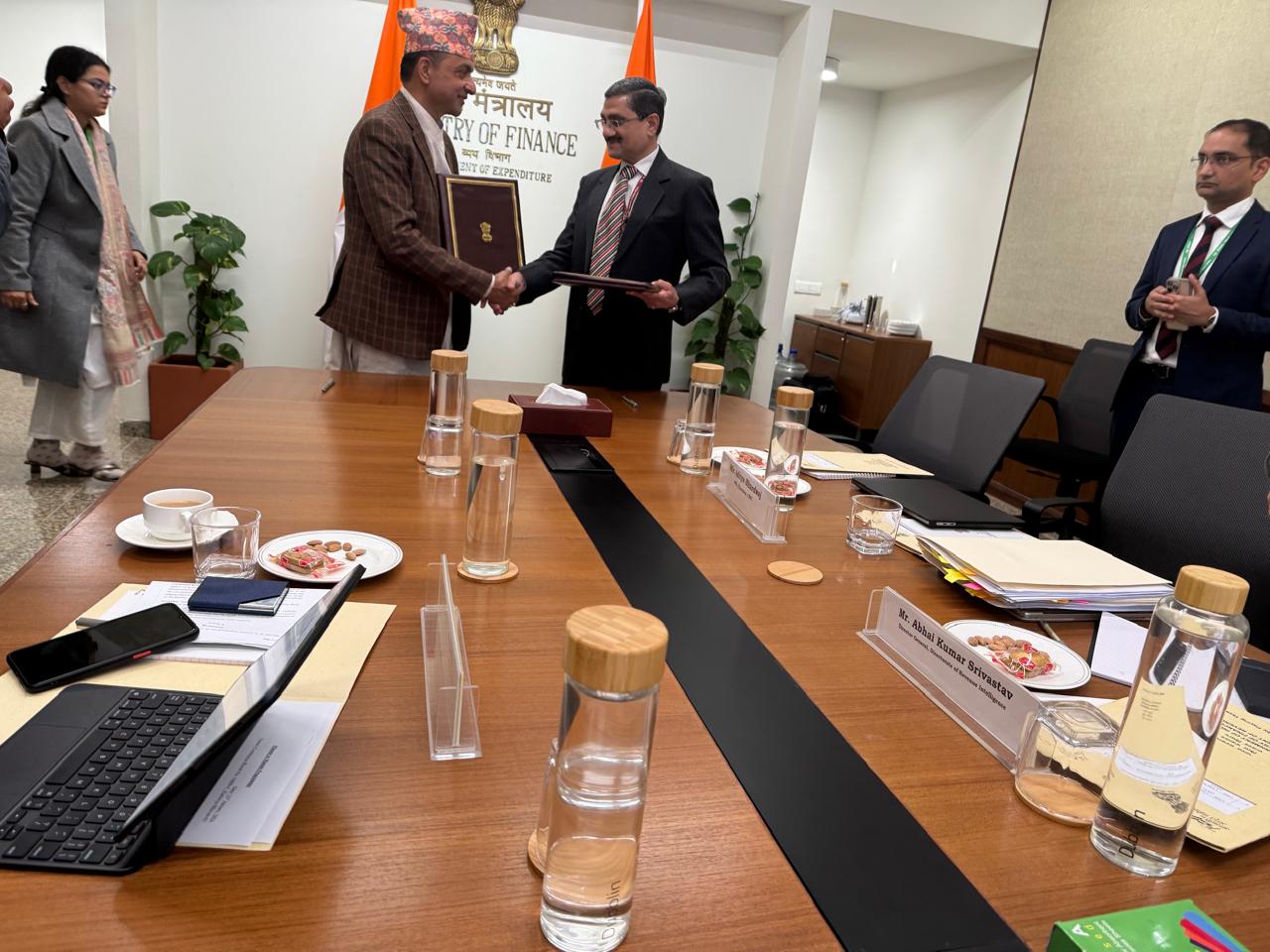
Kathmandu. A memorandum of understanding (MoU) has been signed between Nepal and India to implement the provision of exchange of information before the goods to be exported to the destination. The MoU has been signed with the objective of making trade facilitation and customs control more effective through risk management.
The Central Board of Indirect Taxes and Customs (CBT) and Nepal’s Department of Customs had drafted a draft of a memorandum of understanding (MoU) in collaboration between the Central Board of Indirect Taxes and Customs of India and the Department of Customs of Nepal to implement such a provision with India. The draft was finalized after discussions with the stakeholders.
The Council of Ministers approved the MoU and authorized the Director General of the Department of Customs to sign it. Director General of Department of Customs, Shyam Prasad Bhandari, and Chairman of Central Board of Indirect Taxes and Customs Bibek Chaturvedi signed the agreement on behalf of their respective governments.
The MoU also makes provisions for making customs control and trade facilitation more effective through risk analysis, reducing the time taken for customs procedure, ensuring safe international trade, exchanging export data by electronic means within limits determined by national laws and using information only as per the MoU.
Likewise, provisions include appointing liaison officers from both sides for the implementation, implementing some of the items specified initially as a model and expanding them to all items later, resolving disputes arising in course of implementation through diplomatic channel on mutual consensus and amending the memorandum of understanding on mutual understanding.
Speaking at the signing ceremony, Director General of Department of Customs Bhandari stressed the need of implementing the MoU as soon as possible as it would further strengthen relations between the customs administrations of the two countries. According to him, the exchange of data before the arrival of exported goods would make it easier to monitor and regulate the goods that are at risk and it would further facilitate the businessmen involved in the right transactions, making the customs clearance process faster, faster and easier.
Commenting on the occasion, Bibek Chaturvedi, Chairman, Central Board of Indirect Taxes and Customs (CBICS), said that India is fully committed to its early implementation.













प्रतिक्रिया दिनुहोस्