

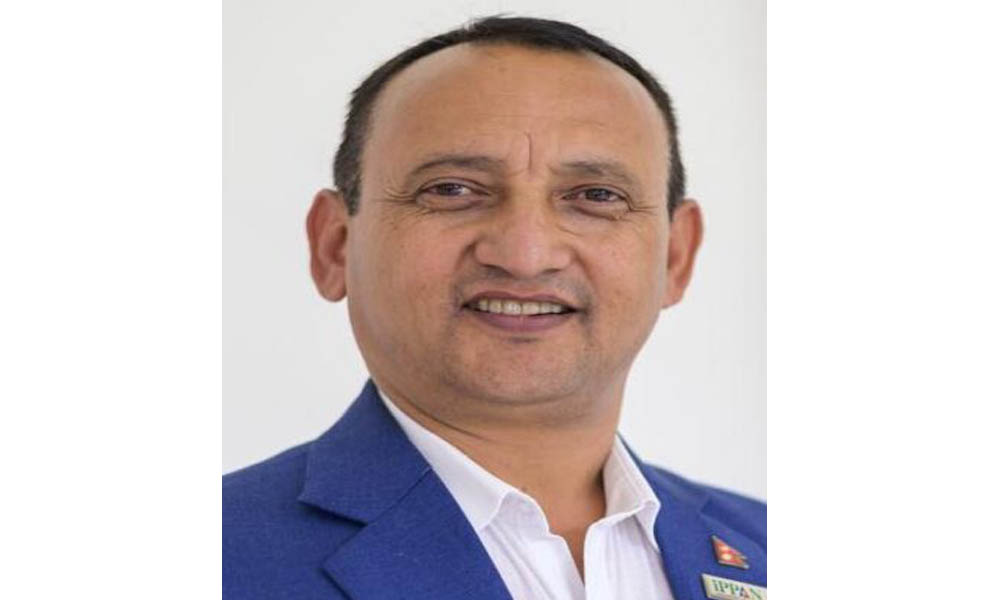
Nepal is a country rich in natural resources. Especially, the availability of water resources has made Nepal one of the top countries with the potential to produce many hydropower in the world.
According to the study conducted by the Water and Energy Commission, Nepal has the potential to generate 120,000 MW of hydropower in Nepal, including 72,000 MW of river-based projects and 48,000 MW of reservoir-based projects.
Independent energy experts, however, claim that Nepal could generate up to 200,000 MW of electricity with the optimum utilization of new technology and resources. Nepal, which has immense potential for hydropower generation and constructed hydropower projects 114 years ago, has been facing the problem of lack of electricity access and load-shedding for a long time.
However, in the last two decades, Nepal’s energy sector has made a remarkable leap with the active participation of the private sector. In a way, Nepal’s economy is led by the energy sector. The entry of the private sector has propelled the energy sector, which the government has been developing at a snail’s pace for 100 years.
The 144 MW Kaligandaki A Hydropower Project came into operation in 2059 BS with the assistance of foreign donor agencies. In 2060, Nepal Electricity Authority (NEA) built 22 MW Chilime Hydropower Project in company model. Chilime became the largest project built with indigenous investment and indigenous manpower. On the strength of this, the private sector also gained confidence to build big projects. Until then, the private sector had been able to construct the 183-kilowatt Syange hydel project and the 7.5-megawatt Indrawati III hydropower project.
History of Hydropower Production in Nepal, Initial Stage (1968–2018)
History of electricity generation in Nepal It was started in 1968 with the Pharping Hydropower Project. The 500-kilowatt Pharping Hydropower Project (Chandra Jyoti) was constructed at the initiative of the then Prime Minister Chandra Shumsher Jung Bahadur Rana. This made Nepal one of the first countries in South Asia to generate hydropower. Electricity generation started in Nepal during the Rana regime.
After becoming a democratic country. In 2007 B.S., Sundarijal (640 KW) and B.S. In 2018 BS, projects like Panauti (2.4 MW) were constructed. All these projects were fully owned by the government. They were mainly focused on meeting the electricity demand of the capital city Kathmandu and even the royal palace.
Institutional Development and Government Dominance (2018–2046)
The democratic system did not last long and the Panchayat system was introduced. After the direct rule of the king, After 2018 B.S., Nepal Electricity Corporation was formed expanding the scope of electricity offices. The same organization was later made Nepal Electricity Authority in 2042 BS and given the responsibility of generation, transmission and distribution of electricity to a single organization. During this period, Trishuli (21 MW) and Devighat (14.1 MW) were constructed with the support of the Government of India, Kulekhani (60 MW) and Marsyangdi (69 MW) were constructed with concessional loan and grants from the Asian Development Bank and JICA. These statistics show that the development of hydropower in Nepal was much better during the direct rule of the king as compared to the Rana regime.
Private sector entry (after 2046)
}
After the political change in 2046 BS, Nepal adopted the policy of liberalization and privatization. Against this backdrop, policy documents such as Hydropower Development Policy 2049, Electricity Act 2049, Electricity Regulations, 2050 and Hydropower Development Policy, 2058 were issued. This opened the legal avenue for the private sector to invest in power generation. The private sector was allowed to survey, produce and sell projects up to 20 MW. Although the private sector was allowed to construct the project, the delay in determining the power purchase rate has prevented the private sector from gaining momentum. The then Minister for Energy and Water Resources Shailaja Acharya had made a breakthrough in the entry of private sector in hydropower by fixing PPA rate for the first time in 2055 BS.
But by then, when the demand for electricity in Nepal had increased at a high rate and the government production was limited to 200 MW, the government had given a lot of facilities to some foreign companies and started two hydropower projects. The 60 MW Khimti-1 and 36 MW Bhotekoshi hydropower projects (later increased to 45 MW) are the first big hydropower projects built by the private sector in Nepal.
The 144 MW Kaligandaki A Hydropower Project came into operation in 2059 BS with the assistance of foreign donor agencies. In 2060, Nepal Electricity Authority (NEA) built a 22-megawatt Chilime Hydropower Project in company model. Chilime became the largest project built with indigenous investment and indigenous manpower. On the strength of this, the private sector also gained confidence to build big projects. Until then, the private sector had been able to construct the 183-kilowatt Syange hydel project and the 7.5-megawatt Indrawati III hydropower project.
Evolution after the end of the Maoist war and the declaration of the republic
}
The then CPN (Maoist) fought a 10-year armed conflict in Nepal. Their conflict centered around the village. There was no environment to go to the village and carry out development works. When they came to the peace process, hydropower became the fastest growing sector. While other industries and businesses were slowing down, the development of the energy sector has taken dozens of industries associated with it together.
Currently, the total installed power capacity in Nepal is around 4,000 MW. Of this, 3,000 megawatts of electricity has been generated in the last two decades. All of them have been produced by the private sector projects. Currently, projects with a capacity of 5,500 MW are under construction by the private sector, about 3,000 MW projects are awaiting financial management after completing the power purchase agreement and 10,000 MW projects have reached the stage of PPA after completing the study work. Another 20,000 MW projects are in the study phase.
With the leap in electricity generation, the use of electric vehicles has increased in Nepal. Electricity consumption has increased in cooking and small agricultural industries. Nepal has been exporting 12-1300 MW of electricity to India and Bangladesh during the rainy season. Electricity exports are expected to generate around Rs 20 billion this year from Rs 18 billion last year. It can be easily estimated that this amount will increase to billions of rupees annually in the coming days.
With the leap in electricity generation, the use of electric vehicles has increased in Nepal. Electricity consumption has increased in cooking and small agricultural industries. Nepal has been exporting 12-1300 MW of electricity to India and Bangladesh during the rainy season. It is estimated that around Rs 20 billion will be earned this year from electricity export from Rs 18 billion last year. It can be easily estimated that this amount will increase to billions of rupees annually in the coming days.
Reasons for the success of the private sector
Currently, the installed capacity of the total electricity generation in the country is around 4,000 MW and of this more than 80 percent is contributed by the private sector. The private sector, which was limited to 5÷10 MW in the past, has now started projects up to 500 MW. There is ample basis for the construction of hydropower projects up to one thousand megawatts from the private sector in some time if the government facilitates it.
One of the reasons why the private sector dares to build big projects is the success of projects like Chilime and Upper Tamakoshi built by the Nepal Electricity Authority (NEA) in the company model (with the participation of local and general public). But more than that, the private sector, which has been working in this area for 3 decades, seems to be determined to build big projects on its own experience. A dozen hydropower projects with a capacity of more than 100 MW are in various stages of construction.
The private sector has been completing the project in a faster, faster and more efficient manner than the government projects. In this case, the ease of decision-making process for the private sector is on the one hand and dedication and commitment to work is the other aspect. The process of obtaining permission from the government agency for the construction of projects by the private sector is still very long and cumbersome. In some cases, permission is not obtained from the bodies under the Ministry of Forest for years. Despite this, the private sector has been completing most of the projects at a cost of Rs 20 crore per megawatt.
With the leap in electricity generation, the use of electric vehicles has increased in Nepal.TAG_OPEN_em_172 Electricity consumption has increased in cooking and small agricultural industries. Nepal has been exporting 12-1300 MW of electricity to India and Bangladesh during the rainy season. It is estimated that around Rs 20 billion will be earned this year from electricity export from Rs 18 billion last year. It can be easily estimated that this amount will increase to billions of rupees annually in the coming days.
There are four main reasons why the private sector is successful:
1. Simplification of the decision-making process
}
There is a multi-level approval process, delays and political interference in government projects. However, in the case of private sector projects, the decision-making process is quicker, which helps to reduce both time and cost.
2. Cost Control and Professional Efficiency
}
The private sector adopts professional discipline in project management, contract system, and labor management. The compulsion to recruit unnecessary employees is less in private projects than in the government. The value of labor is determined by the experience and efficiency of the worker. Therefore, the problem of cost escalation seen in government projects is comparatively less in private projects.
3. Risk Tolerance
The private sector bears market risk, construction risk and financial risk. The private sector is aware of all the risks that the project will face if the project is not completed on time or if the project is not completed in the stipulated cost. There is no clear structure for risk transfer in the government sector. Even if the project is not completed on time, the burden will be on the people’s taxes. Any employee who does not take a decision or is procrastinating does not have to take any risk. This is also the reason why the projects of the private sector are completed on time.
4. Involvement of banks and financial institutions
}
The private sector has become more accessible to finance after banks started viewing energy as a safe investment area. Be it an economic recession or a natural disaster or a political movement. Banks are getting interest from the power projects on time. This has also put pressure on them to increase investment in this sector. The private sector has taken advantage of this.
Government’s contribution to the success of the private sector
}
It was not possible for a single government to bring the private sector to this position. The private sector has been successful in removing the obstacles seen in the course of the construction of the project. However, in recent years, governments have been indifferent to meet the demands of the private sector. It may be mentioned here that the following governments have more policy easing than other governments to make the private sector successful
1. Girija Prasad Koirala (2048-51 and 2054-55)
The government led by Girija Prasad Koirala was formed in 2048 BS after the general election following the political change in 2046 BS. At the same time, the Electricity Act, 2049 BS was promulgated by bringing the Hydropower Development Policy in 2049 BS. Based on this Act, the Electricity Regulations, 2050 were formulated. However, the private sector could not build the project even after taking permission as the power purchase rate was not fixed.
For the first time in Nepal’s history, the rate of electricity produced by the private sector was fixed when Shailaja Acharya took over the responsibility of the then Water Resources Minister on Baisakh 12, 2055 BS. During his tenure at the Ministry for 8 months and 8 days, a provision was made regarding Power Purchase Agreement (PPA) for the purchase of electricity from the private sector. Ultimately, the foundation of energy development was to fix the price of electricity generated from the private sector at Rs 4.03 per unit in winter and Rs 2.95 in the rainy season.
2. KP Sharma Oli (2072-73 and 2074-78)
}
In 2015, the KP Sharma Oli-led government issued the ‘Energy Crisis Prevention and Power Development Decade-2072’. This has paved the way for a power purchase agreement with Nepal to produce 10,000 MW of electricity in 10 years.
The project envisioned increasing electricity production, increasing internal consumption, eliminating load shedding and exporting surplus electricity to India. The 99-point action plan brought by Energy Minister Top Bahadur Rayamajhi to address the energy crisis was implemented by his successor Janardan Sharma and Managing Director of Nepal Electricity Authority (NEA) Kulman Ghising.
}3. Madhav Kumar Nepal, Baburam Bhattarai and Pushpa Kamal Dahal
The then Madhav Kumar Nepal-led government, Energy Minister Gokarna Bista had increased the PPA rate to Rs 8.40 in winter and Rs 4.80 in the rainy season. Similarly, when Baburam Bhattarai was the prime minister, the government had taken a policy decision not to look for sources of investment in energy projects, keeping the energy crisis in the national priority.
The Pushpa Kamal Dahal-led government had signed an agreement to export 10,000 megawatts of electricity to India in 10 years.
Institutional Contributions of IPPAN
}
The Independent Power Producers’ Association of Nepal (IPPAN) was established in 2057 BS. In the early days, there were very few entrepreneurs involved in the energy sector. The government was reluctant to listen to their voices. IPPAN was established with the idea of raising a collective voice when energy producers are being added. The organization currently has about 600 power producers and related company members.
With the increase in the size of the institution, it has also increased the pressure on the government for policy reforms. IPPAN has played a decisive role in many policy decisions. Even though the government has taken policy decisions, the bureaucracy has not implemented them properly, which has not completely stopped causing pain and harassment to the power producers. This has increased the need for more integration of energy producers. We need to be ready to raise the voice of the promoters both in the parliament and on the streets when needed.
IPPAN not only made policy advocacy but also disseminated the message in various forums for the promotion of domestic and foreign investment in Nepal’s energy sector. IPPAN has also been playing a significant and proud role in capacity building of promoters and project employees.
Energy Producers’ Challenges and Areas for Improvement
There are still some structural challenges in the energy sector. There is a need to address the issues of lack of transmission line, policy instability, environmental approval process and investment security. If energy development is not limited to production but is not linked to consumption, export and industrialization, then new problems will come to the surface in this sector.
1. Power Purchase Agreement
The Power Purchase Agreement (PPA) has been closed for the past 5 years. It’s time for the license to expire. The government does not open the PPA. Banks do not invest in PPA in Tech and Pay. The government is not ready to sign a PPA on Take-Arpay. There are 20,000 MW of projects licensed by the private sector. The government has been taking royalty from these projects every year. In the absence of PPA, these projects are in a situation to go to the basket. For this, the government must decide whether to open the PPA or keep all the licenses as they are. Otherwise, there is a risk that hundreds of projects that have already been invested billions of rupees will go to the government basket. This kind of injustice to the private sector cannot be tolerated.
2. forest
At present, the private sector has been facing the most problems under forest and environment. There are many instances where the project work has been delayed by 4÷5 years due to not being able to cut a single tree. Acquiring forest land is equally challenging. In this way, the cost of the increase means that the cost increases, and the direct impact of the increase on the cost is on the investors.
3. Out of control situation
On the other hand, the government policy states that the date for starting power generation (RCOD) can be extended only if there is damage caused by floods and landslides. However, 90 percent of the under-construction projects have passed RCOD today as the delay in the government process has not been addressed anywhere. The Nepal Electricity Authority (NEA) is on the verge of imposing a penalty on the company. The government should address the delays in the government process and create an environment for the extension of the RCOD deadline.
4. Share Removal
The government has now banned the primary issue by making a legal provision to give 10 percent shares to the local people. This has stopped the IPO approval of the 50th company for two and a half years. The company is short of capital. Their interest expenses have gone up.
5. Insurance
The Insurance Authority has increased the insurance premium of hydropower projects so much that the companies are reluctant to insure after the completion of the project. At the same time, the companies are compelled to provide insurance even if it is expensive due to the increase in weather events due to climate change. However, even after such insurance, the insurance companies pay the claim very slowly and only less. This has also increased the financial burden on the project.
6. Local challenge
In the past, the producers were facing a kind of problem. Now, due to the government’s actions, they are facing new problems. After the IPO was stalled for two and a half years, they have not been able to give 10 percent share to the locals. Some locals and some politically protected groups are trying to create an environment where the project cannot be operated. The government needs to pay attention to this as well.
7. Transmission line
More than 500 MW of electricity from the private sector will be wasted during the rainy season due to the government’s failure to construct the transmission line on time. If the problem of transmission lines is not resolved, there is a risk that it will get worse in the coming days. According to the take-or-pay provision, the government has forcibly implemented the provision of take and pay by signing a contingency agreement, saying that the capacity of the transmission line will not be able to take all the electricity after the completion of the PPA. The NEA refuses to take even 10-20 percent of the electricity while signing the contingency. As soon as the Nepal Electricity Authority (NEA) signs, only the electricity will be paid. At present, more than 2 dozen projects are in contingency due to the transmission line. Dozens of projects listed with the Securities Board of India (SEBON) have also been affected by this arrangement.
Prospects
1. Increasing the economy by increasing internal consumption
}
What can be better than consuming the electricity produced in Nepal? Nepal is expected to produce 28,500 MW of electricity in the next 10 years and consume 13,500 MW of electricity in the country. Currently, only 22÷2300 MW of electricity is being consumed in the country. If electricity can be consumed for cooking by upgrading the transmission system, then a large amount of additional electricity can be consumed immediately. Ten industries can consume 5,000 MW of electricity if they can bring in more energy-consuming industries. If the government takes the policy of exporting by mining crypto, then a large amount of electricity can be consumed there, which is what Bhutan is currently doing.
Even if a chemical fertilizer factory is opened in Nepal, a large amount of electricity will be consumed. The opening of the fertilizer factory will also bring revolution in the agriculture sector. If we move forward with a policy of green hydrogen storage, there is also a place to consume a large amount of electricity. The use of private electric vehicles has also increased the consumption of electricity. If electric vehicles are added to public transport, more electricity can be consumed. Various studies have shown that one unit of electricity can contribute Rs 45 to Rs 50 to the country’s economy when electricity consumption increases.
2. export
Nepal has already become a country exporting electricity worth around Rs 20 billion annually. The government has a monopoly on this. Nepal can export electricity worth Rs 100 billion annually within a decade if the private sector gets permission to export electricity. Currently, 12÷1300 MW of electricity is being exported to India and Bangladesh. If the private sector gets permission, it can develop hydropower projects only for export purposes, and it can export electricity during the winter season. Therefore, the government should not delay in issuing licenses to the private sector for electricity trade and construction of transmission lines.
Conclusion:
Nepal’s energy sector has now reached a historic turn. The government’s facilitation can become the basis of prosperity, while apathy can lead to the collapse of the carpet from entrepreneurs to banks and financial institutions engaged in this sector. Factories in the country are running at half capacity. A large part of the production of cement, rods, bricks, panels, tiles, paints and dozens of other industries is consumed in hydropower projects. As the construction of the project increases, the production of these industries will also increase.
As soon as the construction of the project slows down, many industries will also collapse. The production of automobiles and other industries that trade imported goods is also being consumed in hydropower projects. In a way, the construction of hydropower projects is helping Nepal’s economy. While this sector is flourishing, some government÷non-government organizations are trying to hold this sector hostage by misinterpreting the laws and filing cases in the courts. What everyone should keep in mind is that if the energy sector is held hostage, there is no other sector that will lift Nepal’s economy today.
Joint efforts of the government and private sector are necessary to save and make this sector big. Only right policy environment, political commitment and pure business competencies of the private sector can take Nepal on the path of energy prosperity.
(From the article ‘Energy Prosperity Souvenir’ 2082 by IPPAN Senior Vice President Dangi)









प्रतिक्रिया दिनुहोस्