

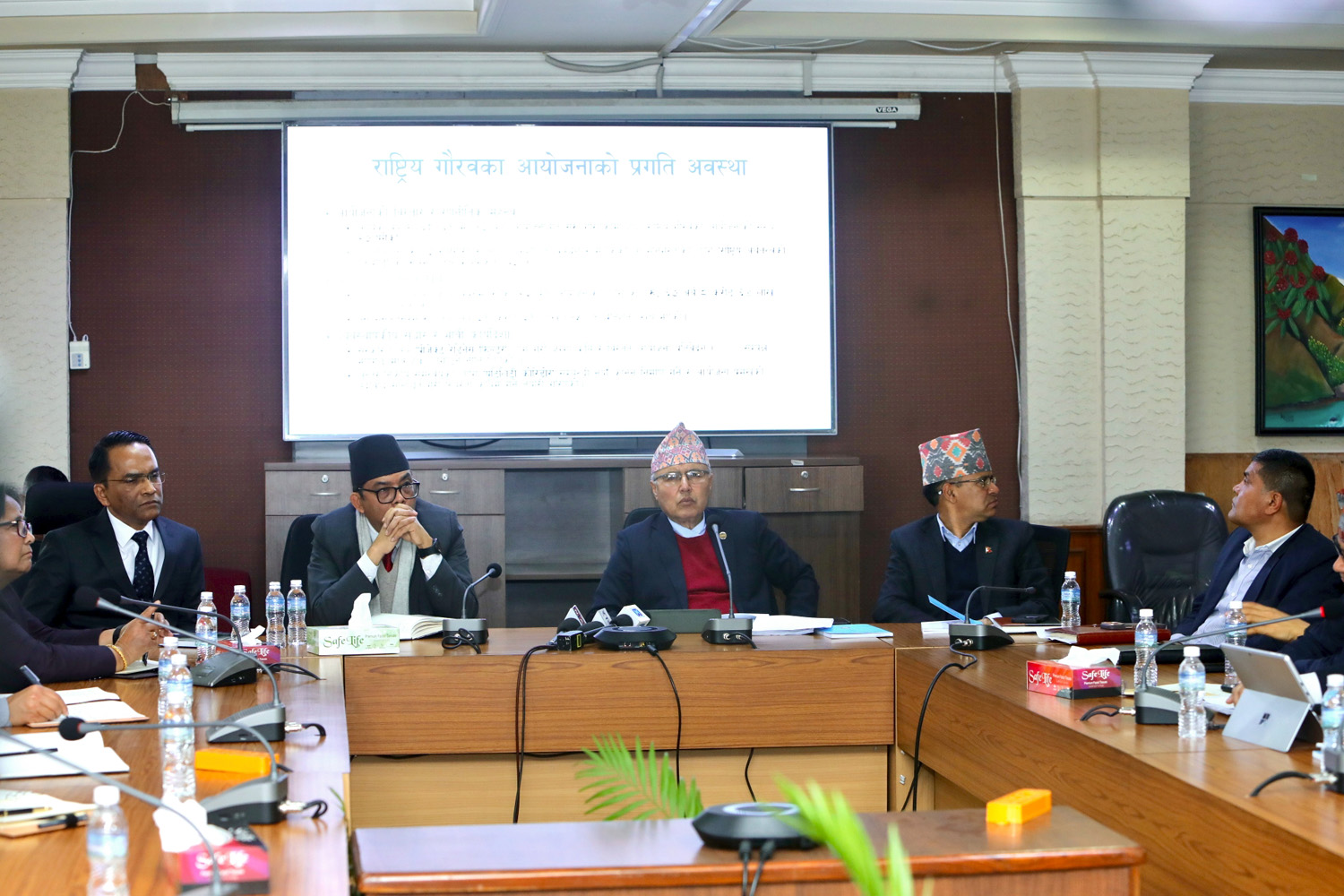
Kathmandu. The Ministry of Finance has made public the half-yearly evaluation report of the budget for the fiscal year 2082/83. According to the report, only about one-third of the total budget allocated for the current fiscal year has been spent while the capital expenditure has not been satisfactory.
According to the Ministry of Finance, Rs 690.21 billion has been spent till mid-January of the allocated Rs 1,964.11 billion for the current fiscal year. This is 35.14 percent of the total budget. Out of the allocated amount, 41.25 per cent was spent on current expenditure, 12.12 per cent towards capital expenditure and 40.95 per cent towards financial management.
The overall expenditure in the review period increased by 3.39 percent compared to the corresponding period of the last fiscal year, the report stated. However, lack of preparedness for the project, complexities seen in land acquisition and use of forest area, as well as damage to physical infrastructure due to the agitation that took place on September 7 and 24 have been cited as reasons for low capital expenditure.
According to the half-yearly review report of the budget, the budget of Rs 119.53 billion allocated for unprepared and unproductive small projects has been postponed as per the decision of the Council of Ministers. Of the stalled projects, Rs 42.28 billion has been released on the basis of the procurement process that has already begun and the concerned ministries have requested to release the projects with justification, the ministry said.
The government has set a target to collect Rs 14.80 trillion revenue in the current fiscal year. The federal government’s share is estimated to be Rs 13.15 trillion. The report has also made public the goals and policies for improvement in budget implementation and resource management. The main goal is to strengthen revenue mobilization in the remaining period by resolving the structural and systemic problems seen in the review period and to focus the investment in the productive sector.
In order to make public expenditure economical, a policy has been adopted to amend the criteria of 2078 BS and implement it effectively and to spend only within the allocated limit. According to the Ministry, the existing structures and posts would be reviewed after conducting an organisational and management survey as per the work responsibilities of the federal, provincial and local levels to increase budget expenditure.
Apart from the mandatory representation, the policy has also been adopted to discourage foreign travel from government sources. Likewise, no new organizational structure and posts will be created in government offices, regulatory bodies and public corporations in such a way that there will be additional expenses. Provision will be made not to appoint supervisory consultants in projects other than big projects and no external consultancy services will be taken for the drafting of policies and laws.
Likewise, it has been ensured that there will be no shortage of resources in the projects of national pride and strategic importance and the budget of these projects will not be diverted to other places. In case of multi-year projects, the Resource Consent Criteria-2082 would be fully abided by and approval would be made on the basis of medium-term expenditure structure. The provision of submitting the budget that has not been spent by mid-March or cannot be spent in the remaining period will also be strictly adhered to.
The half-yearly review report states that the payment of mandatory liabilities such as remuneration, allowance, ration, electricity, communication and house rent would be settled in the current year itself and managed in such a way that the liabilities do not shift in the next year. The report mentions the need for facilitation and monitoring for timely receipt of reimbursement of the projects run with foreign assistance and adopting a policy to mobilize the development assistance only in the national need and high-yielding strategic projects. Only the projects that have completed their preparations will be selected by effectively implementing the ‘Project Readiness Filter’ in the new foreign assistance projects.
Similarly, a plan has been put forward to increase voluntary tax compliance by making the revenue system technology-friendly, transparent and taxpayer-friendly. It is stated that multi-agency integrated efforts would be made to control revenue leakage by coordinating with the customs administration and security bodies along the border. Likewise, it is stated that taxable informal economic activities will be brought into the formal system and the tax net will be expanded by including digital transactions in the tax net.
Similarly, the tax arrears recovery and arrears settlement would be expedited by formulating an action plan. By expanding the scope of non-tax revenue, the existing rates will be made timely and arrangements will be made to collect dividends from government investment bodies on time. The report states that the process of depositing the government money in various funds in a non-budgetary manner in the federal consolidated fund will be initiated.














प्रतिक्रिया दिनुहोस्