

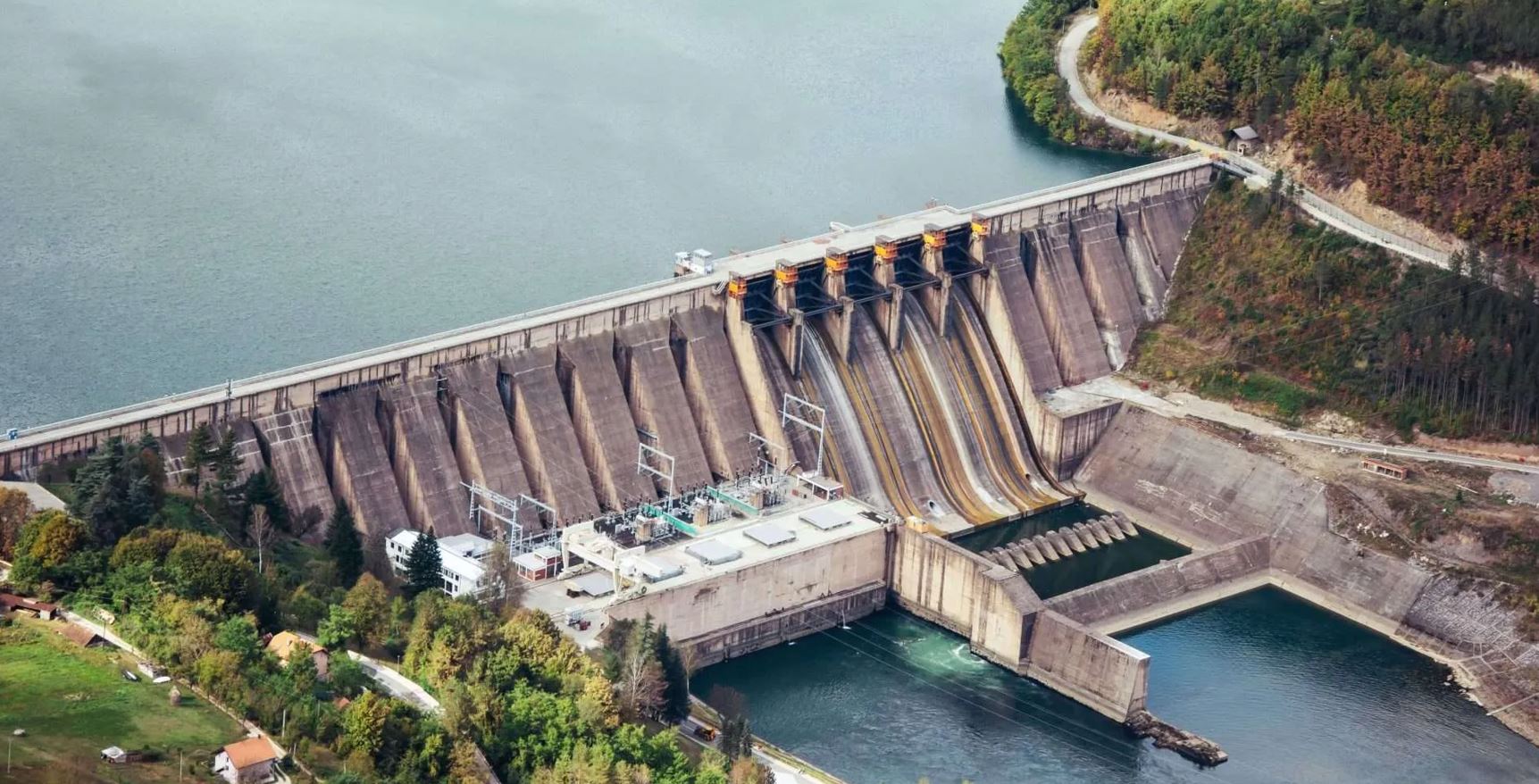
Kathmandu. The major political parties have given a special place in their manifestos depicting the energy sector as a major sector linked to the country’s economic prosperity. They have also come up with a plan to remove the complexities on the implementation side by setting different deadlines and create an energy-friendly environment.
Increasing domestic consumption, job creation and selling energy to the regional market through diplomacy are the top priorities of the government. The manifesto has included the end of policy complexities, ending the need to visit eight ministries and 23 departments and creating an environment conducive for the private sector to invest. This time, the energy sector has been included as the common agenda of all in the manifestos of the political parties, which have been named as ‘pledge letter’ and ‘commitment letter’.
Some political parties have proposed a 10-year plan while some political parties have proposed a five-year policy. The major political parties have given equal priority to energy mix and alternative energy as they are close to the government’s target of producing 28,000 megawatts of electricity by 2035.
Programmatically, the Nepali Congress has come up with the slogan ‘Sufficient Energy: Sustainable Development’. The government has set a target to increase the total electricity installed capacity of the country to 14,000 MW in the next five years. The party has given top priority to the sustainable and long-term development of the region in the form of self-employment from the share of economic earnings.
Likewise, the NC has a plan to increase per capita electricity consumption to 750 units, implement the concept of increasing consumption and decreasing tariff, formulate a national energy security policy and strengthen the energy infrastructure to ensure clean and quality energy to the citizens. Similarly, the NC aims to gradually replace petrol and diesel.
“The fact that the Nepali Congress has given priority to energy development is evident from the Hydropower Development Policy brought by the party government in 2049 BS, the Electricity Act, 2049 BS and the Hydropower Development Policy, 2058 BS,” reads the party’s manifesto.
The Nepali Congress has acknowledged the fact that the energy industry, like other sectors, has not been able to reap adequate benefits of the policy reforms due to major political changes and transitional instability.
It has been claimed that today’s energy industry stands on the foundation of the liberal hydropower policy implemented by the Nepali Congress. The NC believes that the availability of experienced technical human resources and improved efficiency of the banks have further strengthened the investment climate and financial access has increased as banks and financial institutions have started investing after understanding the projects.
Stating that the Nepali private sector has now gained confidence and capacity to construct big hydropower projects, the party has argued that hydropower sector could become the main basis of the country’s industrial revolution if necessary policy facilitation and proper mobilization of financial resources were made to convert this enthusiasm into concrete results.
The NC has also come up with a programme to formulate national energy security policy taking energy security into consideration and to become self-reliant in energy by ensuring reliable and modern energy for every citizen linking it with country’s economic development, poverty alleviation and environment protection.
The NC has also given priority to forward big projects like Budhigandaki and Dudhkoshi and to increase per capita electricity consumption to 750 units within next five years.
The NC, which has set a target to implement the concept of reducing the increasing consumption and decreasing tariffs, has said it would take additional 10,000-MW projects including solar power into the construction phase by mobilizing joint investment from the international and private sector as well. For this, the total installed capacity will be increased through policy and regulatory reforms.
The Nepali Congress has pledged to start the construction of the Betan Karnali and Chainpur Seti hydropower projects with reservoirs like Budhigandaki and Dudhkoshi and Chainpur Seti with national priority.
The party has also expressed its commitment to take serious initiatives to implement the Pancheshwar Multipurpose Project through technical and political consensus while protecting the national interests.
Priority has been given to legal reforms including the provision of one-door system to conclude the process of forest and land acquisition and environmental impact assessment to be followed by hydropower projects within six months.
The NC has also planned to make policy arrangement for concessional loan to the disadvantaged families to purchase 10 percent preference shares of hydropower companies for the project-affected locals. Provision for purchase of such shares and financial concessions will also be provided to the Nepali citizen workers involved in the construction of the project.
The party has also planned to emphasise political and diplomatic initiatives with neighbouring countries to remove complications in inter-country trade for the export of electricity that is surplus after domestic consumption and adopt effective economic diplomacy to expand Nepal-India power trade to the sub-regional level.
KATHMANDU: The CPN (UML) has come up with a plan to complete the production, transmission and distribution of renewable energy including hydropower, solar and green hydrogen with the slogan ‘Clean Energy, Green Development and Export to Foreign Countries’.
The party has also included programmes to guarantee energy security, develop Nepal as a clean energy export hub of South Asia and double the per capita electricity consumption in the country.
The UML has a programme to increase the state’s investment in clean energy production and transmission and distribution system. The UML is committed to creating a conducive environment for the private sector to construct transmission lines along with production, and export electricity. According to the team, reliable system of energy supply would be established by developing hydropower, solar energy and green hydrogen.
The party’s programme includes implementing the Upper Arun, Dudhkoshi and Budhigandaki hydropower projects so that there would be no problem of electricity supply even during winter and to make all efforts to complete the private power projects on the stipulated time.
The CPN (UML) has prioritized the completion of the Sunkoshi-Marin and Bheri Babai diversion irrigation and power projects, and supply of energy from agriculture, industry, transport, tourism, education, health, trade, business and financial sectors.
The UML manifesto has pledged to encourage the consumption of electricity in gross domestic consumption and provide electricity services required for irrigation in the Terai, Kathmandu Valley and Tar through deep boring and lift system at a fair price.
In order to promote community electrification, a goal has been set to make the electricity service accessible to the people’s doorstep by reviewing the existing policies, laws and regulations for the sustainable management of community electricity consumer organizations.
The CPN-UML has a programme to enhance the capacity of community electricity consumer organizations to run small and medium enterprises in rural areas and to manage energy for industrialization of agriculture.
The Communist Party of Nepal (CPN) has prioritized energy and infrastructure development in its commitment paper. Hydropower, renewable energy and integrated corridor have been put forward in the meeting.
The per capita consumption of electricity will be 750 kilowatt hours within five years. Currently, per capita consumption of electricity has reached 380 kilowatt hours.
Similarly, the party has set a long-term target of generating 40,000 megawatts of electricity by 2100 BS. The CPN has described the energy sector as the basis for prosperity at a time when 10,000 people will get employment directly or indirectly while starting the process of power generation.
It has also set a target of adding 10,000 MW of electricity in the next five years. This goal will be achieved as soon as the ongoing projects, the projects that are ready to go under construction and the projects that are in the completion stage are connected.
Likewise, the CPN has also pledged to export electricity to India and Bangladesh in a more systematic manner. The CPN, which has mentioned to resolve some legal issues immediately, will solve it immediately and bring in working people under the leadership of organizations like Nepal Electricity Authority and Department of Electricity Development. It seems objective and practical as the NCP has included the energy sector in its commitment letter keeping the energy sector in special priority. As Ujjyalo is the leader of Nepal, the commitment letter of the NCP seems to be scientific and implementation-oriented compared to others.
The Rastriya Swatantra Party (RPP) has set an ambitious target of producing 30,000 megawatts of electricity in the next decade. Existing laws related to land, forest and environment will be improved and amended to speed up energy development. Similarly, the party has a plan to create an environment where people can work through one-stop service center by ending the situation of visiting eight ministries and 23 departments.
It is stated in the party’s commitment letter that the party would prepare and implement the water resources policy and work in the private sector-friendly or participatory system in the storage and distribution system based on pump storage and other technology.
Likewise, the party has put forward a plan to develop and expand solar system and expand transmission line to increase internal power consumption and develop energy-based big industries. Cement, chemical fertilizer industry, data server and distribution system will be improved. Likewise, the government has set a target to increase per capita consumption to 1,500 kilowatt hours by 2035.
The delegation is scheduled to sign energy trade agreement with India and Bangladesh for energy export. Likewise, the party aims to make Nepal a reliable energy supplier through expansion of cross-border transmission lines, access to energy market and stable purchase and sale structure.
Similarly, the Bright Nepal Party has put forward important plans and programmes for the development and expansion of the energy sector. The energy sector has got special priority in the commitments of most of the political parties taking part in the elections. Experts are of the view that the establishment of this sector as the main basis of economic prosperity will end unemployment, open the door to economic development and prosperity. At the same time, some have said that this issue can be made more clear only by keeping in mind what will happen in the implementation process.











प्रतिक्रिया दिनुहोस्