

. “It doesn’t cost much to write a manifesto. How to implement? And what are the financial sources? Don’t believe in free and free food. It’s not possible. It is just a matter of whether to take it directly or to take it around, to take it today or tomorrow,” National Planning Commission (NPC) Vice-Chairman Dr Prakash Kumar Shrestha wrote on social media Facebook on Friday evening.
Sushil Bhatta, former chief executive officer of the Investment Board of Nepal (IBN) and a former member of the National Planning Commission, wrote on the same network on Thursday, “I have always wanted to see a manifesto that includes a detailed assessment of costs, a fiscally responsible plan, clearly identified sources of investment and implementation methods rather than just ambitious promises.” Let the details of how it can be implemented. ”
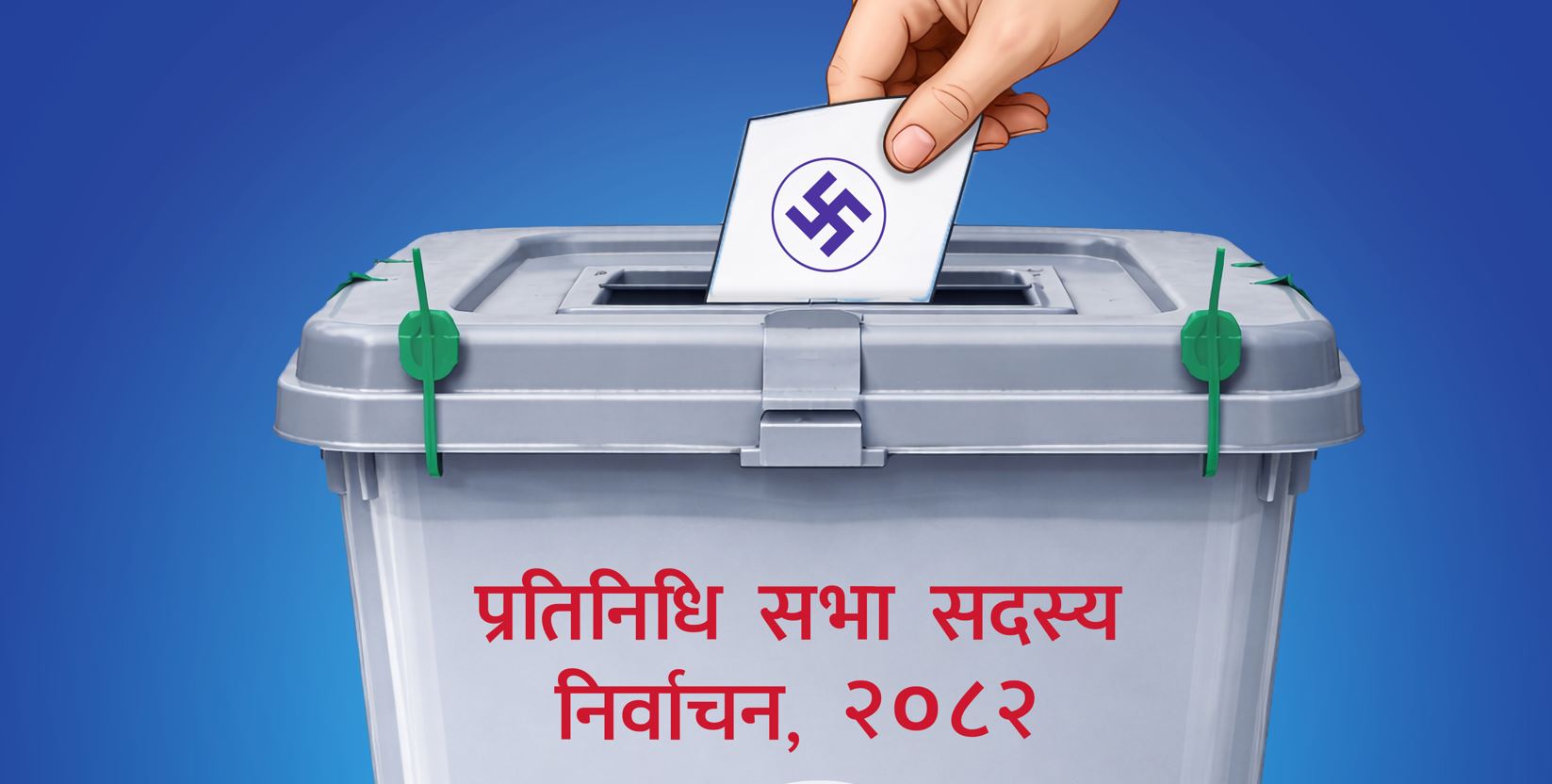
All the political parties are busy making their election manifestos public and seeking votes for the upcoming House of Representatives elections. In a democracy, a manifesto is not just a paper asking for votes, but a social contract with the voters. However, Shrestha and Bhatta have taken a dig at the bundle on social media, which is made with attractive words of populism, ambitions beyond capacity, and plans that do not seek financial resources. What is the ‘cost price’ of the election manifesto? Where does that money come from? And how will it be implemented? This is not the first time such questions have been raised in intellectual circles. But now every conscious voter is asking these questions to the parties and candidates.
The country’s economy, which was constantly stalled due to the earthquake of 2015, the blockade of India, the COVID-19 pandemic and unstable politics, is in further crisis after the Genji demonstrations of September 7 and 24. That’s what the current economic situation and the psychology of the market say. The government has reduced the income and expenditure estimates through the mid-term review of the budget as the revenue could not be collected as per the target.
Development expenditure has shrunk to just 15 per cent in the last seven months. With the decrease in revenue, the federal government has reduced the financial equalization grant to the provinces and local levels and the total approved annual budget is up to 70.5 million rupees from the third installment. Only 43 per cent will be sent. The National Resource Estimation Committee has recommended the government to bring the budget for the coming fiscal year 2083÷84 within the limit of around Rs 19 trillion, which is less than the size of the budget of the current fiscal year.
The federal consolidated fund has a deficit of more than Rs 130 billion. Public debt has reached around 45 percent as a proportion of GDP, while more than the development budget is being spent on payment of principal and interest. Credit expansion has shrunk to 6.7 percent despite cheap interest rates and adequate liquidity. The private sector is complaining that the security of its investment has not been guaranteed. The cooperative sector, the third pillar of the economy, is itself in crisis. Economists say that the manifestos of the political parties are spreading false promises and unfulfilled dreams.
Former Finance Minister Shankar Koirala said that although it is natural for political parties to come up with attractive slogans and programmes to attract voters’ attention, there is not enough homework in terms of implementable plans and agendas.
“At present, most of the political parties have forwarded the agenda of economic prosperity and have come up with a roadmap for reform, which is a positive aspect,” he said. We have to look at income before we spend. As long as the sources of income are not assured, the implementation of the plan will not be guaranteed. He said the ambitious target on infrastructure development, to double or triple the per capita income within five years, to immediately make education and health free and to take full government responsibility for social security are impractical and baseless. Stating that the government’s revenue could only cover modest expenses in the current situation, he said it would be an improper and impractical step to create additional liabilities until reforms like expansion of tax net, export promotion and wider industrialization were carried out.
According to former Finance Minister Koirala, the manifestos of all political parties are more focused on distribution-oriented programmes. “There is no cost-benefit economic theory. The manifesto has left out an important basis as to where to source the expenses for the plans and programmes of the manifesto and how much profit will be derived from it,” he said. Koirala said that the implementation cannot be assured just by announcing the resources without ensuring the resources.
Former vice-chairman of the National Planning Commission, Prof Dr Shivaraj Adhikari, said although the election manifesto is primarily a document of presenting the views of the parties concerned, motivating the voters and setting future goals, the tradition of estimating the budget, ensuring its resources and making clear budgeting has not been developed yet.
“If the practice of looking at costs and budgeting had been stronger in the making of manifestos, they would have been more realistic. Where can the economy go in the coming days to make the manifesto realistic? We need to find answers to basic questions about how the available resources will be utilized and what will be the political situation of the country,” he said. According to Adhikari, the declaration will be evaluated not only on the basis of cost assurance but also on the basis of timelines, resource mobilization and institutional capacity.
According to him, some improvement has been seen in the recent years while making a comparative study of the manifestos from 2048 BS onwards. Compared to the past, the current manifesto seems to be more realistic in terms of cost. He says the major parties have tried to include simple cost estimates in their commitments. “There seems to be an attempt to refine the manifesto, but the full fiscal blueprint and priorities are still not clear,” he said.
Most of the parties have set a target of creating an economy of over one billion rupees within five years. According to the official, this goal is not completely impossible. He recalled that the 16th five-year plan prepared by the National Planning Commission had also set a target of achieving a similar size of economy. “Achieving double-digit economic growth is possible to achieve a billion dollar economy,” he said, adding that it depends on the continued political stability, policy uniformity and execution capacity. ”
The official said that the parties often ignore the possibility of political instability while drafting their manifestos. Likewise, he argued that the political culture of not fully implementing the constitution, policies, acts and regulations and even the party’s own basic statute would weaken the economic goals. He made it clear that the goals set out in the manifesto would not be materialized until there was improvement in practice.
Saying the political parties should clearly express their behaviour and working style in the manifesto, he said, “How successful have we been in implementing the provisions of the constitution and laws? How much of the party’s statute has been followed? This self-assessment should be included in the manifesto. Politics becomes stable only if there is a commitment to improve one’s situation and behavior. ”
According to him, the pace of development has been hampered due to the tendency of parties joining hands together in the government, not being united on the agenda, indulging in vendetta politics and not forging common views on economic agenda. Adhikari said that the aspect of whether the election manifesto programs are in line with the existing policies and plans of the government will also be important. According to him, only programs that are program-based, result-oriented and have clear priorities can deliver results.
Economist Dr Dilliraj Khanal opined that many of the plans included in the election manifestos of the political parties are unfeasible and there is no clear mention from where to gather the resources required for their implementation. According to Khanal, although it is natural for the manifesto to be somewhat ambitious, it is not appropriate to aim for something that does not match with the reality. “We need 13-14 per cent economic growth to meet the government’s commitment to increase per capita income to 3,000 US dollars,” he said. But how is that possible when we are growing at around four per cent?”
According to Dr Khanal, the voters evaluate and decide how much the promises made in the previous elections have been fulfilled till the next election in advanced democracies. But he says that the announcement written in the previous election in Nepal will be lost by the next election. According to him, the parties are not accountable as the voters did not question whether the work was done as per the manifesto or not. He also expressed concern over the narrative that everything will improve after joining the government.
“The current state of the economy is not satisfactory. Capital expenditure has not been made as per the target and there is not enough investment despite the liquidity in the banking system. In such a situation, it will take at least two to three years to bring the economy back on track,” he said. The need of the hour is to acknowledge the current situation and plan for realities. ”
He expressed concern over the fact that the manifestos were being issued promoting only the distribution of money instead of linking social security with education, health, food security and production sector. “We have huge administrative expenses and social security responsibilities. But it has not been assessed how much this amount is contributing to national capital formation,” he said. He also said that the tendency to politicize social security and make it distribution-oriented is increasing.
In this way, an ambitious manifesto without resource assurance, cost-benefit analysis and political accountability has become the culture of the parties and the destiny of the voters. During elections, political parties set attractive goals such as economic prosperity, high growth rate, per capita income increase, free service and expanded social security, but do not accurately evaluate the multidimensional aspects such as revenue expansion, investment climate, institutional reforms, and political stability.
In the present scenario, the manifestos have not been practically implementable due to the situation where the revenue can only meet the general expenditure, weak capital expenditure, low investment despite adequate liquidity, distribution-oriented social security and poor monitoring culture of both the voters and the parties towards the past commitments. However, they believe that the manifesto has shown the commitment to implement policies and improve service delivery due to the activism of the younger generation and the ‘Genji’ movement.
Similarly, the tendency to announce new plans and add only liabilities without evaluating the impact of old programs has not been removed. According to the party, a fundamental change in thinking is necessary even if the name of the manifesto, commitment letter or promissory note has been changed. Just changing the cover of the manifesto is not enough. Now, policy continuity, institutional discipline and reform in political culture have become imperative.
Main economic agenda in political party manifestos
Election Affidavit of Nepali Congress
KATHMANDU: The Nepali Congress (NC) has declared the next five years as the ‘half decade of economic revival’ and has said that Nepal’s economy will be boosted to 115 trillion dollars and per capita income will increase to US $ 2,500 through second-generation economic reforms. Of this, a total investment of Rs 137.5 trillion will be mobilized and 80 per cent of the investment will come from the private sector. In order to make Nepal’s economy ‘pro-private, pro-growth and pro-social’, liberal economy, production-oriented economy and just economy have been portrayed as the three main pillars.
Likewise, the NC has also pledged to forge a national consensus on the ‘Common Minimum Economic Agenda’ among the major political parties so that the policy will not change with the change of government. The NC has plans to provide legal guarantee with a stability clause so that the tax rates and conditions will remain stable for at least 10-15 years, provide loans ranging from Rs 5 lakh to Rs 5 million to women entrepreneurs on the basis of collateral-free projects and provide up to 90 percent subsidy on the premium of agricultural insurance.
The manifesto also pledges to maintain fiscal good governance through fact-based budget formulation, just tax system and reduction in unnecessary expenditure by ending the archaic style of allocating budget in a haphazard manner. In order to provide relief to the general public from the burden of tax, there will be a provision of not charging income tax up to the first Rs 1 million on personal income, the maximum rate of personal income tax should not be increased more than 25 percent, the corporate income tax will be reduced to 20 percent and the single rate of value added tax (VAT) will be reduced from the existing 13 percent to 10 percent. The NC has also planned to implement the model of 25 per cent grant, 50 per cent concessional loan and 25 per cent self-investment model for youth entrepreneurs.
UML manifesto
Issuing its election manifesto for the upcoming House of Representatives elections 2082, the CPN-UML has announced plans to provide 10 GB of internet data free of cost every month for the age group of 18 to 28 years, add Rs 5,000 annual bonus to the bank account of the workers sending remittances, provide interest-free loan to two million students and provide interest-free loan up to Rs 2 million to students who want to pursue higher education in technical stream. Similarly, mid-day meal up to grade 10, loan waiver up to Rs 25,000, maternity nutrition allowance up to Rs 20,000 and interest-free loan up to Rs 2 million have been included in the manifesto.
The budget has stated that the base of the economy will be reached to Rs 100 trillion in five years and Rs 200 trillion in 10 years by achieving seven to nine percent economic growth by making strides in agricultural productivity, power generation capacity, minerals and industrial production, information technology and physical infrastructure development. The per capita income is expected to reach around three thousand US dollars in five years. In the infrastructure sector, the plan includes completing the East-West Railway within 10 years, completing the Nepal-India cross-border railway within five years and upgrading the East-West Highway into an expressway, among others.
Letter of Commitment of the Communist Party of Nepal
KATHMANDU: The Communist Party of Nepal (CPN) has prepared its election commitment letter with the goal of achieving double digit economic growth rate in the next five years. The current 20. The party has also included plans to reduce multidimensional poverty from 15 per cent to 10 per cent in five years, to add 150,000 additional jobs every year to ensure 500,000 jobs annually and to implement special employment programmes for the poor, backward and marginalized communities.
The agenda includes making India self-reliant in rice, wheat, maize, vegetables, fruits, sugarcane, milk, meat and fish within two years, declaring Nepal hunger-free within two years, expanding irrigation facility to 80 per cent of irrigated land within five years, installing 10,000 solar irrigation pumps, free registration of start-up enterprises and tax exemption for five years.
Rashtriya Swatantra Party Manifesto
The Rastriya Swatantra Party, through its election manifesto 2082, has presented 100 bases of policy departure for transformation. In order to make Nepal a ‘respectable middle income country’, the government aims to maintain an average economic growth rate of seven percent annually at constant prices in the next five years. Based on this, the per capita income at prevailing prices is expected to exceed three thousand dollars and the size of the economy will exceed one billion dollars within five to seven years.
Among other plans have been brought to review the income tax ceiling on the basis of family burden, complete the construction of national pride projects within the next two years, declare 10 more projects as national pride projects in the next five years and return the amount of small savers of the troubled cooperatives to their savings accounts within 100 days of the formation of the government.
Rastriya Prajatantra Party Resolution Letter
The Rastriya Prajatantra Party (RPP) in its election manifesto has called for “new phase of economic reforms 3.5 billion. Pointing out the need for 0′, it said that the policy of welfare nationalism and protectionist development will be taken.
Among the objectives are to increase economic growth rate to above seven per cent within five years, to reform the tax structure and scope, to end the double taxation, to explore the possibility of producing strategic goods like rare earth, to declare an investment promotion decade under the investment-friendly Nepal programme and determination to take international development assistance and loan based on the needs and priorities of the nation.
The party’s election manifesto also includes plans to prepare an action plan to generate 28,500 MW of electricity by 2025 BS and make all government services completely paperless within five years.












प्रतिक्रिया दिनुहोस्