

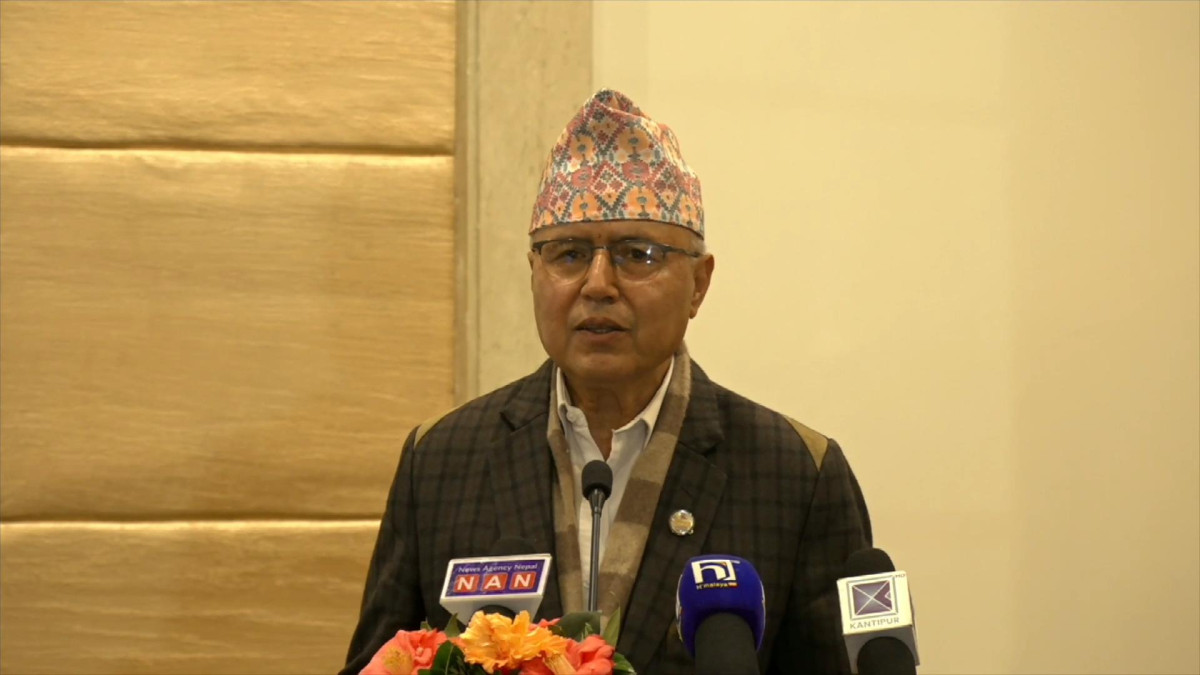
Kathmandu. KATHMANDU: The Ministry of Finance has formed a 12-member committee to provide suggestions for the budget formulation for the coming fiscal year 2083/84.
Finance Minister Rameshwor Prasad Khanal on February 28 formed the Revenue Advisory Committee under the coordination of Revenue Secretary at the Ministry of Finance.
The committee has started its work.
The Revenue Advisory Committee is coordinated by the Revenue Secretary and the members include senior professor of the Central Department of Economics, Tribhuvan University, Joint Secretary at the Ministry of Industry, Commerce and Supplies, Executive Director of Nepal Rastra Bank, 2 experts (economist and tax expert) nominated by the Ministry of Finance, President of Federation of Nepalese Chambers of Commerce and Industry (FNCCI) or senior official designated by him/her, President of the Economic Association of Nepal or senior member designated by him/her. The chairperson of the Confederation of Nepalese Industries (CNI), the president of the Nepal Chamber of Commerce or the senior office bearer designated by him, the president of the Federation of Nepalese Chambers of Commerce or the senior office bearer designated by him, and the president of the Federation of Nepal Cottage and Small Industries or a senior office bearer designated by him/her.
Similarly, the Joint Secretary of the Revenue Management Division of the Ministry of Finance is the member-secretary.
The committee’s mandate is to provide recommendations on policy and legal reforms related to income tax, value added tax, excise duty, education service tax, digital service tax, tax levied on e-commerce and other internal taxes to be levied under the Finance Act, review of tax and non-tax rates, simplification of tax process, reform of tax system, overall revenue administration and organizational structure.
Likewise, the committee will give suggestions on policy and legal reforms, procedural simplification and tax and non-tax incentives for industrial promotion and protection, trade, import and export and foreign trade, service trade, supply management and investment promotion.
Likewise, the committee will give suggestions on review of customs rates, analysis of domestic products if they need to be protected through customs rates, improvement in evaluation system, simplification of process, trade facilitation, reforms in customs laws and regulations, improvement in customs administration and organizational structure, border management, among others.
It will also provide suggestions on the control and investigation of revenue leakage, investigation of money laundering, foreign exchange regulation and legal and organisational reforms to be carried out for controlling economic crimes.
The committee will give suggestions on reforms in agriculture, agriculture production and commercialization, electricity and energy, tourism promotion and civil aviation, and conservation and management of natural resources.
The committee will provide suggestions on banks, financial institutions, insurance, remittance, capital market, cooperatives, economic policy and real estate transactions as well as the measures to resolve them.
The committee will provide suggestions on identification, rate determination and review of the areas of non-tax revenue to be collected from various agencies of the Government of Nepal, the tax system of the federal, provincial and local levels, duplication in it, management of inter-governmental tax system, reforms in the system related to revenue sharing and measures to resolve the problems and problems in this sector.
It will provide suggestions on the subject related to economic development by making a comparative analysis of the situation of international, regional and national economy on the basis of information and study available from various sources.
It will also provide necessary suggestions after expanding the scope of tax, making timely reforms in the revenue collection process, implementing new tax and holding discussions with experts, industrialists and businessmen if any tax needs to be abolished.
It will mobilize and facilitate the sub-committees under the committee and provide recommendations after studying various other reports submitted in various areas regarding revenue administration.
The sub-committees under the Revenue Consultative Committee 2082 are working on issues related to income tax, value added tax, excise duty, education service tax, digital service tax, tax levied on e-commerce and other internal taxes levied under the Finance Act, review of tax rates, simplification of process, reform of tax system, overall revenue administration and organizational structure.
Likewise, the customs sub-committee will review the customs rate, analyse the need to protect domestic products through customs rates, reform in the evaluation system, simplification of the process, trade facilitation, reforms in customs acts and regulations, reforms in customs administration and organizational structure and border management.
Likewise, the Revenue Leakage Control and Investigation Sub-Committee has been tasked with controlling revenue leakage and investigation, controlling smuggling and imports, analyzing trends of revenue leakage, steps to control leakage, foreign exchange regulation and legal and organizational reforms to control economic crimes.
The Sub-Committee on Industry, Commerce, Investment and Export Promotion has focused on industrial promotion and protection, commerce, import export and foreign trade, policy and legal reforms for service trade, supply management and investment promotion, simplification of process and tax and non-tax incentives.
The sub-committee on agriculture, energy and tourism sector has discussed the issues of improvement in agriculture, agricultural production and commercialization, electricity and energy, tourism promotion, civil aviation and conservation and management of natural resources.
Similarly, the sub-committee on banks, financial institutions, insurance, cooperatives and capital market will deal with the problems seen in banks, financial institutions, insurance, remittance, capital market, cooperatives, economic policy and real estate transactions and revenue mobilization.
The non-tax and inter-governmental revenue management sub-committee is on issues related to identification, rate determination and review of the areas of non-tax revenue collected from various agencies of the Government of Nepal, duplication in the tax system of the federal, provincial and local level tax system, management of inter-governmental tax system, reforms in the system related to revenue sharing and resolving the problems and problems in this sector.
The Macroeconomic Sub-Committee will analyse the scenario including the macroeconomic indicators and suggest the feasibility and projection of revenue mobilization and the measures to resolve or improve the current economic problems.
The anti-money laundering and investigation sub-committee will analyse and suggest the current status of anti-money laundering and investigation, the risk of money laundering and terrorist investment, the steps to be taken to prevent money laundering, revenue mobilization and money laundering, and the activities to be removed from the FATF’s grey list.
The Revenue Advisory Committee will hold its first meeting and invite suggestions from the concerned bodies, representatives of the private sector, academia, stakeholders and the general public.












प्रतिक्रिया दिनुहोस्