

Kathmandu. The massive military offensive launched by the US and Israel against Iran and the reported death of Iran’s Supreme Leader Ayatollah Ali Khamenei have plunged the Middle East into a precarious position.
The death of the second supreme leader of the Islamic Republic since the 1979 Islamic Revolution has raised serious concerns around the world about the regional balance of power, the future of its nuclear program and a possible full-scale war. World leaders have reacted cautiously, calling for restraint and diplomatic initiative.
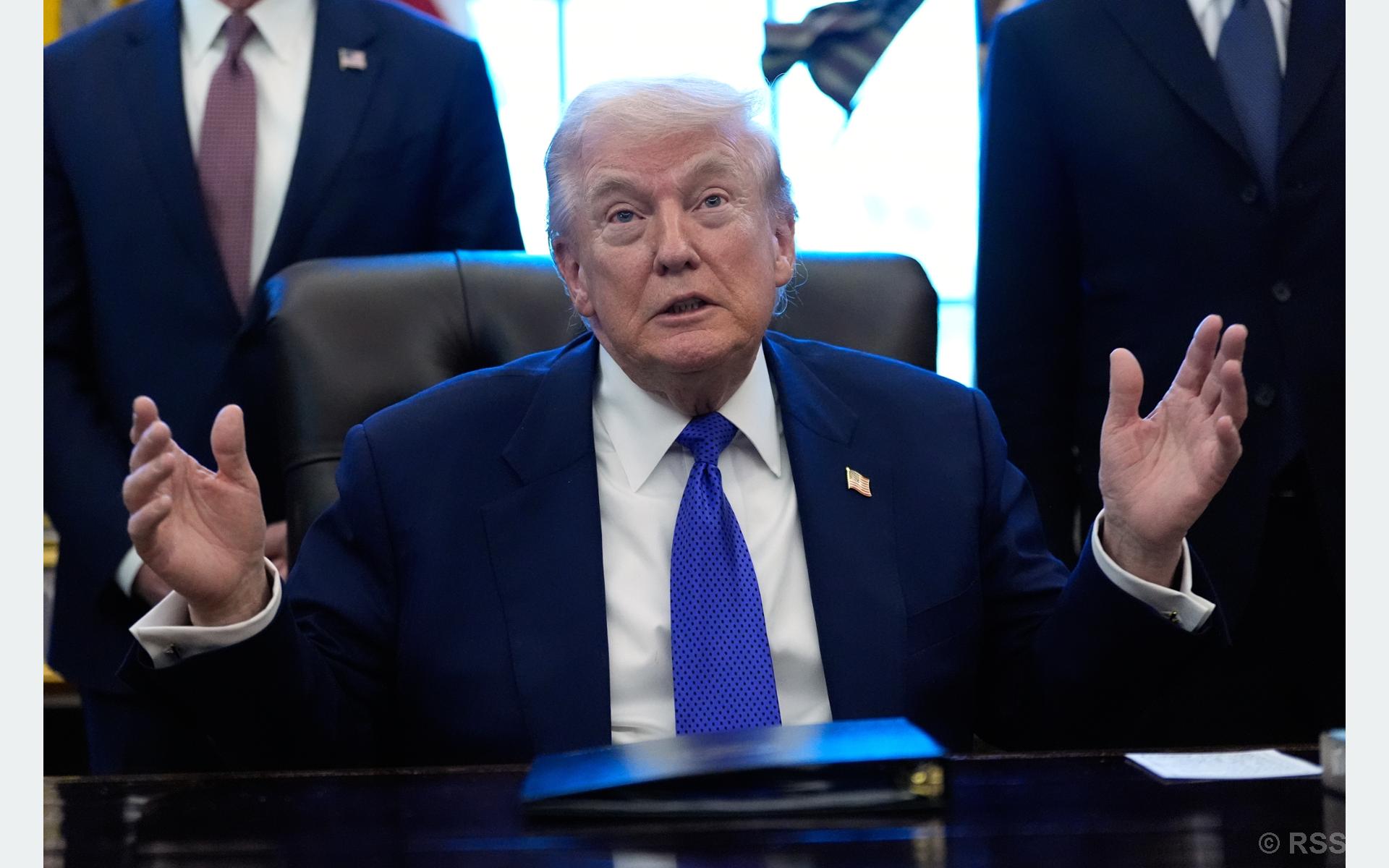
US President Donald Trump confirmed Khamenei’s death on social media, describing it as “the greatest opportunity for the Iranian people to take back their country”. Iran’s state media said the 86-year-old had died, but did not give any cause.
Israeli officials said on condition of anonymity that he had died, while Israeli Prime Minister Benjamin Netanyahu said in a televised address that there were “growing indications” that he had died after the attack on the compound.
A clear successor to Khamenei has not been publicly determined. His death has added to uncertainty over Iran’s political structure and leadership transition. Analysts have indicated that the internal power struggle could intensify and the external conflict could intensify. The UN Security Council has called for an emergency meeting on the issue.
The United States and Israel launched a major offensive against Iran on Saturday. President Trump called on the Iranian people to stand up to the current religious regime and “take control of their own destiny.” Iran said it had fired missiles and drones at US military bases in Israel and the Middle East. As regional tensions intensify, there are growing concerns about prolonging the cycle of retaliation and counter-aggression.
European powers have urged the government to choose the path of dialogue without direct support or condemnation. British Prime Minister Keir Starmer, French President Emmanuel Macron and German Chancellor Friedrich Merz issued a joint statement urging the US and Iran to return to talks immediately. He made it clear that his country was not involved in the attack, adding that the only way to resolve Iran’s nuclear program, ballistic activities and regional instability is through diplomatic means.
The Arab League called the attack a “clear violation of the sovereignty of countries striving for peace and stability”. Morocco, Jordan, Syria and the United Arab Emirates have condemned Iran’s attacks on US military bases in the region. Saudi Arabia has strongly condemned Iran’s actions and said restraint is necessary to protect regional stability. Oman, which has been mediating the talks, said the US action violated the principles of international law.
Australia and Canada have expressed support for the strike. Canadian Prime Minister Mark Carney has described Iran as a “major source of instability and terrorism” in the Middle East. Russia, on the other hand, called the attack a premeditated armed act and called for an immediate halt to military action and a return to dialogue. China’s foreign ministry said Iran’s sovereignty and territorial integrity should be respected.
At the regional level, there has been a mixed impact on people’s lives. Explosions were heard in the sky as Israel’s Iron Dome intercepted missiles in the occupied West Bank, but daily activities have not come to a complete halt. But after Israel closed checkpoints, there have been long queues at petrol pumps due to fears of supply disruptions. The Palestinian Authority condemned Iran’s attacks against Arab countries, but did not comment on US or Israeli actions.
Norwegian Foreign Minister Aspen Barth Eide said he feared the situation could escalate into a “new, all-out war”. The Nobel Peace Prize-winning International Campaign to Abolish Nuclear Weapons also condemned the attack, warning that it would increase the risk of nuclear proliferation and potential use. The European Union and the Arab League have urged all parties to exercise restraint and move towards a process of de-escalation or conflict.
The Middle East is at a critical juncture amid Khamenei’s reported death, uncertainty over a leadership transition and intense military action. The world community is aware of the risk of regional conflicts escalating further if diplomatic efforts fail.














प्रतिक्रिया दिनुहोस्