



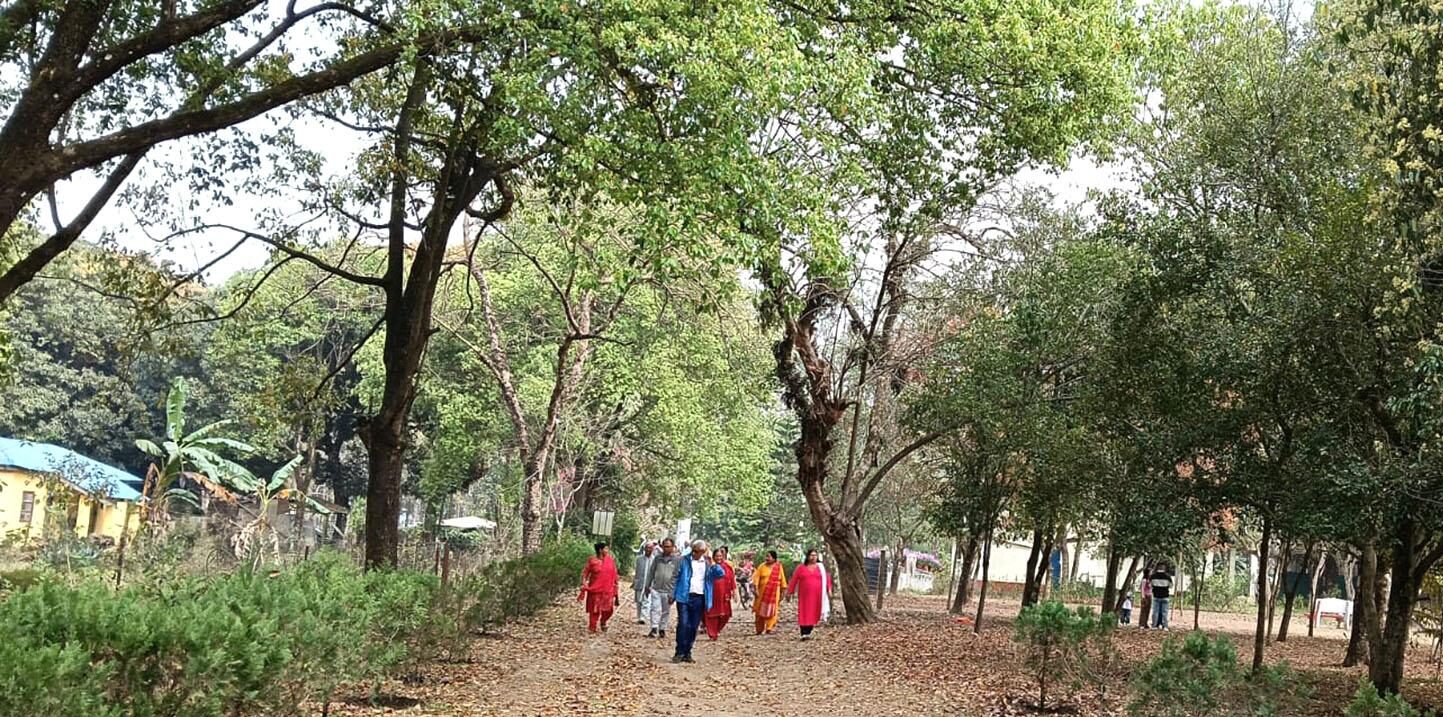
Kathmandu. Hetauda, Feb. 12: The Botanical Research Centre based in Hetauda Sub-metropolis-12, Vrindaban Botanical Park in Makwanpur district is gradually becoming the centre of domestic and external tourist attraction.
Vrindaban Botanical Garden protected by the Botanical Research Centre under the Department of Botany under the Ministry of Forest and Environment is becoming a centre of attraction for tourists for study, visit and observation.
Suman Lama, a resident of Padampokhari, Hetauda-12, said that the number of domestic and foreign tourists coming to the park is increasing in recent due to its ecological beauty, the tune of birds and the pleasant environment. “In the past, only students studying forestry used to come here”, Lama said, adding, “But now tourists have also started coming here to visit the park along with the students”. According to Lama, the sound of birds along with the flora and colourful flowers inside the botanical garden has been attracting tourists.
“Some 50 to 100 tourists visit the botanical garden on a daily basis”, said Jayaram Dahal, an employee at the Botanical Research Centre, adding, “200 to 300 tourists visit the botanical garden on Saturdays and public holidays”. “With the study, there is more attraction of people roaming in the plants, making TikTok and taking photos,” he said.
Tickets have been arranged for tourists to come to the plant. The budget has been fixed at Rs 10 for Nepali students and Rs 50 for foreign students. Visitors from SAARC countries have been charged Rs 25 while tourists from SAARC countries have been charged Rs 250 for domestic visitors, said Poudel.
Until some time ago, the centre had become an attraction for students studying forestry, botany, pharmacy and technical education and vocational training council. The concept of ceremonial plantation plot has been developed in the park since 2078 BS.
Chief of the Botanical Research Centre, Hari Raj Poudel, said that dignified afforestation has been planted on more than one hectare of land to develop a new thematic garden inside the park to attract visitors visiting the plants. “We have planted Rudraksha, Sita, Ashoka, Peepal, Chhatiban, Chiuri, Amala, Banyan, Sami, Kapur, Jackfruit, Bel, Rajvriksha, Kamda, Neem, Arjun, Mango, Jamuna, Shrikhand, Chap, Tejpat, Angasti, Dar, Darro, Tamarind, Sugandha Kokila among other plants in the vacant land inside the botanical garden,” Poudel said, adding, “The genetic resources of more than 650 species of plants have been preserved in the park.” ’
“We have been surveying, collecting and identifying plants from different places of the district and the Chure region and preserving the herbarium model of the plants,” Poudel said. There are three botanical gardens under the Botanical Research Centre, Hetauda. Of them, 415 species have been conserved in Brindaban Botanical Park, 205 species in Tistung Botanical Park and 208 species in Hill Park Daman, Poudel said.
The Botanical Study Centre has been documenting the vegetation used by various indigenous nationalities and indigenous peoples, and conducting awareness programs on the use and conservation of plants. In addition to this, they have been producing and distributing saplings, distributing various materials, researching and researching new plants and promoting ecotourism, said Poudel.
According to him, the Botanical Research Center will carry out detailed survey, collection and identification of plant heritage, conserve the genetic resources of plants, develop farming technology by conducting research on medicinal herbs, test percentage of aromatic vegetable oil, disseminate information about technically beneficial herbs, study and research on the use of traditional plants and record knowledge about the use of plant and biological resources and produce and distribute medicinal plants. It has come.
According to Poudel, they are now involved in producing quality medicinal plants, handing over technical skills by developing herbal farming technology and conserving and managing habitats of medicinal herbs. Chief Poudel said that a plan has been made to attract local people towards herbal farming by carrying out timely study and research on important herbs that are on the verge of extinction and in crisis.















प्रतिक्रिया दिनुहोस्