



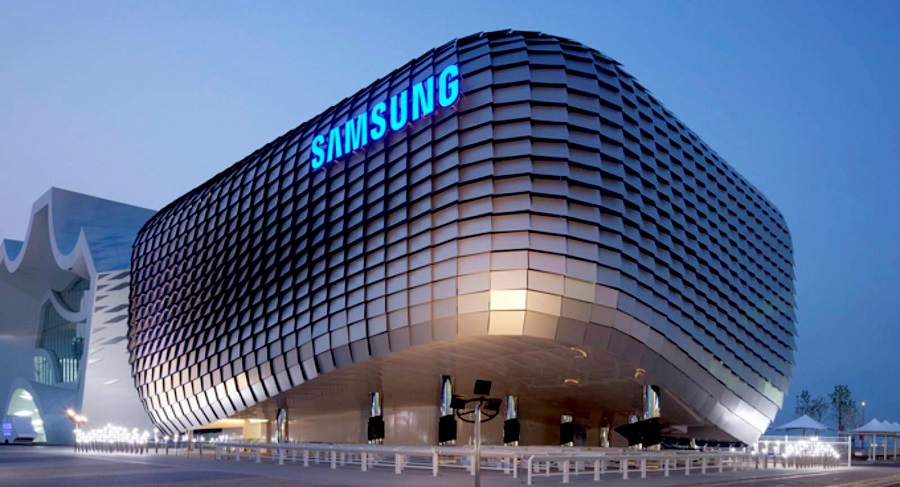
Kathmandu. South Korean tech giant Samsung Electronics on Thursday forecast a historic jump in its second-quarter operating profit as demand for memory chips related to artificial intelligence (AI) technology soared.
The company reported preliminary data on Tuesday said operating profit for the April-June period was expected to reach 89.4 trillion won ($58.4 billion). This is 1,810 percent or 19 times more than the same period last year.
Samsung, the world’s largest memory chip maker, said revenue rose significantly to 1.71 trillion won during the period. This is an increase of 129 percent compared to the previous year. The company said it would release its detailed financial report later this month.
The booming demand for high-performance memory chips used in data centers needed for AI has pushed the revenues of South Korea’s major semiconductor companies to new heights. This is the reason why Samsung was able to avert a possible big strike after agreeing with the workers on bonuses earlier.
Kim Dae-jong, a professor of business administration at Sejong University, said Samsung’s projected profit was the biggest quarterly operating profit in the company’s history.
According to him, if the company can maintain such performance, it can further strengthen its position as the world’s leading manufacturing company. But he said the next challenge will be how long the high demand for AI-related memory chips will last. According to him, although the demand is expected to be safe until next year, the situation after that is not certain.
Samsung’s share price fell nearly seven percent in early morning trading on Tuesday despite the positive financial projections. The overall decline in Seoul’s Kospi index also had an impact.
Samsung’s preliminary profit estimate was 6.2 percent higher than analysts’ average forecast, South Korea’s Yonhap news agency reported citing market analysis.
Samsung and domestic rival SK Hynix are building a new semiconductor manufacturing facility in southwestern South Korea in a public-private partnership worth about eight trillion won. Prof Kim said that it is still uncertain whether Samsung will be able to maintain its current income level even after the completion of the project.
Some analysts point to a potential slowdown in investment in AI infrastructure as a key risk to the memory chip boom. But M.S. Hwang, an analyst at Counterpoint Research, said it was too early to conclude a broader recession because the gap between manufacturers’ supply capacity and consumer demand remains significant. He says that while some competing companies’ data center projects may slow down, that doesn’t necessarily signal that overall AI infrastructure investment has slowed down.
Manufacturers who have prioritized high-value chip production for the AI industry have scaled back production of common chips used in mobile phones, laptops and other consumer electronics. It has also been analyzed that the price of these devices has increased.
The issue of how to use the increased tax revenue from the semiconductor industry in South Korea is also at the center of the public debate. Kang Hun-sik, Principal Secretary to the President, said the additional revenue generated from the tax revenue would be invested in big projects in AI and the semiconductor industry, which could help create housing, startups, and employment opportunities for youths.
Meanwhile, the jacket belonging to SK Hynix went viral on social media this year as a symbol of wealth and success. Various satirical material portrayed it as a “golden ticket” to a luxurious lifestyle and good marital prospects. According to Yonhap, the ‘Desire Index’ prepared by the matrimonial organization Sunu shows that employees of Samsung and SK Hynix are as attractive as doctors and lawyers.
















प्रतिक्रिया दिनुहोस्