

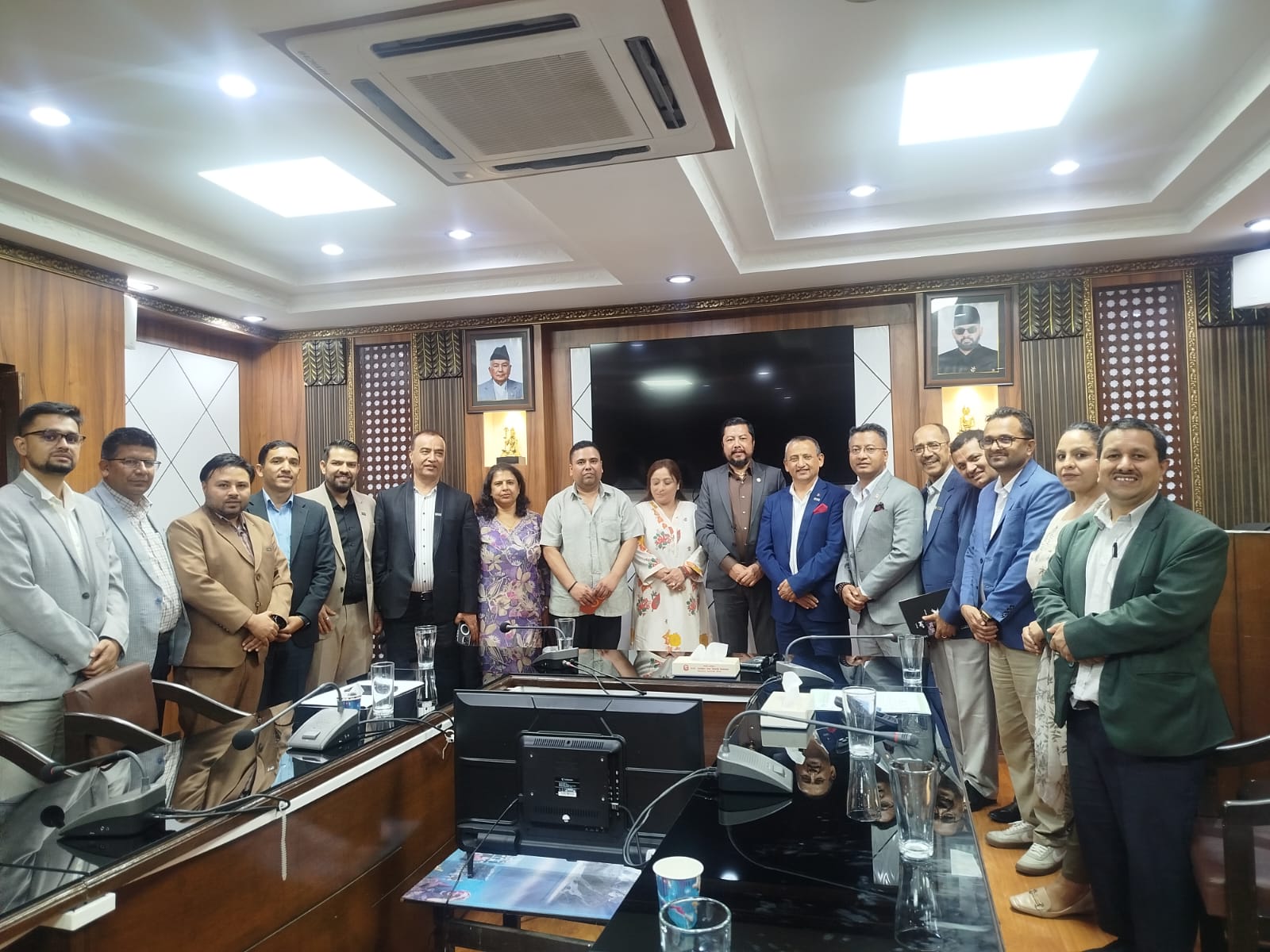
Kathmandu. The Independent Power Producers’ Association of Nepal (IPPAN) has submitted a 38-point demand to Minister for Energy, Water Resources and Irrigation Biraj Bhakta Shrestha, calling for the participation of private sector in electricity trade and construction of transmission lines.
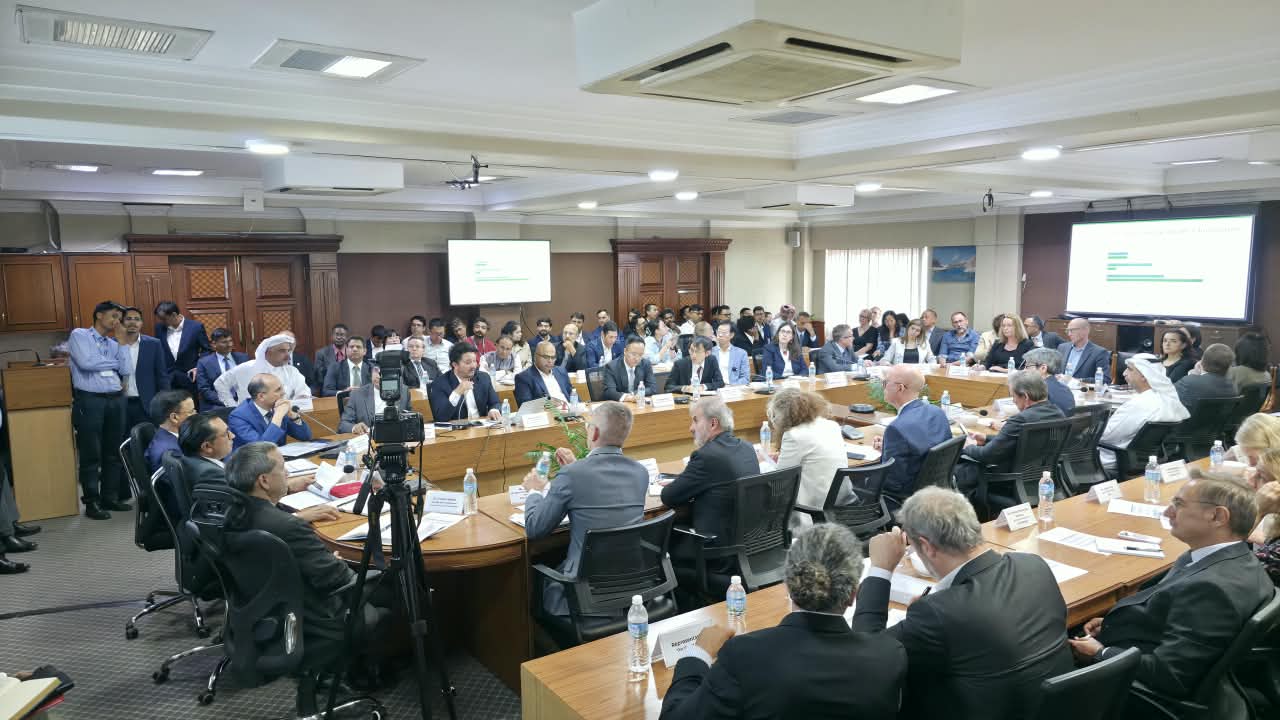
At a program organized to congratulate the newly elected Executive Committee of IPPAN today, the Energy Minister proposed to address the problems seen in the energy sector along with policy-level and implementation problems to resolve the problems seen in the energy development and the country.
On the occasion, Minister Shrestha urged the government to move ahead by looking at economic engineering from the perspective of the broader economic development, analyzing the contribution of the energy sector to Nepal. “The energy sector has made a huge contribution to the economic and social sectors and it needs to be analyzed in a big way. “It is necessary to analyze the contribution of energy sector in an integrated manner. ’
Stating that the Ministry was moving ahead for energy development with wider participation of stakeholders, he said that a high-level committee comprising the private sector should be formed and move ahead with a clear political line for the same. “The issue of increasing the participation of the private sector in electricity trade has already progressed a long way and although a large budget has been allocated for the construction of the transmission line this year, it will not be possible to attract the private sector to the project from next year,” he said. “The energy sector has to approach Singha Durbar for resolving policy-level and implementation-related problems rather than constructing projects. He was of the view that the government and the private sector should move ahead jointly by forming a committee regarding the market for electricity trade. He also informed that the Ministry of Energy has proposed to the Ministry of Foreign Affairs to appoint Energy Attaché in India for electricity trade.
Minister Shrestha said that the Ministry was moving ahead with the intention of making the electricity bill an umbrella act that would incorporate all topics related to energy.
He argued that the private sector’s attention should now be focused on power trade, transmission, distribution, market and consumption along with production. “Now, we should move towards comprehensive and integrated development by studying on integrated trade management and integrated system management. He said, “The government should move ahead by collaborating between the private sector and the government by identifying the current policy gaps.” ’
Private sector to generate 30,000 MW in 10 years if facilitated : IPPAN Chairman
On the occasion, IPPAN president Dangi said the private sector was ready to achieve the government’s target of generating 30,000 megawatts within 10 years if the problems seen in energy sector were addressed by the government.
According to him, the 50-point declaration was issued in the 205th meeting of the newly elected work committee of IPPAN held on July 3, 2008 and if the points mentioned in the declaration were addressed in time, the private sector was ready to move forward with full commitment to meet the national goal of 30,000 MW generation, energy export, consumption enhancement, green development and economic prosperity.
Expressing gratitude to the government, through policy, budget and 100-point action plan, the PPA below 10 MW will be completed in 180 days, electricity trade and transmission line permit to the private sector and determination of wheeling charge. He said that the RCOD’s deadline has been facing problems in energy development.
Stating that it would not be wrong to revoke the license for financial management in 2 years despite knowing that the Nepal Electricity Authority (NEA) has not signed the PPA and the Ministry of Forest and Environment has delayed it, he said that all problems should be resolved by forming a high-level committee as the private sector is ready to cooperate with the government. Urging the government to immediately resume the process of dematerializing the IPO÷right issue that has been stalled since May 2080 and the process of dematerialization of shares that have been stalled since January 2081 and to put an end to the enforcement of double engine force against the law, he said the private sector would be involved in the energy sector in a dignified and professional manner and the IPPAN would not protect them by doing wrong and distorted things.
Points of Demand placed before the Minister of Energy
}
main demands
a. Policy and Legal Reforms
1. Formulate clear guidelines for electricity trade with neighbouring countries and create an environment for B2B trade by issuing license for electricity trade.
2. To implement policy decisions allowing private sector to construct transmission lines.
3. Make the bills under consideration in the parliament friendly to the private sector and pass them within a year.
4. Make arrangements for the construction of common transmission line for all projects in the same river corridor.
5. To take initiatives to jointly advance partnership, coordination and collaboration between the government and private sector by formulating a Private Sector Promotion Fund working procedure under the leadership of the Department of Electricity Development to build overall dignity with the enhancement of positive sentiment in the society about the energy sector.
6. Initiate through the Ministry of Home Affairs for a separate security strategy for the security of the project.
7. To make the limit of return on self-capital investment-friendly.
8. National Energy Development Authority should be formed with the declaration of the Decade of Nepal Energy Development and Consumption Enhancement and NEA should be developed as a one-door system.
9. The license period of the electricity project should be made at least 50 years, taking into account the nature of the long-term investment, the loan repayment period and the return structure.
b. Power Purchase Agreement (PPA) and its amendments
}
10. PPA up to 10 MW will be opened from coming July 2018 and PPA will be opened for 16,000 MW projects that have been stalled by the Nepal Electricity Authority (NEA) after applying for PPA.
11. To prepare a draft of bankable PPA with provision of hydrology at par with international standards and to take initiative to adopt Nepal Electricity Authority.
12. To fix separate and reasonable rates for storage and pump storage projects.
13. To increase domestic consumption by providing cheap rates to industrial customers and to arrange off-peak pricing.
14. To make the grid installation process of private projects easy, simple and non-discriminatory.
15. Initiate to make arrangements for compensation to the investors to prevent losses caused by the delay in the transmission line of the Nepal Electricity Authority.
16. PPA rate will be reviewed on the basis of price increase. Arrangements will be made to compensate the investors if the Nepal Electricity Authority does not take the electricity.
17. The tendency to form contingency and take-and-pay PPAs by linking PPAs to transmission lines will end.
c. Closing Trade Date (RCOD) and PPA Review
18. Extend the license period of the projects that have been delayed due to various agencies of the Government of Nepal and extend the deadline of the Final Trade Date (RCOD) by five years in a policy manner and facilitate the private sector who are in trouble.
19. The PPA rate should be reviewed on the basis of the Nepal Rastra Bank’s price increment index, which has not been increased for the last 15 years (2068 B.S.) by analyzing the fluctuation in the dollar price, the increase in the price of machines and equipment.
20. Such a provision should be removed as the practice of linking PPAs to broadcasting infrastructure or other uncertain terms discourages investment.
d. Investment and Financial Reform
21. To facilitate the issuance of right shares by directing the regulatory body.
22. To direct the Nepal Rastra Bank to announce a special refinancing package for sick and small hydropower projects.
23. To take initiative to completely scrap the contingency of the completed projects in all projects.
e. Broadcasting and Infrastructure Construction
24. Making grid access simple and developer-friendly by making the construction of transmission lines a matter of national priority, the private sector would be allowed to construct transmission lines under the public-private partnership (PPP) model.
25. To provide a just and scientific wheeling charge.
26. Mobilize long-term financial sources, green finance and infrastructure fund through the private sector for broadcasting infrastructure.
f. Consumption and energy diversification
}
27. To make ‘Made in Nepal’ products competitive by providing cheap electricity to industries.
28. Initiate policy decisions to replace LPG and diesel with electric cooking and increase industrial use.
29. Prioritise battery storage for grid stability.
30. To conduct research and pilot project on green hydrogen.
31. There is a need for a concrete program to increase the use of electricity in industry, electric vehicles, electric cooking system, agriculture, tourism and service sectors.
Environmental and Social Responsibility
31.To initiate legal arrangements for projects of less than 200 MW to be made IEA.
32. Initiate the implementation of the Sunset Law by completing the deadline of Environmental Impact Assessment (EIA/IE) approval within 3-5 months.
33. To clearly demarcate the conservation area and buffer zone and allow the project to be constructed as per the CO-EXIST principle.
j. Other
34. Relief should be provided to the projects affected by climate change and natural disasters like floods and landslides.
35. Nepal Electricity Authority (NEA) should be segmented and a competitive energy market should be established.
36. Initiation should be taken to immediately resume the process of dematerialization of shares that have been stalled since May 2080 and the share dematerialization process that has been stalled since May 2081.
37. In order to clarify the structure of project development, construction, ownership, investment and share trading, the definition and rights and responsibilities of developers and investors should be delineated.
38. In order to reduce the cost of energy projects, the problems related to insurance access, premium and reinsurance should be addressed by making the tax-fee structure practical.










प्रतिक्रिया दिनुहोस्