

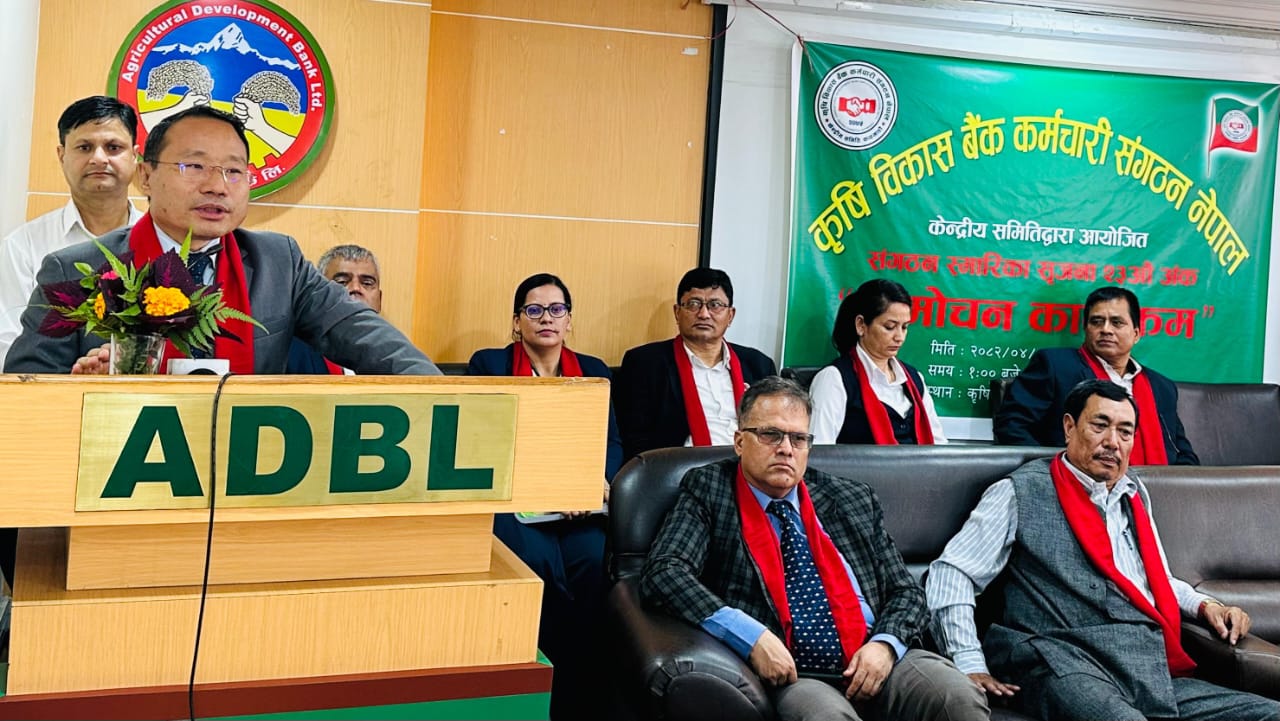
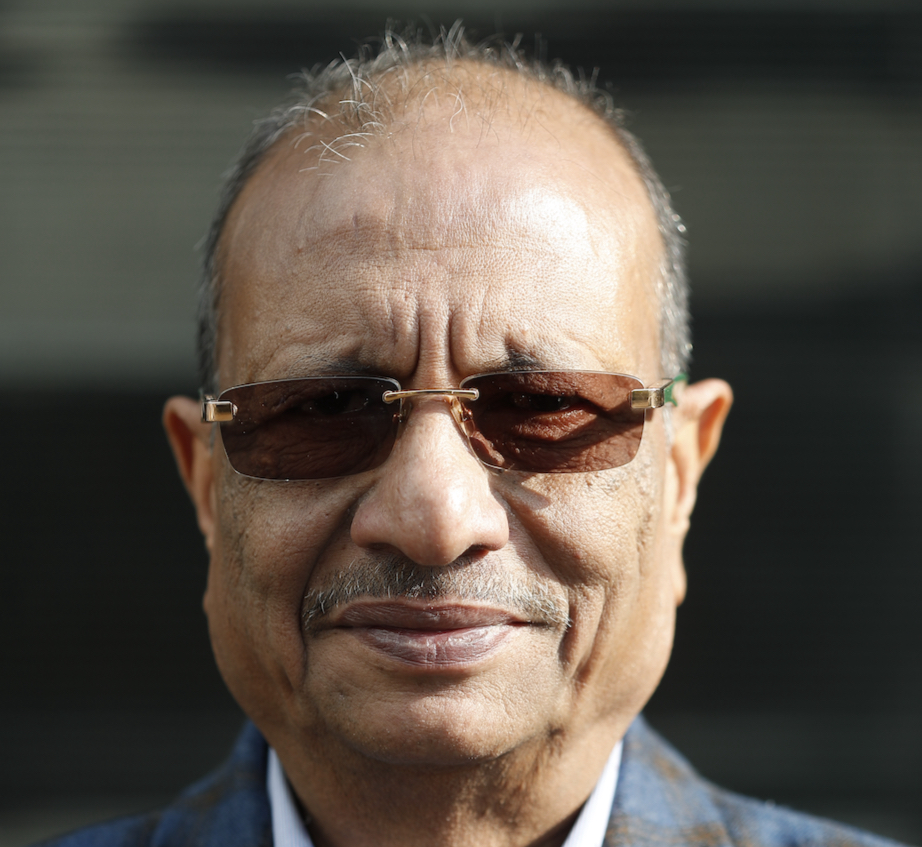
Kathmandu. Former Finance Minister and CPN (Maoist Centre) Deputy General Secretary Barshaman Pun has said that nearly two-thirds of the government formed by two major parliamentary parties has failed to make significant improvements in the sector of the economy in one year.
Speaking at a programme organised by the Agriculture Development Bank Employees’ Association here today, Pun said the economy could not be revived as the government had not worked to improve the economy.
According to him, the budget for the fiscal year 2082/83 BS has not brought a policy programme to meet the challenges of the economy. He said that the budget has been brought in a regular and traditional manner, so no matter how much the government claims, there is no sign of significant improvement in all the indicators of the economy. Pun, however, said that the monetary policy unveiled by the Nepal Rastra Bank (NRB) recently has raised hopes.
Pun said the government has failed to address the problems seen in the flow of loans of banks and financial institutions. According to Pun, the central bank draws Rs 50-60 billion from banks almost every month and the market has not been able to recover due to the increase in the reserves of investible funds to Rs 700 billion.
“The two-thirds government could not give hope in the economic sector. The formation of a two-thirds government is a unique situation in itself. However, such a numerically strong government could not bring a good finance policy,” pun said, adding that the monetary policy could not have done much as the finance policy was not good. However, the governor has brought comparatively better monetary policy. ’
Although the overall finance policy will keep the market moving, pun pointed out the danger of focusing investment in unproductive sectors. He said that the stakeholders should be alert now that it could push the economy further into trouble in the future.
He pointed out that although the refinance policy brought by the central bank after the COVID-19 pandemic is good and relevant, entrepreneurs should be able to learn from the experience of investing money through refinance in unproductive sectors and the economy has fallen.
“After corona, policies like refinance came well with the aim of improving the economy. The economy went into a ‘slow down’ for the last three years due to the investment of refinance money in the unproductive sector, pun said, adding, “We should be aware in time that the economy, which is trying to return to the rhythm of monetary policy, will go back to trouble.” ’
Stating that more than 60 per cent of the loans disbursed from banks and financial sectors are used by limited people, Pun stressed the need for the majority to take advantage of it. Pun said credit flow in agriculture, industry and service sectors should be higher, but the returns are low due to the large share of trade.
“A small number of people have 60 per cent credit. Due to limited financial access of only limited households, more credit has been disbursed in the unproductive sector,” he said, adding that the credit flow to targeted sectors such as production and services was not satisfactory. Despite the flow of credit more than the size of gdp, it has not been able to make any contribution to the economy. ’
In a different context, he said a debate was underway in parliament on whether to separate bankers and businessmen in the under-law Banks and Financial Institutions Act (BAFIA). According to him, the political parties would come to a conclusion on the basis of international practice, country’s needs and practicality.
“There is also pressure to separate bankers and investors from international experience,” pun said. In the context, Pun clarified that seven provinces and 753 municipalities were not only a means for political and administrative convenience but also an economic unit. According to him, banks and financial institutions should reach every local level as per the spirit of federalism.
Former Finance Minister Pun said his party was of the view that the provision brought by the government in the budget for the current fiscal year by making the Employees Retirement Fund mandatory was not in the interest of the employees. In the budget, it has been made mandatory for employees to be enlisted in the Social Security Fund. “The government has brought a mandatory policy in the budget to bring the Employees Retirement Fund to the Social Security Fund. It should be made voluntary,” he said.

















प्रतिक्रिया दिनुहोस्