

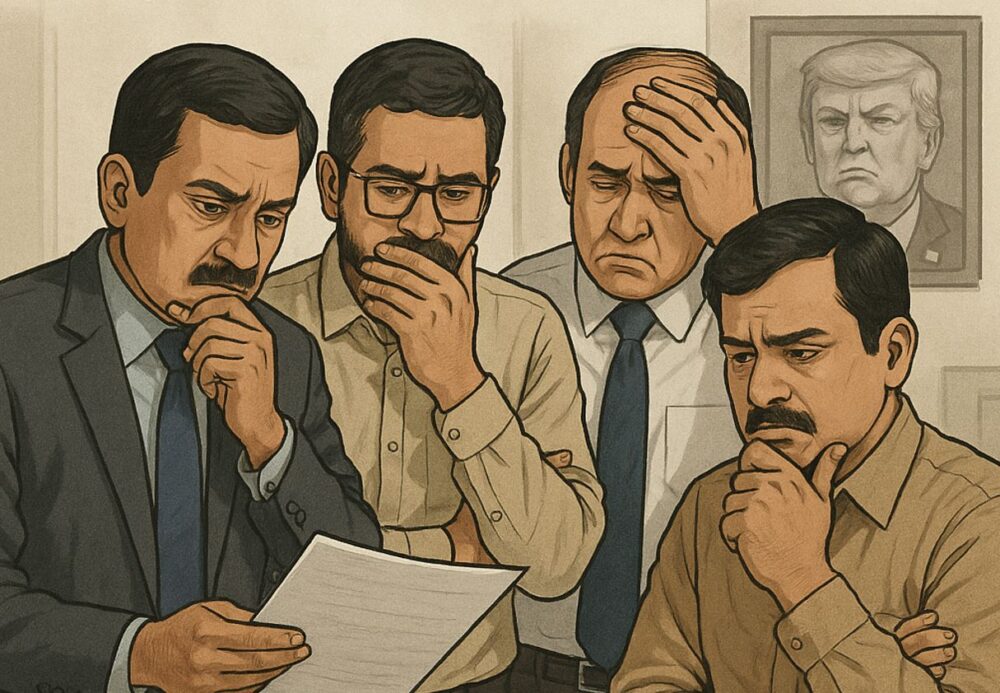
Mumbai. Indian exporters are exploring options to mitigate the consequences of US President Donald Trump’s threat of a tax hike against the world’s most populous nation.
If India continues to buy Russian oil, many have warned of serious job losses after Trump said he would double new import duties from 25 per cent to 50 per cent in an attempt to curb Moscow’s income for Russia’s military offensive in Ukraine.
Garima Kapoor, economist at Elara Securities, said, “At 50 per cent customs duty, no product in India can have a competitive advantage. ’
India, the world’s largest importer of crude oil, has until August 27 to look for options to replace nearly a third of its current oil supply from abroad.
Although New Delhi is not an export powerhouse, it exported goods worth about $87 billion to the United States in 2024. Now that 50 per cent customs duty threatens to overturn labour-intensive industries with low margins ranging from gems and jewellery to clothing and seafood.
The Global Trade Research Initiative expects U.S. sales in areas such as clothing to decline by 60% in 2025.
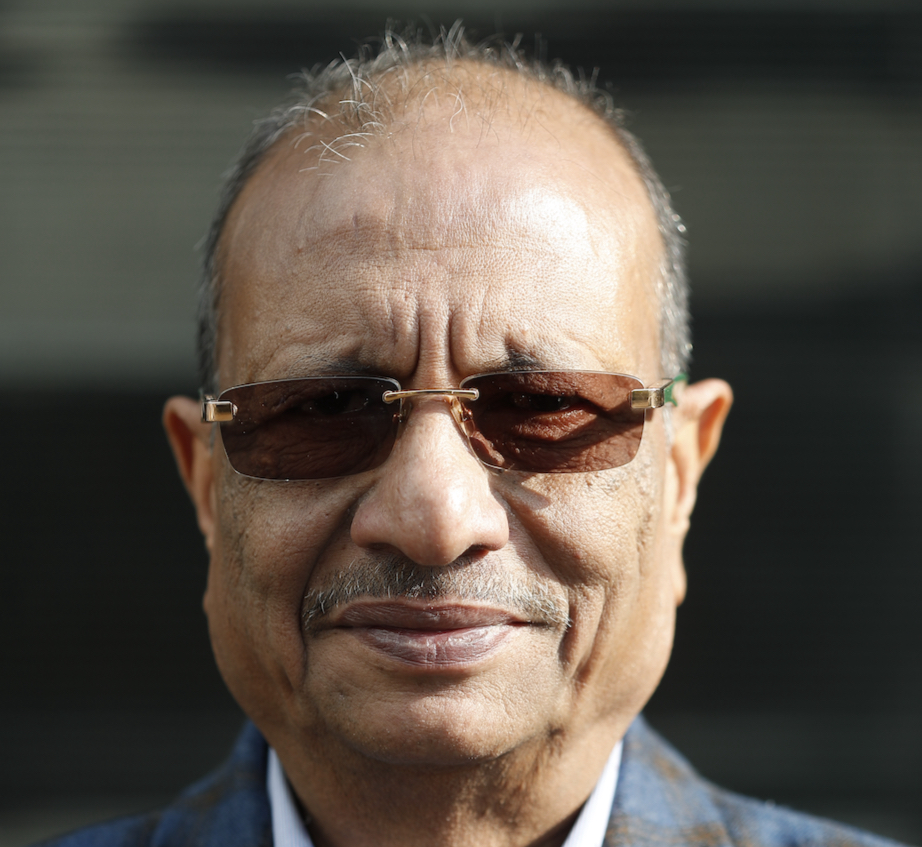
Exporters said they were racing to meet orders ahead of the deadline. Vijay Kumar Agarwal, chairman of Creative Group, a Mumbai-based textile and garment exporter, said, “We are transporting anything we can before August 27. His Mumbai-based textile and garment company has almost 80 per cent dependence on the US market.
Agarwal, however, warned that it was only an immediate cure. Transporting goods before the deadline will not solve the problem, he said.
“If this is not resolved, there will be chaos,” he said. He said he was concerned about the future of 15,000 to 16,000 employees.
“It’s a very disappointing situation… It will be a huge loss of business,” he said.
Product to be moved abroad
Negotiations to resolve problems rely on geopolitics away from the reach of business. Trump is set to meet Russian President Vladimir Putin on Friday. This will be the first direct meeting between the presidents of the two countries since Russia launched a full-fledged invasion of Ukraine in February 2022.
New Delhi, which has long-standing relations with Moscow, is in a critical state. Prime Minister Narendra Modi has called on both Putin and Ukrainian President Volodymyr Zelensky to resolve the conflict “peacefully”.
Meanwhile, the impact of US customs is already being felt in India. Traders said new orders from some U.S. buyers have started pouring in. It threatens the future trade of millions of dollars and the livelihoods of millions of people in the world’s fifth-largest economy.
With global manufacturing operations, some of India’s largest apparel manufacturers are looking to move their US orders elsewhere.
Top exporter Pearl Global Industries said indian media has been asked by some of its US customers to produce orders in low-duty countries such as Vietnam or Bangladesh. Companies also have production facilities in those countries.
Leading apparel manufacturer Gokaldas Export told Bloomberg it could increase production in Ethiopia and Kenya, which have 10 percent tariffs.
Recently, Moody’s warned that for India, a “very wide tariff gap” could “reverse some of the gains made in recent years to attract related investments”.
India’s gems and jewellery industry exported goods worth more than $10 billion last year and employed millions of people.
“Nothing’s happening right now, everything has come to a standstill, new orders have come to a halt.” Ajesh Mehta of NavinChandra Exports said, “We expect 150,000 to 200,000 workers to be affected. ’
Gems and other expensive non-essential items are at risk. “The 10 per cent customs duty was absorbable (not 25 per cent, let alone 50 per cent,” Mehta said, adding, “At the end of the day, we trade in luxury products, when costs go beyond a point, customers will deduct.” ’
Seafood exporters, who have been asked by some U.S. buyers to halt shipments, are hoping for new customers.
“We’re looking to diversify our markets,” said Alex Ninan, a partner at Baby Marine Group. We have to push our products to alternative markets, such as China, Japan… Russia is another market that we are really looking at. ’
However, he warned that it was not that easy. “You can’t create a market all of a sudden,” he said.














प्रतिक्रिया दिनुहोस्