

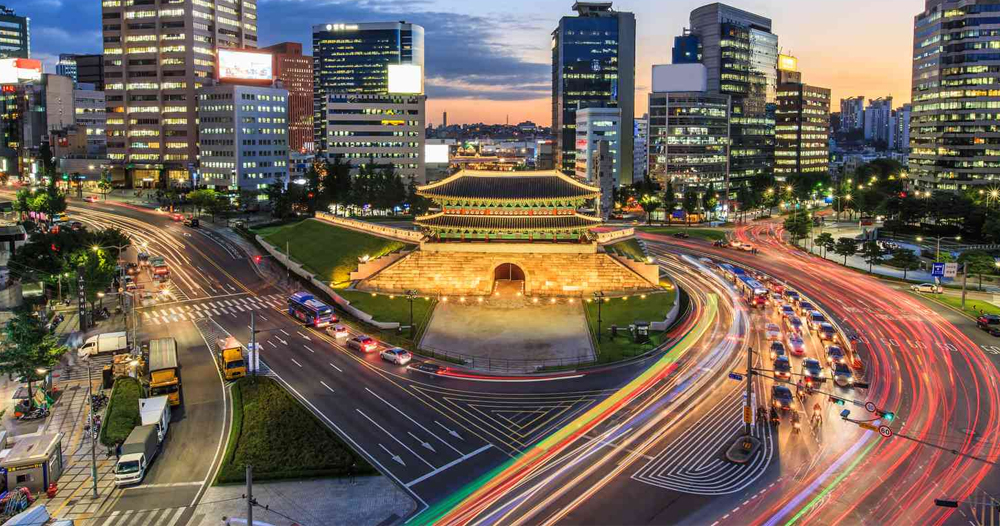
Seoul. South Korea’s new government led by President Lee Jae-myung has proposed a future-oriented and technology-friendly expansion-oriented budget for 2026. The budget has been prepared to give priority to artificial intelligence (AI) and research and development sectors.
President Lee chaired a cabinet meeting on Friday and approved his government’s first full annual budget, proposing a total of 728 trillion won ($524.2 billion) for 2026. This is an increase of 8.1 percent compared to the previous year.
If this budget is approved by the Korean Parliament, the growth rate of spending in 2026 will be higher than the previous years. In 2025, the growth rate was 2.5 percent, in 2024 it was 2.8 percent and in 2023 it was only 5.1 percent.
President Li has been pointing out the need to expand investment in sectors such as AI, renewable energy, biomedical, defense industry and modern production systems for the country’s long-term economic growth.
In this context, 35.3 trillion won ($25.4 billion) has been allocated for R&D for 2026, an increase of 19.3 percent over the previous year. This increase is considered to be the fastest in South Korea’s modern history.
A budget of 72 trillion won ($51.9 billion) has been allocated to build an “innovative economy driven by cutting-edge technology”, up 41 per cent from last year.
Of that, 10.1 trillion won ($7.3 billion) has been set aside for physical AI such as AI robots, AI vehicles, AI ships, AI chips, AI factories and AI home appliances. The remaining 44.3 trillion won ($31.9 billion) will be used to build technology development and investment funds for future development sectors.
President Lee has vowed to transform South Korea from an “intense follower” to a “first promoter” strategy and include it among the world’s top three AI powers.
The budget for energy, industry and medium-sized enterprises has been increased by 14.7 percent to 32.3 trillion won ($23.3 billion), which will support the continuation of actions generated after the US-South Korea tariff negotiations and renewable energy transformation.
Defense spending for 2026 has been increased by 8.2 percent to 66.3 trillion won ($47.7 billion), as well as the budget allocated for health, social security and employment. It grew 2 percent to 269.1 trillion won ($193.8 billion).
Budget increases for environment and culture, sports and tourism have been proposed by 7.7 percent and 8.8 percent respectively.
Total revenue (from tax and non-tax sources) is estimated to be 674.2 trillion won ($485.5 billion), up 3.5 percent from the previous year.
Excluding the Social Security Fund, the fiscal deficit ratio is estimated to be 4% of the country’s GROSS domestic product (GDP) in 2026. It will reach 0 percent, which is more than 2.8 percent this year.
The central government’s debt-to-GDP ratio is expected to increase from 48.1 per cent this year to 51.6 per cent in 2026.














प्रतिक्रिया दिनुहोस्