

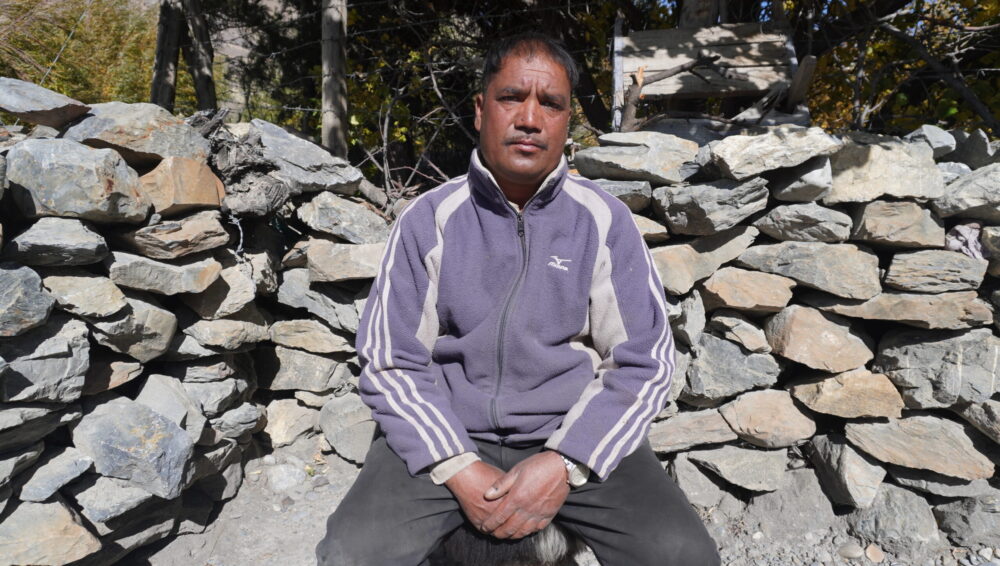
Mustang. Nowadays, the price of mountain goat meat is Rs 1,300 per kg in meat shops. Hearing this price, many people may think that it is possible to keep mountain goats by investing 1,000 rupees! But Purna Bahadur Nepali of Jomsom in Gharpajhong Rural Municipality-4 had started mountain goat rearing five years ago with an investment of Rs 1,000.
Some people from the Nepali and Dalit communities had reached there after the Himalayan Sub-Project started providing subsidies to people who wanted to do entrepreneurship. A total of 30 families of Jomsom in Gharpajhong-4 proposed collective mountain goat rearing. The project approved the proposal and secured the grant.
A total of 30 Dalit households, including Purna Bahadur, received three mountain goats for each household. When I bought a mountain goat, I paid one thousand rupees to the beneficiary household. The rest of the money was provided by the sub-project. In the beginning, 30 Dalit households reared mountain goats in Sagol.
However, it was difficult to raise mountain goats collectively. Some of the goats began to disappear and die. After less than a year, the number of mountain goats purchased on grant started dwindling, so they decided to share it alone. When Purna Bahadur took the division from Sagol, it was divided into two.
Purna Bahadur added 10 more to the two mountain goats that fell to him. Then began Purna Bahadur’s business journey of mountain goat rearing. His goat farming is now fascinating. There are currently more than 130 mountain goats in his farm. This year alone, Purna Bahadur sold more than 20 mountain goats for Rs 40,000. “There is a lot that can be sustained, but it is difficult to protect ourselves from snow leopards and other wildlife,” he said. ’
He has also hired a herdsman to rear mountain goats. Out of 30 households that started mountain goat rearing, only seven households are now engaged in mountain goat rearing. The main purpose of mountain goat farming is to produce manure and lamb. According to Purna Bahadur, he now earns more than Rs 200,000 by selling 200 huts of fertiliser every year. Purna Bahadur said, “The money from the sale of fertiliser is used to cover the expenses of buying feed and giving it to the shepherds. ’
According to Purna Bahadur, he earns more than five lakh rupees annually. He pledged to continue livestock rearing along with agriculture at a time when many people have given up the mountain goat rearing business due to climate change and wildlife risk in recent period.












प्रतिक्रिया दिनुहोस्