

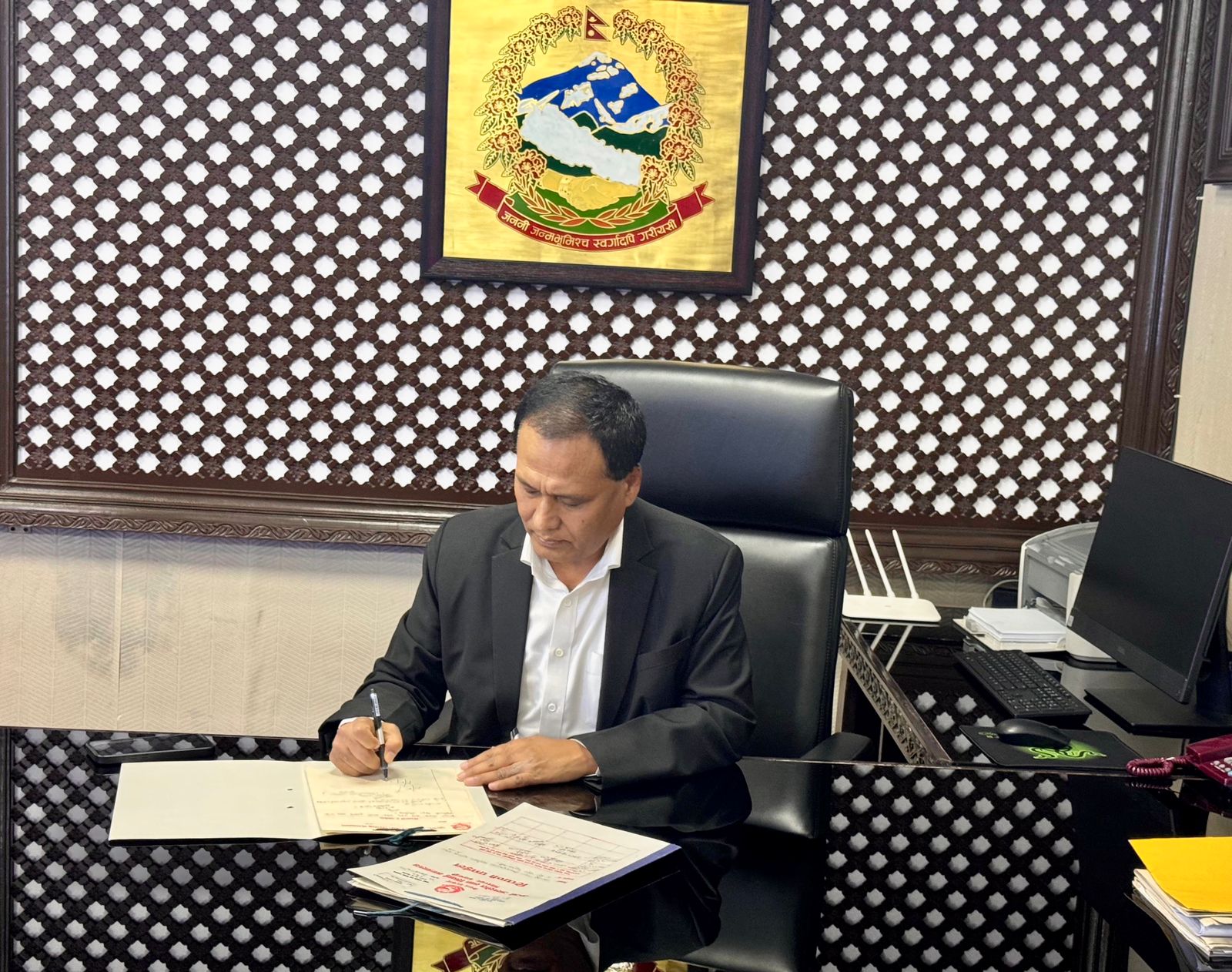
Kathmandu. The government has amended and implemented the National Building Code for the construction of earthquake-resistant buildings.
The provisions in the old code are impractical and not in line with international standards, complexity in design calculations and unnecessary cost of construction have been revised. The revised National Building Code has been published in the Nepal Gazette on Thursday. The new code will not only provide guidelines for the construction of underground structures like dam, power house and tunnel of hydropower projects.
Minister for Urban Development Kul Man Ghising said that the revised code code is a milestone to build a secure future for the country. Minister Ghising expressed confidence that the buildings constructed as per the new code would minimize the loss of life and property due to earthquakes in the coming days. He urged the local governments, engineers and the general public to strictly implement the code in the construction of new buildings.
A new seismic zoning map has been prepared by incorporating all 753 local levels in the revised code. It gives clear guidelines on the design according to the location. A special map of the type of soil of the Kathmandu Valley has been included in the improvement of soil classification. The new load combination formulas have also been updated to test the stability of load combinations, including snowfall, fluid pressure and soil pressure.
To improve the resilience of the structure, new standards have been incorporated to make the buildings more energy efficient during earthquakes. Improvements have been made to the control of softstory and torsional irregularities for the stability of tall buildings. This will reduce the cost of building construction.
The new CODA has been prepared by incorporating the suggestions received from the stakeholders including professional designers, Structural Engineers Association (SYNEP), professional societies, university academics and others. The building code has also been technically revised by studying the provisions of codes used by different countries and discussing with internal and external experts in order to make the building code easy and easy to use by the users as per the time.
There were technical difficulties in the design due to the lack of some international standards in the old code. The revised code is expected to reduce earthquake damage, enhance safety of human life, maintain uniformity and transparency in design and construction, facilitate scientific evaluation in building approval process at local level, reduce long-term cost, simplify maintenance and provide clear guidelines for engineers and designers.














प्रतिक्रिया दिनुहोस्