

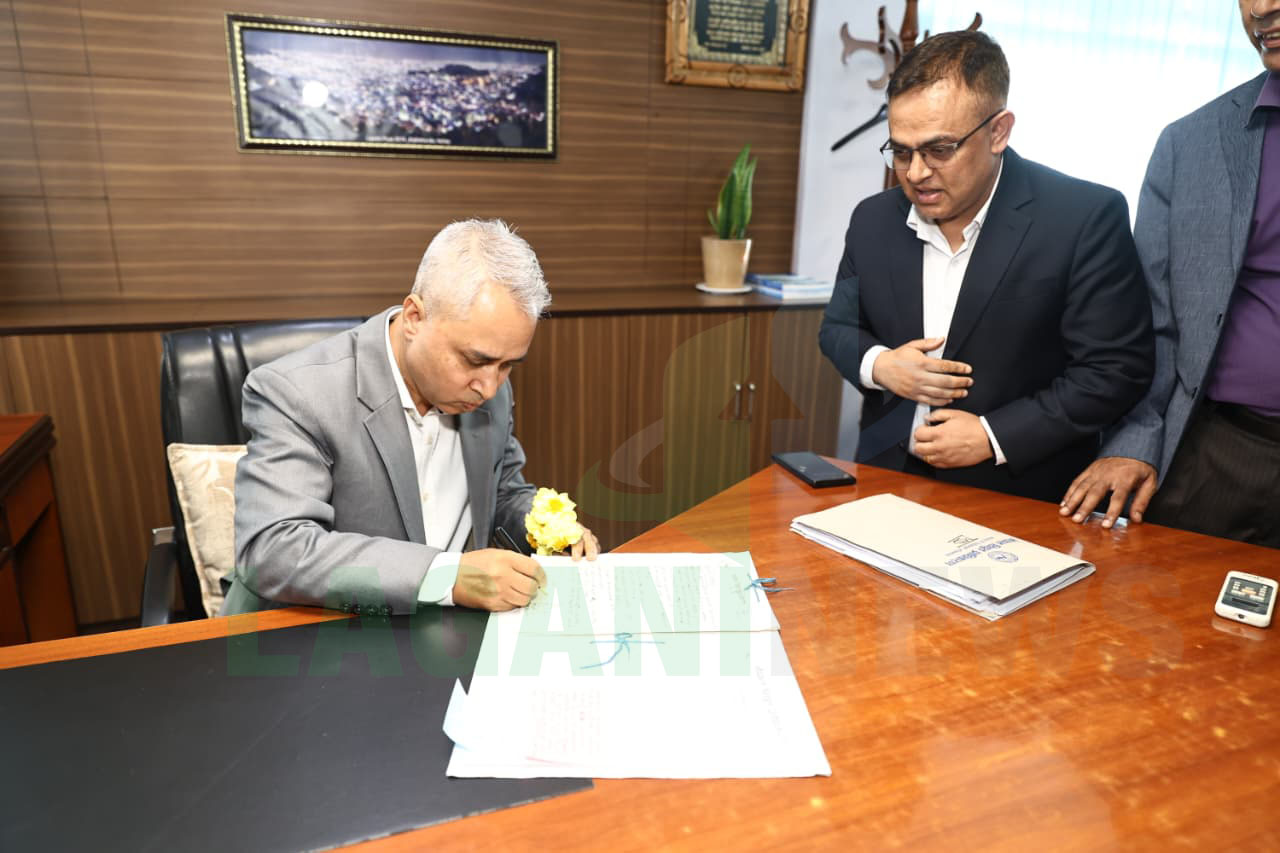
Kathmandu. Nepal Electricity Authority (NEA) has clarified the agreement between Nepal Electricity Authority (NEA) and PTC India. The NRA made this further clear in a meeting of the Public Policy and Delegated Legislation Committee under the National Assembly on Monday.
Nepal’s national electricity system has a predominance of river-based hydropower projects, so the surplus electricity consumed during the rainy season is exported. Nepal is compelled to import electricity from neighbouring India for managing electricity demand for a few months during the dry season. Nepal exported 2.38 billion units of electricity in the last fiscal year and imported 1.68 billion units of electricity from India.
NEA has been importing electricity from India’s Energy Exchange Market (IEX) through day ahead, real-time market and power exchange mechanism. However, due to the increasing demand for electricity in the last few years, Nepal has agreed to purchase electricity from India only during solar hours (6 am to 6 pm) and during peak hours.
NEA’s Managing Director Manoj Silwal said that the agreement has been reached to purchase power in the best option among the available options as there is a necessity of purchasing electricity in advance for the management of dry season electricity as the same situation is likely to persist in the current fiscal year.
According to a meeting of the Public Policy and Delegated Legislation Committee of the National Assembly on Monday, Silwal had sought a proposal from PTC India Ltd and NTPC Vidyut Vyapar Nigam (NVVN), an Indian government entity, for the purchase of power through a bilateral agreement on July 30, 2002.
PTC India has proposed to sell electricity at a price of INR 6.74 per unit (excluding transmission loss, state and central government transmission line charges) for a period of one month (applicable only if the agreement is signed by September 7, 2082).
According to Silwal, the authority had requested PTC India on September 3 to extend the deadline of the previous proposal by 15 days to September 23, 2082 till September 23, 2082. However, during the then executive director’s visit to France and Korea, the board of directors did not take any decision on PTC India’s proposal of Rs 6.74 per unit.
On September 3, NVVN had received a proposal to sell 200 MW of electricity from Dhalkebar Muzaffarpur and 30 MW from Tanakpur line at Rs 7.70 per unit (including transmission loss and charge). He said that no time limit has been set.
The authority had requested NVVN on September 19 to review the rate. According to Silwal, there was a nationwide Janji agitation on September 23 and 24 and the then executive director was out of the country and was not in contact.
Nepal Electricity Authority (NEA) had requested PTC India on September 14 to import 150 MW power from Bihar and Uttar Pradesh substations and 200 MW from Dhalkebar Muzaffarpur and reduce power purchase rate. On September 1, PTC India had informed that the deadline for its old proposal could not be extended.
Likewise, Sibalal said that NVVN had sent a reply to the NEA’s request on September 18 to reduce the power purchase rate from Rs 7.70 per unit to Rs 7.67 per unit.
PTC India had submitted a proposal on September 20 to sell electricity through Dhalkebar-Muzaffarpur 400 kV transmission line and 132 kV Bihar-Nepal line at a landed tariff at delivery point of Rs 6.95 per unit (including transmission line loss and transmission charges) from January 2026 to May 2026.
According to Silwal, the PTC proposal for the Dhalkebar-Muzaffarpur line is Rs 0.72 less than the NVVN, while the Rs 1.15 per unit rate is Rs 1.15 less than Rs 8.10 per unit on 132 kV voltage till March on the basis of take-and-pay basis.
Last year, an agreement was signed with NVVN to buy 230 MW of power at Rs 7.05 per unit. However, he said that the agreement could not be implemented due to lack of consent from the Designated Authority of India.
The 1013th meeting of the board of directors of NEA on September 23 had sought the approval of the Electricity Regulatory Commission to purchase 50 MW power from Bihar-Nepal 132 KV transmission lines and 100 MW power from Dhalkebar-Muzaffarpur line at Rs 6.95 per unit in round the clock (RTC) model during January to May 25, 2026 ।
Based on the decision of the Board of Directors, PTC India was issued and a consensus was sought with the Electricity Regulatory Commission on September 28. “The power purchase rate agreed by PTC India is lower than the tariff proposed by NVVN and the rate fixed by PEC for this year,” Silwal said.
The power purchase agreement was signed between NEA and PTC India on October 11, 2082. The agreement has already been approved by the Electricity Regulatory Commission of Nepal and submitted to the Designated Authority of India on October 28 for approval. He claimed that the agreement will come into effect only after getting approval from the agency.
The agreement with PTC India will come into effect only after getting approval from the Electricity Regulatory Commission of Nepal and the Designated Authority of India. According to him, the agreement was signed after consulting the commission.
For this, approval has been received from the Commission and it has been submitted to the Designated Authority of India for consensus. Considering the previous agreed period, it will take about 2 months to get the consent from the Indian authorities.
“Last year, the agreement could not be implemented due to delay in signing the agreement with NVVN after obtaining approval from the Electricity Regulatory Commission of Nepal to purchase power during the dry season,” said Shivalal.
Earlier, the agreement would be signed after the decision of the Board of Directors of the Authority and then the agreement would come into effect only after the approval of the Commission and the Designated Authority of India.
Silwal said that both sides will sign the power purchase agreement with the private promoter of Nepal and send it to the commission for consensus. Regarding the period to purchase electricity, NEA had asked for a proposal of 5 months,” he said. “We had received a proposal from PTC India for a period of 5 months and the agreement was signed to import power for 5 months. ‘
NTA had issued a letter of intent to PTC India on October 26. According to him, the letter issued by the Authority has been corrected and the date of the letter has been corrected and the concerned PTC India has been informed through letter and email made from January to May 2026.
NEA is importing about 65 crore 23 lakh 20 thousand kilowatt hours (units) from PTC India. Nepal Electricity Authority (NEA) has to pay Rs 7.25 billion for the purchase of Rs 6.95 from PTC India.
He claimed that if the NEA management had delayed the decision for just three days, NEA would have had to purchase the same amount of electricity from NVVN at Rs 7.67 per unit. He said that Nepal has to pay Rs 8.52 billion to import the same amount of electricity from India.
NEA had to pay an additional Rs 75.14 crore. If the PEC had to import the same amount of electricity, it would have to pay Rs 8.45 billion. The price has been fixed at Rs 8.10 per unit. This means that Nepal had to pay an additional Rs 1.20 billion.
In May and June 2022, NEA had imported 150 MW of electricity from NVVN through Dhalkebar-Muzaffarpur line at Rs 12 per unit. Similarly, in October 2024, an agreement was signed to purchase 230 MW of electricity at Rs 7.05 per unit from February 2025 to May 2025. Silwal told the committee that the agreement was signed by the current Board of Directors and management of Nepal Electricity Authority (NEA) with good intentions as one of the best options available for winter power management.










प्रतिक्रिया दिनुहोस्