


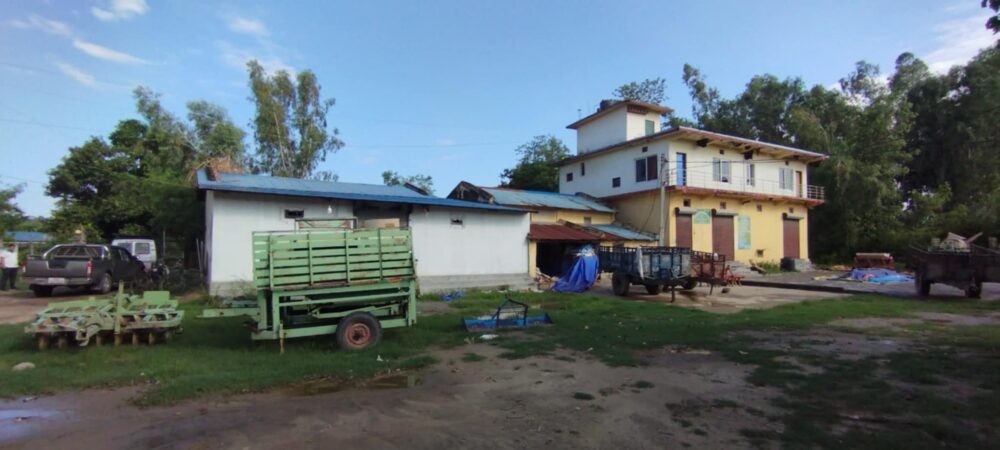
Tikapur. Bijriddhi Agricultural Cooperative based at Janaki Rural Municipality-4, Munuwa, which started producing paddy seeds nearly two decades ago, has cultivated paddy seeds on 100 hectares this year. More than 100 farmers of Ward No. 4 and 7 of Janaki Rural Municipality have cultivated paddy seeds.
Farmers are engaged in paddy seed production due to fertile land and good irrigation arrangements from the point of view of production. Last year, the cooperative produced 3,500 quintals of paddy seeds. Similarly, 3,000 quintals of wheat, 60 quintals of mustard seeds and 12 quintals of maize seeds have been purchased from farmers.
The cooperative pays rs 300 more per quintal to the farmers than the market price. The cooperative, which was initially started with 45 farmers, has been contributing a lot to seed production in recent times. The seeds produced here are sold in different municipalities of Kailali. Besides, farmers from Bardiya, Banke, Surkhet, Dang, Kanchanpur, Dailekh, Sarlahi, Saptari and Siraha have been taking them away.
Kamal Bahadur Kathariya, former chairman of the cooperative, said that the farmers who take the seeds once come looking for them the next time. “In the initial days, many people were not interested in seed production, now many farmers are engaged in seed production,” he said. ’
Stating that the cooperatives have been helped a lot through the agriculture program after the Rani Jamara Kularia Irrigation Project came into force, Kathariya said there was no problem of seed grading and storage. Last year, the cooperative had cultivated paddy seeds in 100 hectares of land and produced wheat seeds in 115 hectares. Mustard seeds were cultivated in 10 hectares, maize in two hectares and lentil seeds in about one hectare.
The group, which has been cultivating vegetables through the group since 2057 BS, started producing seeds by expanding it to cooperatives in 2062 BS. Rani Jamara Kularia Irrigation Project gave a big support to the cooperative engaged in seed production with the help of various organizations due to the activism of the farmers. Bijay Badaik of the cooperative said that the cooperatives have started producing seeds so that the farmers who have been using local varieties of seeds can benefit from the production.
According to cooperative manager Govinda Raj Rawat, the cooperative currently has warehouses with a storage capacity of 408 metric tonnes. The cooperative has been producing seeds of many crops and sending them to different districts. With the help of cooperatives, farmers here produce seeds of paddy, wheat, maize, lentils, mustard and maas crops. The irrigation project has provided storage buildings, various machines and grading machines.
Farmer Labita Kathariya said that he has been growing paddy and wheat seeds on three bighas of land. According to him, the farmers who did not get much production while cultivating in the past got seeds and fertilizers in the cooperative and the cooperatives bought the produce, which encouraged them to cultivate.
In the past, farmers in Munuwa used seeds stored in the bhakari of their homes, while some farmers were forced to migrate for seeds. Their attraction towards cooperatives has increased after they started getting quality seeds graded in the village. The cooperative has been providing seeds and other concessions to its members.
To become a member of the cooperative, there is a rule that there must be a seed producing farmer. At present, there are 109 shareholders in the Munuwa Bijriddhi Cooperative, which was started by 45 farmers. The Irrigation Project Agriculture Program Implementation Unit is supporting the farmers and cooperatives to increase agricultural production.
Project chief Bharat Kandel said the Munuwa Bijriddhi Agricultural Cooperative Society is working as a leading organization in seed production and such organizations of the project will always be supported. “The role played by cooperatives in seed production is commendable and has done a good job in increasing the seeds,” he said, adding, “Our efforts will be made to modernize the farmers according to the time.” We have helped the cooperatives in the construction of buildings for necessary technology and storage so that the farmers can be benefited through cooperatives, this support will continue. ’
More than a dozen cooperatives of Tikapur and Janaki are engaged in seed production with the help of irrigation project agriculture program implementation unit. The seeds produced by the farmers are sold through cooperatives. Other cooperatives in the region have also started taking interest in seed production after the success of seed production due to seed growth.


















प्रतिक्रिया दिनुहोस्