


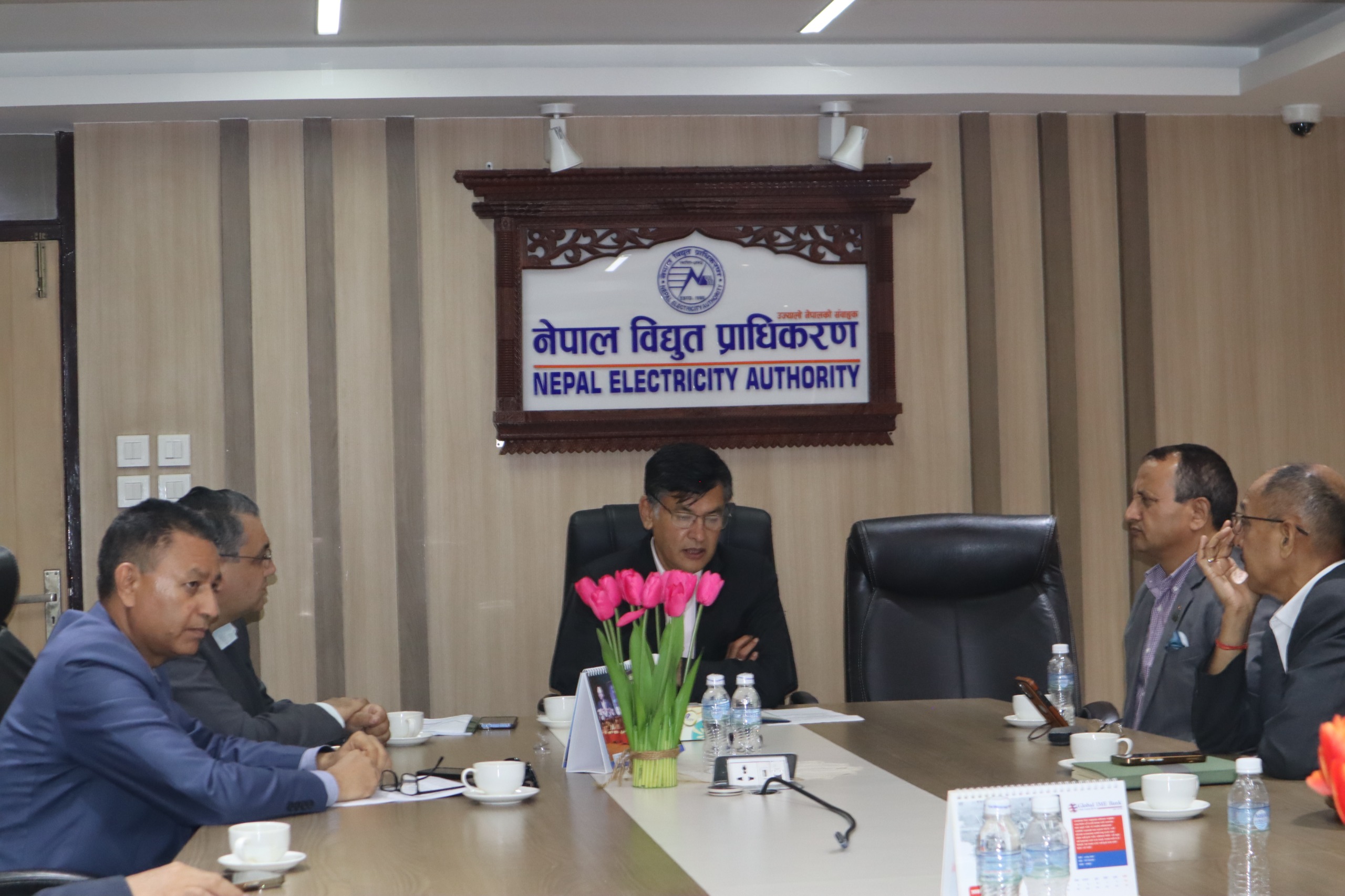
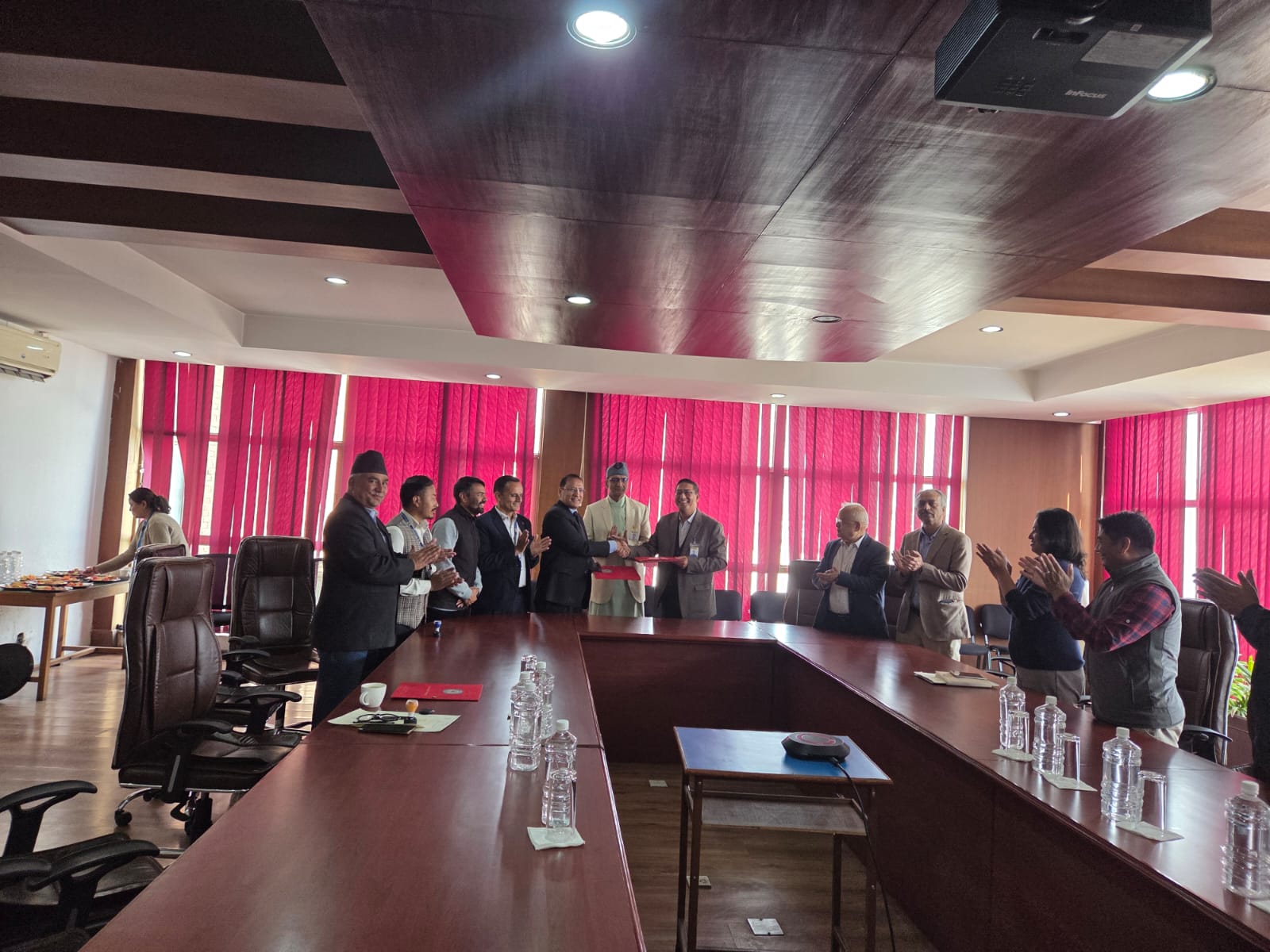
Kathmandu. The Independent Power Producers’ Association of Nepal (IPPAN) has put forth an 11-point demand to Nepal Electricity Authority (NEA) Executive Director Hitendra Dev Shakya.
A delegation led by IPPAN senior vice-president Mohan Kumar Dangi on Monday urged Executive Director Shakya to fulfill the demands at the earliest.
Senior vice-president Dangi had demanded the response of the AUTHORITY on the 11 demands raised by IPPAN, ranging from the extension of the tenure of the RCOD to the abolition of the contingency system.
The issues raised by IPPAN include extension of RCOD deadline, scrapping of wasted power management and contingency system, opening PPAs to achieve the target of 28,500 MW unconditionally and activating PPAs up to 10 MW as soon as possible, removing the conditions laid down by NEA while opening PPAs for 5,000 MW, scrapping of hydrology penalties, addressing the impact of transmission lines on the project. The demands included scrapping of take-and-pay PPA, provision of posted rates, revision of energy table, management of access energy, removal of transmission line losses and clarity on electricity authority’s official position on hydropower.
Senior Vice-President Dangi said that 22 projects are still running under contingency and the provision of these projects should be scrapped. He also said that the PPA of projects smaller than 10 MW has also been stopped after the inclusion of Take and Pay in the budget, so it should be started immediately.
IPPAN Vice-Chairman Ram Prasad Acharya said that the Department of Power Development should also stop issuing licenses and make connection agreements if the ELECTRICITY AUTHORITY does not do PPA. He said that it is not right to say that one agency will show hope and the other agency will not buy electricity after investing. He also said that there should not be two types of policies that are small and big than 10 MW. He said that the facilities given to small projects should also be given at par with big projects.
IPPAN General Secretary Balram Khatiwada urged Shakya not to move ahead by distancing himself from the private promoters. He also expressed concern over the exodus of investors if ppa of 10 MW small projects is also stopped.
IPPAN working committee member Uttar Kumar Shrestha said the RCOD should not be seen as force majeure on the issue of extension. He said that the projects of the same district, which had to transport goods from the same bridge, could not get the facility when the rcod was added to the bridge due to floods in one district.
Shrestha questioned why the RCOD period of all the projects should not be extended even though it would be beneficial for the ELECTRICITY AUTHORITY if the electricity is produced late in the current situation.
Executive committee member Kubermani Nepal said that it would be easier to manage the winter demand if 1 and 1 MW of solar is allowed in the power houses of all the projects. But for that, he said, the electricity rate should also be the rate that hydropower gets in winter.
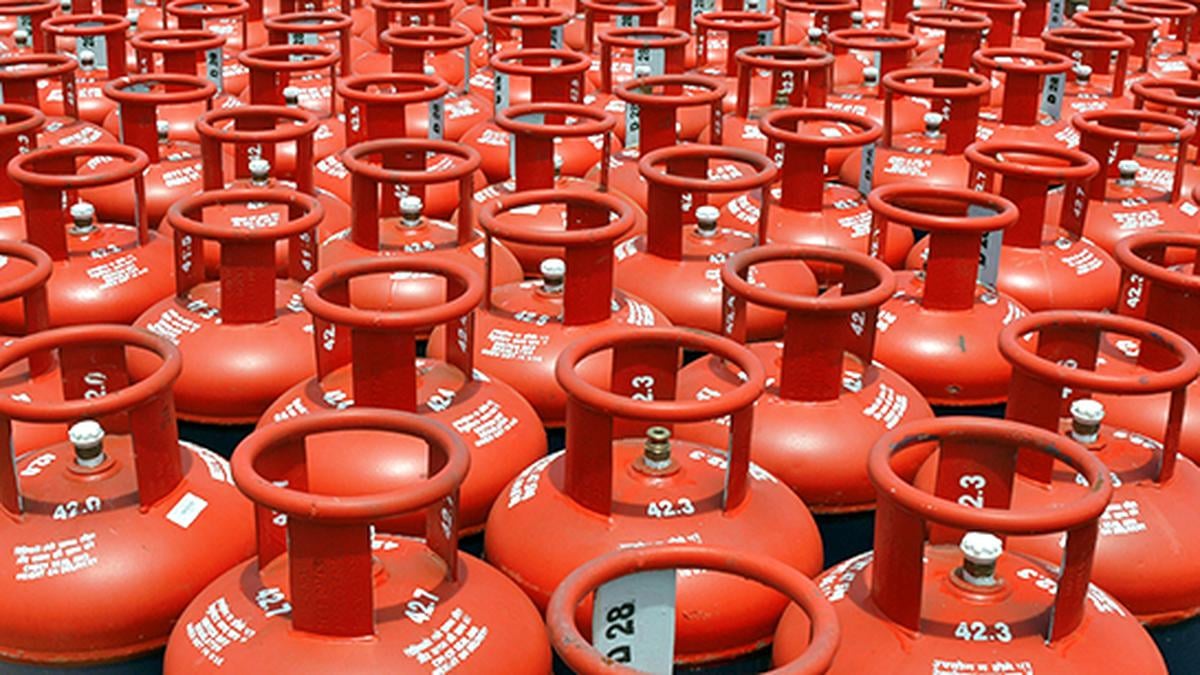
Executive Committee member Shankar Bashyal said the government should increase electricity consumption by spending the subsidy on cooking gas for the construction of structures including electric stoves.
I will take a proposal to the Board of Directors to solve the problem: Shakya
Responding to ippan’s problems, NEA Executive Director Shakya said that the committee formed to extend the deadline of RCOD has already submitted its report and on the basis of that, the deadline will be extended. In the case of some projects, a decision should be taken based on its condition, the IPPAN office-bearers protested in one voice and questioned why the deadline of all the projects should not be extended at the same time despite the benefit of the NEA when the electricity comes late. Shakya said the contingency system could not be abolished immediately, citing fear of authority.
To abolish continuity, either exports have to be done or domestic consumption has to increase. If not, we can’t remove it. When I pay money despite the clause, I fall into the trap of authority. Shakya said.
He said that there is no alternative to working with the private sector to increase the capacity of the line and make new ones to solve this problem. Stating that four agencies, including the private sector, have jointly joined hands in the construction of the transmission line in the West Seti Corridor, he said the same should be done in the coming days as well.
According to Shakya, the private sector will guarantee income in the same modality as the PPA of hydropower generation while constructing the transmission line.
He also said that he was working to ensure that the power of 5,000 MW projects and 4,900 MW of non-PPA projects would be exported directly to India for six months.
For this, nea is preparing to call the promoters for discussion by issuing a notice soon and make an agreement that it can provide so much electricity to India on this date according to the time of the project’s electricity coming, shakya said. He also indicated that if the promoter fails to provide electricity within the stipulated time, he will have to pay a fine as per the rules of India.
However, he said that the Electricity Authority alone cannot take all the risks in all these works and urged IPPAN for risk sharing.
Shakya said another option to open ppa is to open the way for the private sector to buy and sell electricity.
Shakya clarifies that hydropower is not needed
Speaking at a public event a few days ago, Shakya said the NEA would not go after hydropower. He expressed concern that the utility of hydropower would be reduced as solar energy would become cheaper in the coming days as it would be cheaper than hydropower and battery storage could also be done.
Solar is becoming cheaper, that is why if cheap electricity comes from here, then what will be hydro? After 10 years, such a situation will come, not that it does not want to. Shakya said he was clear that hydropower would contribute more to the economy as hydro consumes 60 per cent of the domestic goods, consumes domestic human resources and imports everything from solar panels to batteries.
“Hydropower is relevant today. Comparing the prices of tomorrow, solar will be cheaper. But solar does not boost the economy. I am aware of that,” Shakya said.
Responding to IPPAN’s suggestion that the subsidy on gas should be spent on cooking food from electricity to increase electricity consumption, Shakya said that the distribution cost is expensive and electricity is consumed only in the morning and evening to cook food, so this issue cannot be promoted.












प्रतिक्रिया दिनुहोस्