



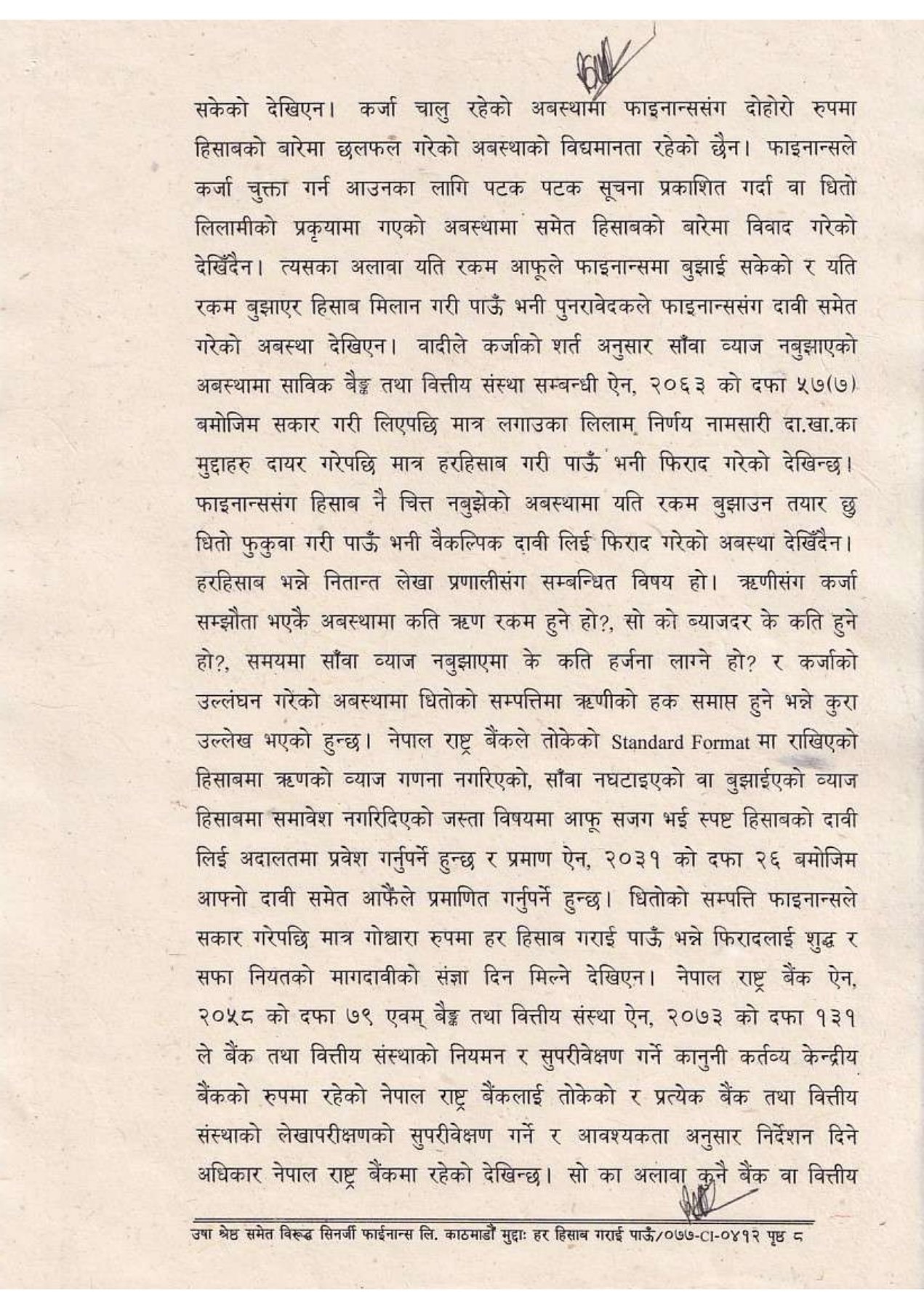
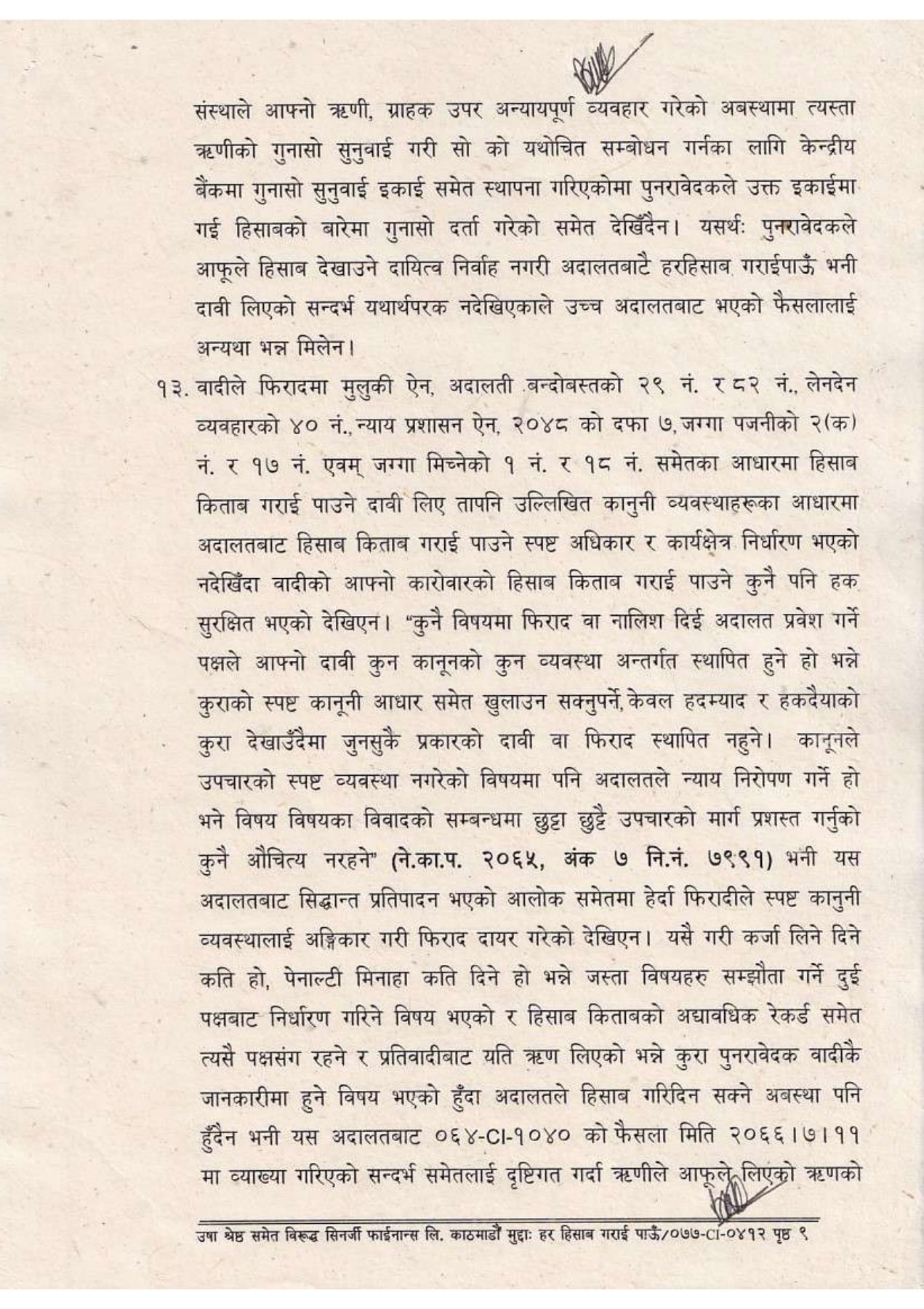
Kathmandu. The Supreme Court (SC) has held that it is not the court’s job to account for the loans taken by borrowers from banks and financial institutions. How many accounts does the bank have? According to the supreme court’s decision, the borrower himself should know how much accounts should be reconciled.
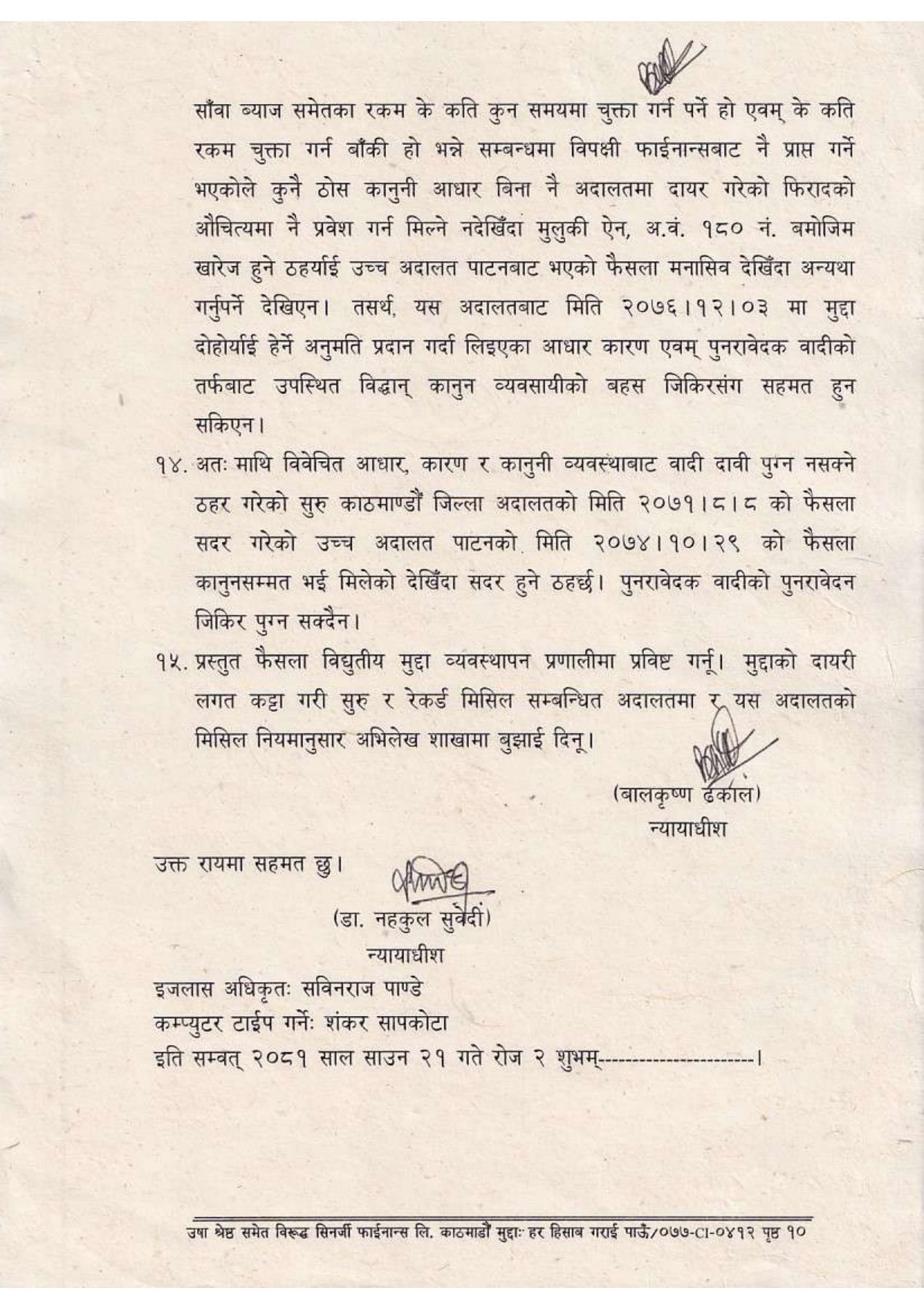
Usha Shrestha had filed the case against the then Alpic Everest Finance, butwal Finance, Synergy Finance and Synergy Finance, which were formed after the merger of Alpic Everest Finance. The case reached the Supreme Court through The Kathmandu District Court, Patan High Court. The Supreme Court ruled in the case that it was not the court’s job to account for the loans taken by the borrowers from banks and financial institutions.
“Section 79 of the Nepal Rastra Bank Act, 2058 and Section 131 of the Banks and Financial Institutions Act, 2073 stipulate that nepal rastra bank has the legal duty to regulate and supervise the banks and financial institutions as the central bank and the nepal rastra bank has the right to supervise the audit of every bank and financial institution and to give directions as needed,” reads the verdict. Apart from this, in the event of any bank or financial institution treating its borrowers and customers unfairly, a grievance redressal unit has also been set up in the central bank to hear the complaints of such borrowers and address them properly. Therefore, the high court’s decision could not be said otherwise as the reference to the petitioner claiming that he should be accounted by the court without fulfilling the responsibility of showing the account was not realistic.
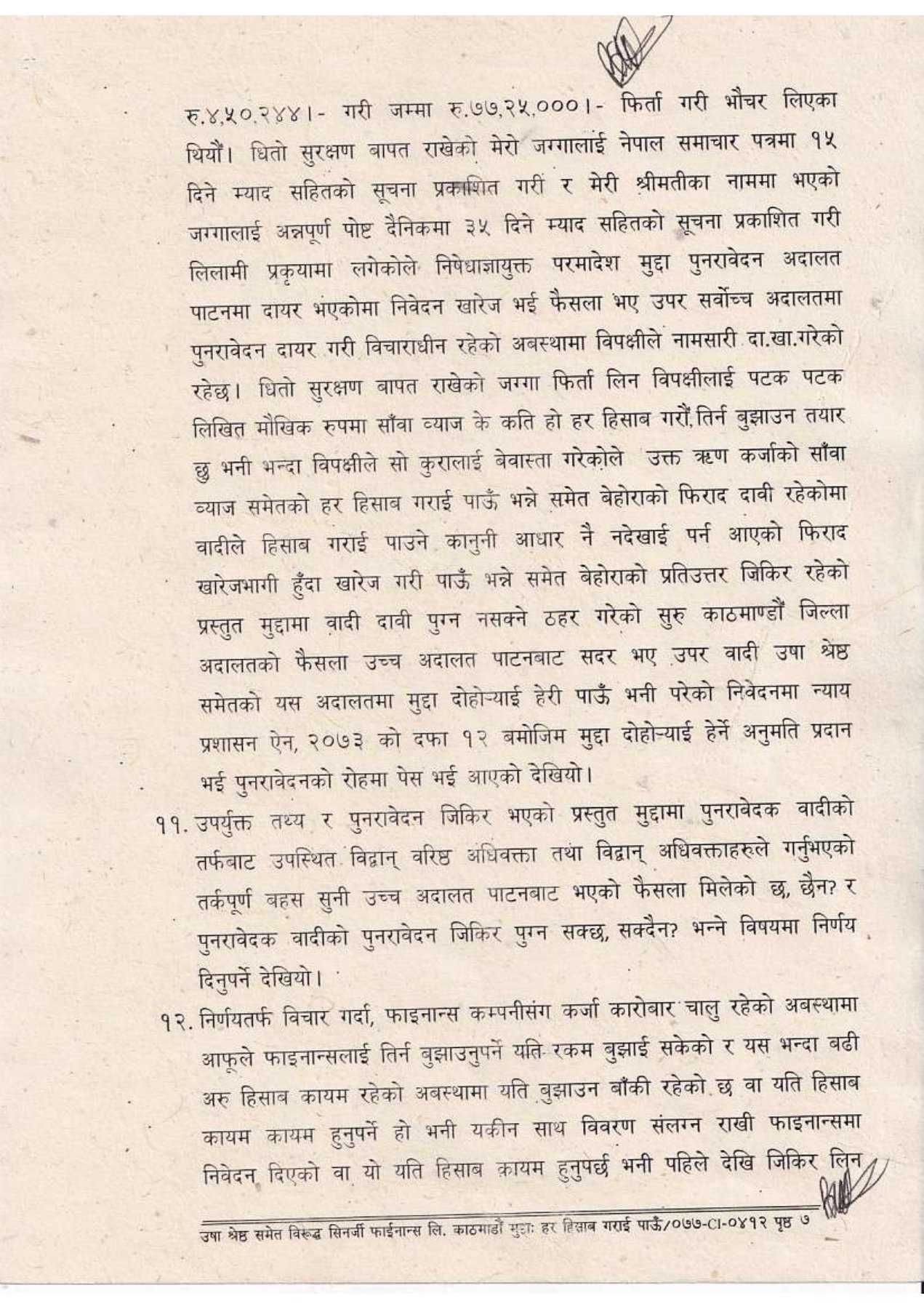
The Supreme Court has upheld both the Kathmandu District Court’s december 2071 verdict and the Patan High Court’s February 29, 2019 verdict, saying usha Shrestha’s appeal claim could not be reached. The Supreme Court has upheld the Patan High Court verdict rejecting the claims of Usha Shrestha and others in the mortgage and loan dispute with Synergy Finance Limited. The Supreme Court has held that the plaintiff has not presented a solid legal basis for the claim of “accounting”, making it clear that such a demand cannot be fulfilled through the court.
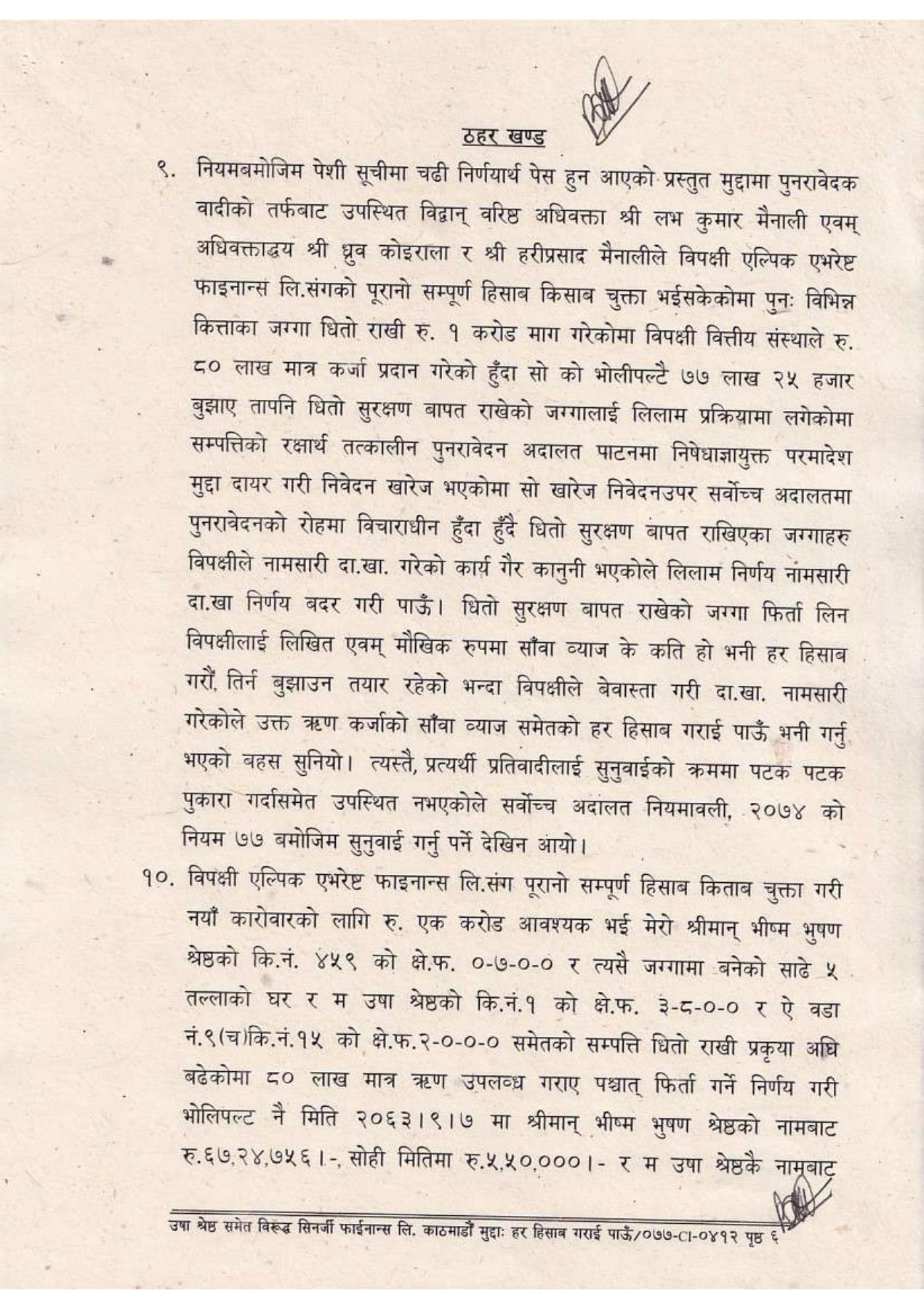
Plaintiff Usha Shrestha and her husband Bhishma Bhushan Shrestha had sought a loan of Rs 10 million from Alpic Everest Finance (now Synergy Finance) for financial transactions. Finance had given a loan of Rs 8 million on the basis of their mortgage.
It is claimed that rs 7.72 5 million was returned the next day after taking the loan. According to Shrestha, the finance company had registered the mutation by auctioning the land and property they had mortgaged.
Senior advocate Labh Kumar Mainali and advocates Dhruba Koirala and Hari Prasad Mainali argued on behalf of Shrestha that all the previous accounts with Finance had been repaid, only Rs 8 million was given without paying the amount as per the demand for the new loan.
Synergy Finance, on the other hand, argued that the case should be dismissed, claiming that the plaintiff’s side had only said that it should be calculated normally without showing any concrete legal basis.
According to Finance, Shrestha did not pay the principal interest on time. According to the Bank and Financial Institutions Act, it is a legal process to auction mortgaged property. The court held that it was not justified for Shrestha to demand an account through the court when he did not dispute by showing any official account or presenting evidence.
Supreme Court Judge Dr. A joint bench of Justice Nahakul Subedi and Justice Bal Krishna Dhakal rejected the plaintiff’s demand. “The plaintiff has not submitted any written evidence to settle or dispute with the finance company. The plaintiff did not object in time even when the finance published the notice while proceeding with the mortgage auction process. There is no need for the court to re-calculate the provisions related to the right to interest, penalty and collateral in the loan agreement. ’
The supreme court has given its verdict on the basis of legal provisions including the Country Act, Bank and Financial Institutions Act and Nepal Rastra Bank Act.


















प्रतिक्रिया दिनुहोस्