


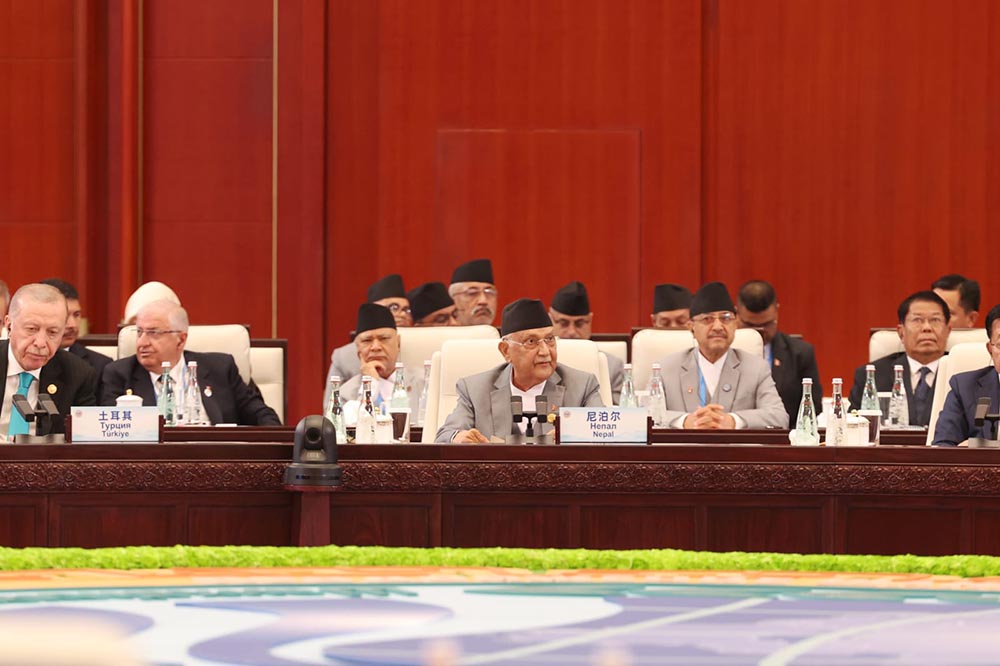
Kathmandu. Kathmandu: Prime Minister KP Sharma Oli has stressed the need to make the global governance system more effective and efficient by keeping the United Nations at the centre.
He, who is on an official visit to China, addressed the Shanghai Cooperation Organisation (SCO+ Meeting) today. In this context, china’s proposed Global Governance Initiative (GGI) will help strengthen the multilateral system by making the United Nations more just, inclusive and equitable for communities for a common future, he said.
Pm Oli said that despite living in an era of extraordinary progress in science, technology and innovation, the progress has been overshadowed by growing inequality, economic instability, climate emergency and deep divisions of borderless conflicts.
“No nation in such a world can be safe alone. No people can prosper in a fractured state. Therefore, multilateralism is the inevitability of our time,” pm Oli said, adding, “Yet we have to face a harsh truth.” The rule-based system has been challenged. Peace and justice are still far away. Thus, multilateralism is in crisis. This crisis is not just external. It also stems from an inability to flow. ”
Stating that the multilateral forum makes many promises, but there is very little flow, he said that promises without progress will reduce trust. Stating that the Shanghai Cooperation Organisation (SCO) would complement the spirit of resurgent multilateralism based on sovereign equality, pm Oli underlined the need for the organisation to be more united, unified and more resilient in dealing with geopolitical, economic and ecological crises.
Stating that peace cannot be talked about without addressing regional security, pm Oli said the challenges have crossed the border every day. “Terrorism takes away security and opportunities from society. Climate change increases the risk. The himalayan country Nepal directly feels the face of this,” he said, adding, “Due to rising temperatures, the mountains, a symbol of global climate stability, are losing ice deposits, which has endangered the lives of billions of people living in low-lying coastal areas.” ”
Stating that emerging threats such as cyber attacks, epidemics and ecological crises are not limited, he said the SDGs are lagging behind in achieving them with just five years left to achieve them.
Stating that regional cooperation is an instrument to face common challenges economically, technologically and ecologically in these difficult times, the Prime Minister said Nepal’s commitment to regional cooperation remains unwavering and relations with the shanghai cooperation organization members are strong.
He pointed out the need for collaboration in the coming days from loneliness to connectivity, from confrontation to consultation and from competition. For this, he said, regional peace, progress and prosperity should be promoted by increasing physical, economic, digital, socio-cultural and people-to-people contacts.
Similarly, dialogue and diplomacy should be intensified to enhance deeper understanding by embracing shanghai spirit and the world needs more partnership, not division. He stressed the need to build a just, inclusive and resilient system and achieve sustainable development by working together and working together regionally and globally.
Stating that no country would be left behind by such global coordination, pm Oli reiterated his commitment to enhance regional cooperation within the Shanghai Cooperation Organisation( SCO). Stating that he supports a rules-based, inclusive multilateral system for a sustainable future, he called for upholding Shanghai spirit, strengthening friendship, partnership and good neighbourly relations.
He extended best wishes on behalf of the Nepali people for the success of the meeting as well as for the continued progress and prosperity of all the member states of the Shanghai Cooperation Organization.















प्रतिक्रिया दिनुहोस्