


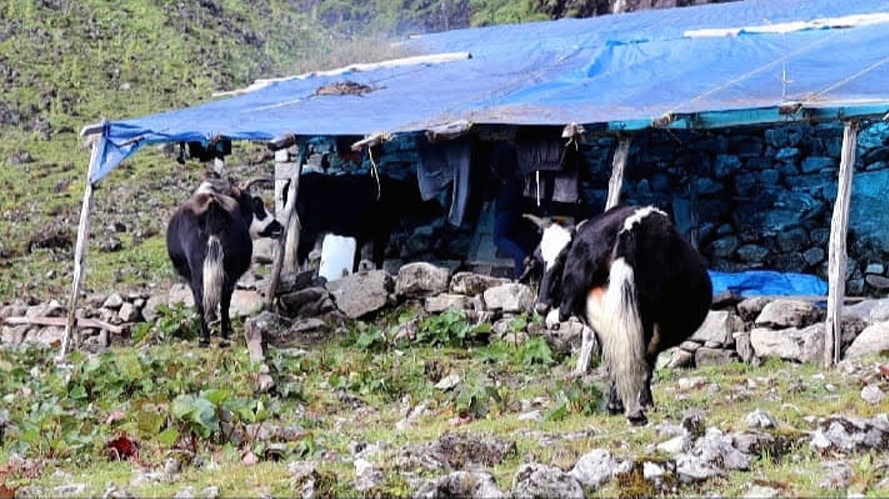
Chautara. Due to the impact of climate change, the yak farming business in the high mountainous region of Sindhupalchowk is now in crisis.
With a climate of 3,000 to 6,000 meters in height, the mobile goth system, which has been going on for years, has been gradually decreasing lately. Due to increasing attraction of youth in foreign employment, lack of grass in grazing areas, climate change, etc., the number of yaks, yaks and sheep rearing through mobile sheds is decreasing.
Pasang Sherpa of Tembathan of Jugal Rural Municipality, Sindhupalchowk, who lives a nomadic life with chauri and yak in Khark, has been facing challenges in this profession due to the change in weather in the mountainous region. Sherpa said that the yak farming business is in crisis as it is difficult to provide grass to the chauri due to the lack of grass in khark as before.
In Pasang’s experience, the mountainous region is not colder than before. “There is no snow in the mountains, so it may not be cold,” he said, adding that the mountain, which used to be covered with snow for twelve months, has now turned into a black mountain.
Indra Bahadur Gurung of Langgarche, who grew up in Khark of Panchpokhari area and raised his livelihood with yaks and sheep sheds, fled from this profession. Some of his children have gone to Kathmandu to study and some have gone to the Gulf countries for foreign employment. Indra Bahadur’s generations of income have come to a complete halt after the death of cattle and sheep. He said that he took a break from his profession due to lack of weather and grazing materials for yaks and sheep.
It is customary to make a shed in the middle of the forest in lekali area for yaks, yaks and sheep and water the same grass. According to the farmers, the nutritious grass used for yaks has now merged due to climate change. Dalu Lama, another farmer, said that due to lack of grass and other grazable natural fodder, the yaks are dying due to lack of weather. Lama said that the younger generation is increasingly disappointed with this profession, which has been doing this profession for generations due to the death of animals due to various diseases and the traders who buy the produce cheaply and sell it at a high price.
They spend most of the time in the mountainous khark, reaching the human settlement only during the winter for three months of the year. The main sources of income for the Tamang and Sherpa communities of Lekali area of Sindhupalchowk are cheese made from yak milk, chhurpi, nauni ghee and radipakhi made from sheep’s hair.
Chauri is practiced in Barhabise Municipality, Bhotekoshi, Jugal, Panchpokhari and Helambu Rural Municipalities of Sindhupalchowk district. According to the Agriculture and Livestock Section of the local municipality, the number of farmers rearing chauri and sheep in Khark is 131 in the district. Sindhupalchowk municipality has introduced an insurance programme to protect chauri, yaks and sheep.
Panchpokhari Thangpal Rural Municipality Chair Tashi Lama said efforts were being made to commercialise the sector, which could become a better income sector than foreign employment.
Despite the efforts of the municipality, chauri goths are now declining in Lekali Khark of Sindhupalchowk. The traditional animal husbandry has not yet been modernized. The locals have not been able to take this profession beyond the traditional ones even if they want to, as the state level has not encouraged this profession.


















प्रतिक्रिया दिनुहोस्