



Kathmandu. Kathmandu: The private sector has demanded that the government promote readymade garment industry in Nepal and promote policy stability and exports.
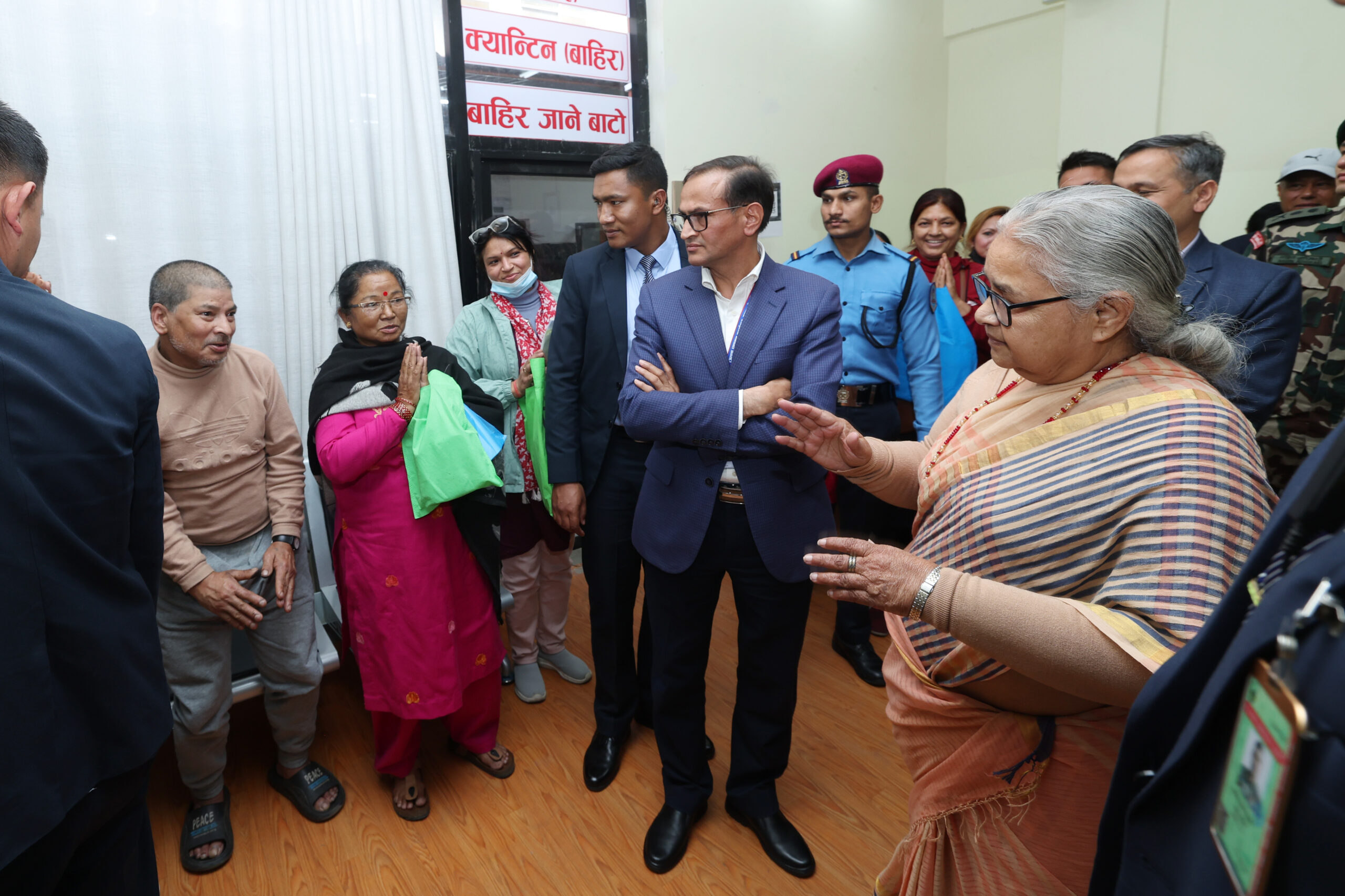
Chairmen and representatives of the private sector made the demand at the 30th annual general meeting of the Nepal Readymade Garment Industry Association on Wednesday.
They stressed the need to implement stable and long-term policies to boost the country’s economic growth and international competitiveness. The entrepreneurs have strongly urged the government to encourage the export of Nepali readymade garments and to cooperate closely with the private sector.
Confederation of Nepalese Industries (CNI) President Birendra Raj Pandey stressed the need to increase industrial production for economic development and called for the government’s full support in this regard. He also pointed out challenges such as balance of payments, acknowledging the opportunities gained from the new investment policies. As a result, there is a need for dynamic strategies to turn into opportunities.
Pandey stressed on strengthening domestic production and strategic collaboration between the government and the private sector. For this, significant economic development would not be possible without collaboration with the private sector. He welcomed the recent law reforms undertaken by the Nepal Rastra Bank and called for similar reforms in other sectors to encourage private investment. He said that effective implementation of guidelines for the use of domestic products by public bodies will significantly increase local production. Pandey shared CNI’s ambitious vision of expanding Nepal’s economy from the current $44 billion to $100 billion within the next decade.
Federation of Nepalese Chambers of Commerce and Industry (FNCCI) Acting President Anjan Shrestha stressed the need to develop and promote the garment industry. He said that the industry has improved from the previous low situation and reached the trade of about Rs 10 billion (possibly Nepali Rupees).
Stating that Nepal’s economic challenges stem from internal weaknesses rather than external factors, Shrestha stressed the need for collective efforts of all, including the government, private sector and the general public, to address these weaknesses.
Shrestha expressed concern about the challenges ahead. Especially the declining population growth rate and birth rate, which can have an impact on the workforce in the coming years. He described the current economic recovery after the V-shaped recession during Covid as a slow, U-shaped trajectory. He also criticised the government for continuously reducing the development budget and failing to spend the allocated amount, which is hampering national development.
Shrestha called for improving export credit facilities and addressing the long-standing demand for setting up quarantine and integrated laboratories. He stressed the need to reduce logistics costs by focusing on both inbound and outbound expenditure and exploring the use of western Indian ports such as Gujarat to diversify trade routes.
Shrestha pointed out that a large part of the announced export incentive amount (about Rs 4 billion) is yet to be paid to the private sector. Supporting production-based incentives, he argued that it was important for Nepal due to geographical challenges and high production costs.
Uen urged the industry to focus on quality, design and branding for garment exports and called for government support in areas such as trade fairs, digital marketing and e-commerce.
Vice President of Nepal Chamber of Commerce Surendra Shrestha stressed on the continuing challenges being faced by the readymade garment industry, especially in technology and investment. He called upon the financial institutions to create a more investment-friendly environment. He urged the government to come up with policy measures including a decade-long investment plan and massive export incentives.
Shrestha stressed the need to produce products manufactured in Nepal with focus on quality, environment-friendly and labor-friendly policies to make Nepal known for unique, high quality products instead of low-cost goods. He advocated that frequent policy changes would discourage investors and a stable, long-term industrial policy for the readymade garment sector.
Shrestha said the collective efforts of all stakeholders including the government, private sector, financial institutions, trade unions and international partners were important for job creation, export promotion and overall economic prosperity. He said the target is to increase exports from Rs 10 billion to Rs 100 billion (possibly Nepali rupees).
Former President of Federation of Nepalese Chambers of Commerce and Industry Chandiraj Dhakal stressed the need for the government to carry out necessary private reforms for the revival of the industry. He expressed deep concern that there were more than 1,800 industries in the past, which have now shrunk to 70 and thousands of jobs have been lost. He said that the problem should be solved with the activism of the Industry Minister.












प्रतिक्रिया दिनुहोस्