


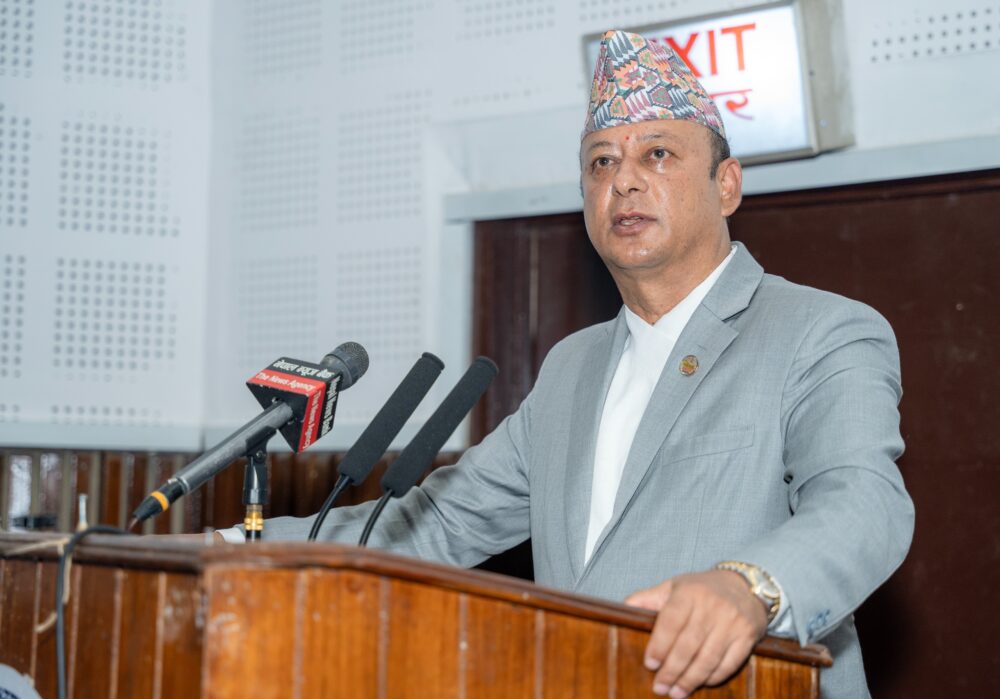
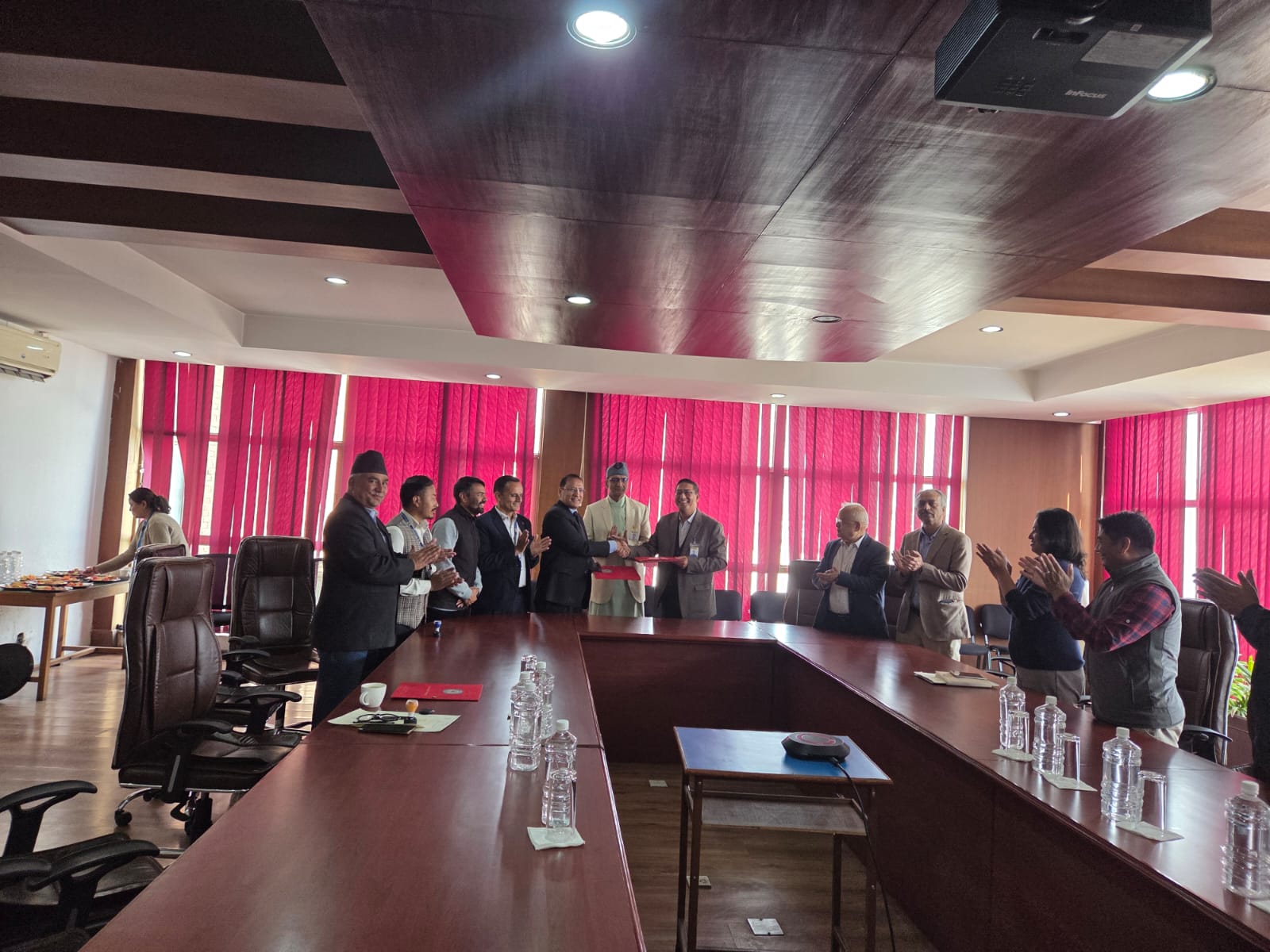
Lalitpur. Minister for Energy, Water Resources and Irrigation Deepak Khadka has said that business management and financial transparency are essential to sustain micro and small hydropower in the long run.
Inaugurating the 8th Annual General Meeting of The National Micro and Small Hydropower Consumers’ Society Nepal in Lalitpur today, Minister Khadka said that providing electricity to difficult geography has contributed a lot to social and economic transformation.
“The work of providing electricity to every corner of the country, difficult and remote geography is an extraordinary achievement, for which the role and activities played by this society are praiseworthy,” he said, adding that more than 40 MW micro and small hydropower projects are being generated from more than 40 MW of micro and small hydropower projects across the country.
Minister Khadka said that the government has been continuously supporting the people by respecting the contribution of consumers and society. He stressed the need to take micro and small hydropower in a more commercial manner.
Minister Khadka said, “Distributing loans given to micro and small hydropower as grants creates problems in financial discipline, so it is necessary to move the organization forward in the business model.”
Minister Khadka said that the government has been moving ahead with the campaign to take the national transmission grid to every local level on priority, adding that a long-term target has been set to produce 28,500 MW of electricity and the government is moving fast towards it.
Chairperson of Parivartan Rural Municipality, Rolpa, Suk Bahadur Budha Magar, said that there was a problem in formulating laws related to the sole rights of the local level as the federal government had not enacted many laws related to federalism. Stating that consumers and the state have huge investment in micro and small hydropower, he said the local levels would pay attention to its sustainable management.
Dilli Ghimire, advisor to the National Micro and Small Hydropower Users’ Society Nepal, stressed the need for collective voice and efforts to uplift the micro-hydropower sector. Stating that more than 60 percent of the investment in micro hydropower is from the community, he stressed the need for its conservation and utilization.
Narayan Gyawali, president of the National Federation of Community Electricity Consumers Nepal, said that micro hydropower has been successful in reaching electricity to everyone’s homes by operating in the villages. He stressed the need for the government to address the issues in a policy manner to protect and sustain the small hydropower projects that have been operated in times of distress.
Kala Timalsina, chairperson of the Women’s Network for Energy and Environment, said that there is a call for continuous debate, discussion and advocacy on the problems of micro hydropower projects and consumers. He stressed the need for women who have contributed labour to micro-hydropower despite taking care of their children should be represented in the operation and management committee of consumer organizations.
Presenting the annual report of the national micro and small hydropower users’ society Nepal, Narayan Dhwaj Khadka informed about the program to be operated for the benefit of micro and small hydropower consumers’ organizations next year. Stating that 70 per cent of the electricity generated by small hydropower institutions across the country was being wasted, he said necessary cooperation and coordination would be made to install electricity in the national system of nea to utilize the wasted electricity. He opined that the organization’s action plan was to take appropriate initiatives for training and capacity development for institutional development and preparation of skilled technicians and to further strengthen the coordination role with the development partner organizations that have been supporting micro hydropower so far.
Man Bahadur Shahi, a member of the Alternative Energy Promotion Centre, said micro and small hydropower consumers are the best way for alternative energy to coordinate at the local level.













प्रतिक्रिया दिनुहोस्