


The full text of the Supreme Court’s order to relocate more than a dozen industries in lumbini region has been made public. It has also created a huge wave in the industrial sector. Investment in the sector has become a matter of concern for all.
At present, there is liquidity in the banking sector. However, the private sector is refusing to take loans. Due to high liquidity in the bank and low interest rates, the loan has not been disbursed. At present, the cement produced by the industrialists has not been sold. The reason for this is low consumption in the market. When consumption is low, it affects not only industrialists but also the loans disbursed by the banks.
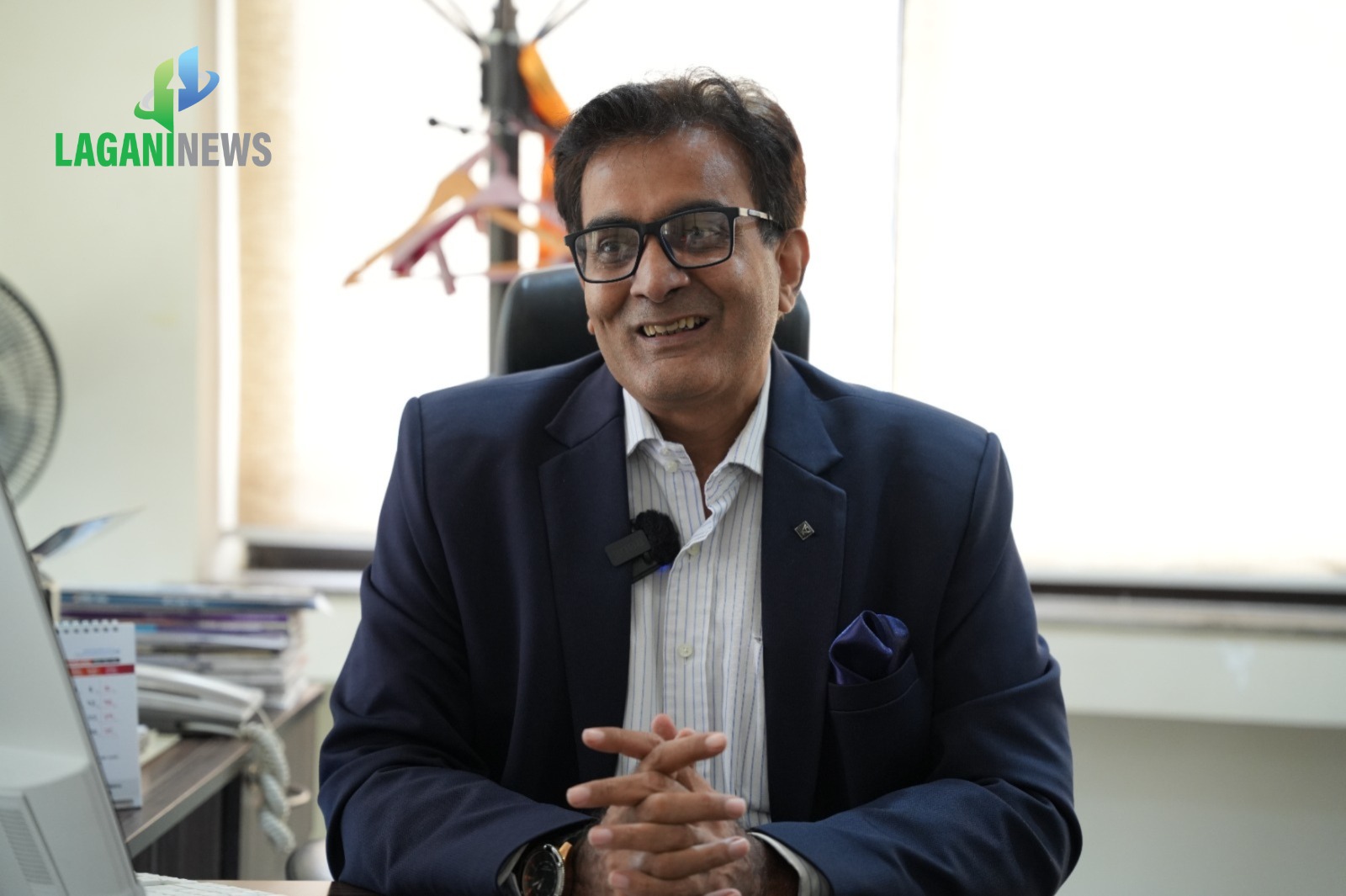
What kind of policy should be formulated to increase exports by producing cement in this serofero? When will the trunkline dispute end? Sumitra TAG_CLOSE_strong_118 Karki for InvestmentNews.com spoke to Raghu TAG_OPEN_strong_118 Nandan Maru, Managing Director of Cement Manufacturers Association and Shivam Cement, on how the Supreme Court order will affect the cement industry:
What are the problems facing the cement industry now?
At present, the capacity of cement industry in Nepal is around 22 million. However, the consumption is only 8 to 9 million. Consumption is very low. At present, the main problem of the cement industry is low consumption. Compared to cement production, consumption has not increased. There are many reasons why cement is not consumed in Nepal.
The main reason is that Nepal’s capital expenditure is very high. The government has not been able to spend capital as per the target set in the budget. Some time ago, exports were slow. Now exports have increased to some extent. At present, this problem is seen not only in the cement industry but also in the entire industry sector. Even if we talk about food, consumption has decreased. The main reason for the decline in consumption in Nepal is the migration of Nepali youth abroad.
Until TAG_OPEN_strong_116 a few years ago, the cement industry was in crisis due to insufficient demand. Is this problem solved now or is it the same?
The government has brought a plan in the budget to convert the existing roads into concrete roads. If the existing road is constructed on concrete, then the state will benefit from it.
Deputy Prime Minister and Finance Minister Bishnu Prasad Poudel has said that the ‘Betamin’ road will be brought into concrete. This increases the consumption of cement. We have predicted that quality cement will be consumed. However, now the government has stopped various schemes to increase the consumption of cement. The construction of hydropower projects has been halted. At present, the EIA of various schemes has not been passed. Another problem is the ownership of land.
The industry has also paid revenue to the government as produced. Cases can be registered if the industry pays more penalty even if it produces less. Such an issue is currently raging in some industries.
The government has made the process of occupancy so complicated that some industries are in a position to shut down. Not a single such scheme has been approved since the enactment of the Occupancy Act 2067 BS. This is a very unfortunate situation.
You and the government have a say about concrete roads, but do you say that concrete roads are not considered good from a social point of view?
There is a lot of difference between Concrete Road and Betamin Road. The betamin road, which is currently under construction, will come up in no time. Not in the long run. The life cycle of Vitamin Road is about 10 to 15 years. However, due to the geographical environment of Nepal, such a road has been damaged in a year or two. Compared to this, it is better to see the condition of the concrete road currently being constructed. This road will be operational for 40 years. Instead of the vitamin road in Nepal, the construction of concrete road will turn nepal’s economy upside down. 100 percent of the goods used in it are produced in Nepal. Imports also fall.
The problems faced by the cement industries in limestone mining have been resolved or are they the same?
The problem of limestone mining is procedural complexity. Files of three÷ to four years have been lying in the Ministry of Industry, Ministry of Forests and various departments of these ministries for three to four years. One of the problems with this is the right to enjoy.
The land is used for limestone mining. The money is paid for it. There is a double-double demand in this. This process is very long. The cabinet can solve this problem. Today, will the District Forest Office issue a discount or not? Will the District Forest Office or the Division Forest Office pay compensation or not? If the Forest Office gives exemption to a tree, then it is like a discount for cutting a tree! Now someone has filed a case saying that they have produced more. However, the industry has also paid revenue to the government as produced. Cases can be registered if the industry pays more penalty even if it produces less. Such an issue is currently raging in some industries.
Is the issue you’re talking about practically a problem to be solved?
This problem should be solved 100 percent practically. No industrialist has committed theft. It has paid revenue to the government. If an industrialist fails to pay the revenue on time, action should be taken against him.
Suppose a company’s production capacity was millions of tons. However, its production capacity increased to 500,000 tonnes. He didn’t steal it. The company hasn’t done anything bad. However, action has been taken to find out why it produces more. It seems that the government is trying to put industrialists in jail. What has the industrialist done badly about it?
The capital expenditure of the government has not been sufficient, due to which the production could not be consumed. However, the government has set a target of generating 28,500 MW of electricity by 2035. If the target set by the government is met, can the current cement industry meet the demand?
It can be 100 percent. Nepal’s cement industry has that capacity. There are as many hydropower projects in Nepal. If all those projects are going on, the current capacity will do well. In this, if the Supreme Court allows the hydropower of the forest park, then the consumption of cement will increase. The government has already signed power purchase agreements (PPAs) for some hydropower companies.
The government had said that 5 to 8 percent subsidy will be given to industrialists. However, there is no record of industrialists getting that grant. The government has only assured that it will provide grants. The government should make arrangements to provide that grant immediately.
Hydropowers with such PPAs are now referred to as forests and parks. It would have been better if the stakeholders reconsidered it. The ‘entrepreneur’ who invests in Nepal makes ‘investment’. It seeks the return of the investment. It is not a good thing for the government and the court to stop the industrialists from coming to the stage of production after completing all the procedures and getting the return of their investment. The government and the Supreme Court need to reconsider this.
What other way can there be to increase the consumption of the cement industry?
One of the things that increase the consumption of cement is by constructing a concrete road. The other is to build more hydropower. While making such projects, all the work should be done through a single system. The government had to do the work of industrialists through a single window.
It also increases the consumption of cement as well as dandi. Another factor that increases consumption is exports. We have repeatedly asked the government to take initiatives for exports to countries other than India. Export prospects are good. The demand is also good. Bihar and Uttar Pradesh may consume a large amount. For this, the government needs to provide grants. The government had promised to provide 5 to 8 percent subsidy to the industrialists. However, there is no record of industrialists getting that subsidy. The government has only assured that it will provide grants. The government should make arrangements to provide that grant immediately. Which encourages industrialists. If this is done, then there is no need to worry about the consumption of cement because we have the capacity to export cement worth Rs 150 billion.
You said exports to India can be increased. Cement worth Rs 276.5 million has been exported in the current fiscal year. Imports amounted to Rs 46.1 million. What is Nepal’s competition with imported cement? We have no competition with imported cement. The quality of our products is good. Because of which we are in a position to export. Only a small amount of cement imports that are currently taking place can also be replaced. Because our cement is competitive. We are in a position to export because we are competitive. We have no competition with imported cement. At present, there is no need to import even a single bag of cement in Nepal.
Possibility of countries other than India in cement exports?
It could be Bangladesh. Exporting from Bangladesh is a diplomatic matter. If Nepal’s trucks can go directly to Bangladesh, it can increase exports in a big way. Bangladesh has a huge potential for exports. There is no cement industry in Bangladesh. However, there are only industries that produce clinker. There is a need to create an atmosphere to export directly from Nepal to Bangladesh.
What is happening now about dedicated and trunk lines? When will it end? We have said that we will pay only for the electricity used by the industrialists. Bring evidence, we will pay everything on the basis of evidence. If the government brings evidence, we are ready to pay all the industrialists together. The government has to bring evidence. The industrialists did not feel bad. If we use it on a dedicated basis, we are ready to pay on that basis. If the truck is used on the basis of the line, then we are ready to pay on the basis of that. I need proof. There is nothing in it, but there is nothing in it. There is no doubt or doubt.
The government has portrayed you as villains when this problem is not resolved?
We stand for the truth. There is justice in the country. We firmly believe that justice will work for the truth. Trunk lines and dedicated things will not be hidden. Industrialists will get justice in this matter. This is a burning issue. It has been unnecessarily burnt. The government needs to take a decision as soon as possible. It needs to be removed as soon as possible.
Lately TAG_OPEN_strong_107, consumers have been complaining that they are not getting cement at a cheaper price. What is reality?
We are still selling cement at a lower price than three÷4 years ago. The price of cement is lower than it was four years ago. You can check its statistics. Now the price rise is on the rise. Compared to that, the price of cement should be even higher. But it hasn’t increased.
How are the cement industry working on environmental, social and governance (ESG)?
Almost every cement industry has worked according to the environmental management plan at ESG. The industries are working on it within all the parameters, including the standards set by the government. Any dust and smoke, noise pollution, etc. are within the parameters of the government and related sectors. The industry has come into operation only after fulfilling those criteria.
The Supreme Court (SC) has decided to relocate industries operating within 15 kilometers of lumbini area within two years. A dozen industries including Arghakhanchi Cement, Jagadamba, Goenka will be affected with the supreme court’s decision. Billions of investments made in industries in the region have been submerged. How has the association viewed it? This has greatly discouraged the industrialists. At the time when the Government of Nepal had given the license to operate the industry, there was no Lumbini area at that time and it would have been different if lumbini area was today. However, there is no difference now when the government has given the license. If the license was given in that area at that time and the industry was allowed to operate, then why the problem now? The cost of the industry is billions of billions. Civil costs billions. In such a situation, the industry cannot be asked to get up.
These are not small domestic industries. Today, it is not necessary to move it from here to another place. This is not practical for the government and the Supreme Court. Earlier, if a standard had been made at the time of operating the industry, the industrialists would not have made the industry in it. But today, the government should look at the investment of such big industrialists and entrepreneurs. Some companies have already been converted into public companies. General investors have also invested in it. This should be reconsidered by the Honourable Supreme Court. We need to find a way out. It is believed that the industrialists will be shown the way out.
As an industrialist, how difficult have you been making it difficult for the industrialists to run the industry due to the things happening by the court and the government in the recent past?
Look, the government is trying to remove such complications. Nothing has been done. There is ‘Ease of Doing Business’ in India. That kind of environment has not been developed in Nepal. The biggest problem I see is administrative and procedural complexities. Unless that complexity can be overcome, it will be difficult. Because the policies and rules are so bound that there is nothing that can be done.
Now the government’s point is in conflict. There is no single system. The government says i will give you everything in a one-way system. But there is no reality in it. Today, I take four to five years to complete the process of cement industry, mineral industry, iron, steel and other industries and mines from licensing to setting up industries. You have to take possession of the excavation of that area. 90 percent of the mines are in the forest area. Its enjoyment is a complex process. The process goes to the cabinet.
The government needs to immediately scrap such a cumbersome process. Industrialization has to be done in the country. The government should stop nepali people from fleeing the country. The current binding action and process should be kept in abeyance to all. Industrial development has to be done in the country. The country’s system needs to be improved if we want to make economic transformation. If we have to transform the country, the government needs to act on it as soon as possible.
Some time ago, Rameshwor Khanal had also submitted a report. A lot of things have been written in it too. Even if the government implements that much, nepal’s industrial sector will turn upside down. I can say this with confidence. The way the Nepali people are going out today. Industrialists here are also migrating abroad. Earlier, workers used to flee. Now industrialists and businessmen are fleeing.
This is a big obstacle to the development of the country as a whole. Today, I had to set up an industry and buy land first and do EIA tomorrow. He had to do EIA. When I bought the land and went for EIA, if it did not happen, then my investment got stuck in it. I can’t buy that land when I go through EIA first. The price of the land is 5 to 10. After that, the government had to think about such situations. Now the government has not thought about that. As a result, the industrialists are not excited even if the bank is giving loans at 7 percent interest rate. Industrialists are running away.
Three years ago, industrialists were trying to reduce the interest rate from the street to the House. Now why are you running away from the bank giving loans at the base rate?
When an investor invests, he seeks returns. Whether it is an outside investor or an domestic investor. He seeks his reward. When investors invest in it, is my return safe or not? He watches. In this too, policy rules are binding and impediments. The government needs to remove it. We have repeatedly drawn the attention of the Honorable Prime Minister and the Honorable Prime Minister.
We think the Industry Minister is serious about this. In view of this situation, I think we can make economic reforms in the country.
The revenue from the sale TAG_OPEN_strong_103 of listed cement products has increased by about 24 percent till mid-June of the last fiscal year. But why aren’t the industry’s financial statements very encouraging on other indicators?
Earlier, some industries were in integrated losses. The indices of such industries have not been very encouraging in advancing those losses. However, compared to the previous fiscal year, the cement industry is on a corrective path last year. If you evaluate the previous two years and two years, then this time there seems to be a slight improvement. The situation in the previous financial years was a bit worrisome. It’s a little better now. A few years ago, cement was cheaper than sand. The industries had to sell cement at much lower than the cost. Even now, the problem has not been completely resolved. Industries were finding it difficult to maintain their cash flow and banks to repay loans on time. There has been a slight improvement from that ‘panic’ situation.














प्रतिक्रिया दिनुहोस्