


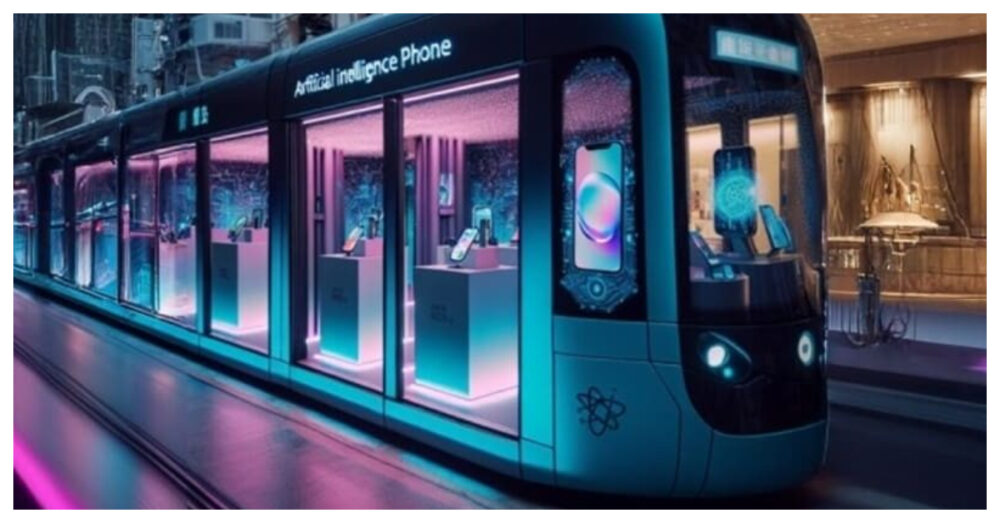
Moscow. Moscow: Russia’s first AI-powered city train service was launched in Moscow on Thursday. This is an important milestone for the innovation of public transport in Russia. The news was confirmed on the Russian government’s official website.
This pioneering project is an important part of Moscow’s transport development strategy for 2030. The city plans to equip more than 300 city rail trams with autonomous technology by 2030, with these vehicles aiming to have a 90 percent share by 2035.
According to TV BRICS, the newly introduced AI-powered (automated) train is able to independently stop at stops and maintain strict adherence to all schedules, such as opening doors, obeying traffic signals, allowing pedestrians to cross the road, and automatically fixing the tracks. Since May 2024, the electric train has completed more than 8,000 kilometers of rigorous testing without any traffic violations. It demonstrates the reliability and safety of the rails of the automatic system.
Under current federal law, a gon operator to inspect the system and handle non-driving tasks such as fare control will remain in the cabin of the train during service. The driving functions of the train are fully equipped with AI and advanced software developed in Moscow.
Before the launch of the train, three phases of tests have already been done. The first stage led to overnight travel on the railroad without passengers, supervision trips with passengers and finally a fully autonomous service.
By the end of 2025, Moscow plans to have three autonomous trains in regular service and expand it to 15 in 2026. In addition to the rail project, the city is preparing to test the first autonomous metro rail starting in December 2025. Full passenger service of the autonomous metro rail is anticipated for 2026. This will further strengthen Moscow’s position as a global leader in smart public transportation solutions.
This initiative reflects Moscow’s commitment to technological advancements and sustainable urban mobility. The aim is to improve passenger experience, reduce emissions and increase traffic efficiency in the long run.











प्रतिक्रिया दिनुहोस्