


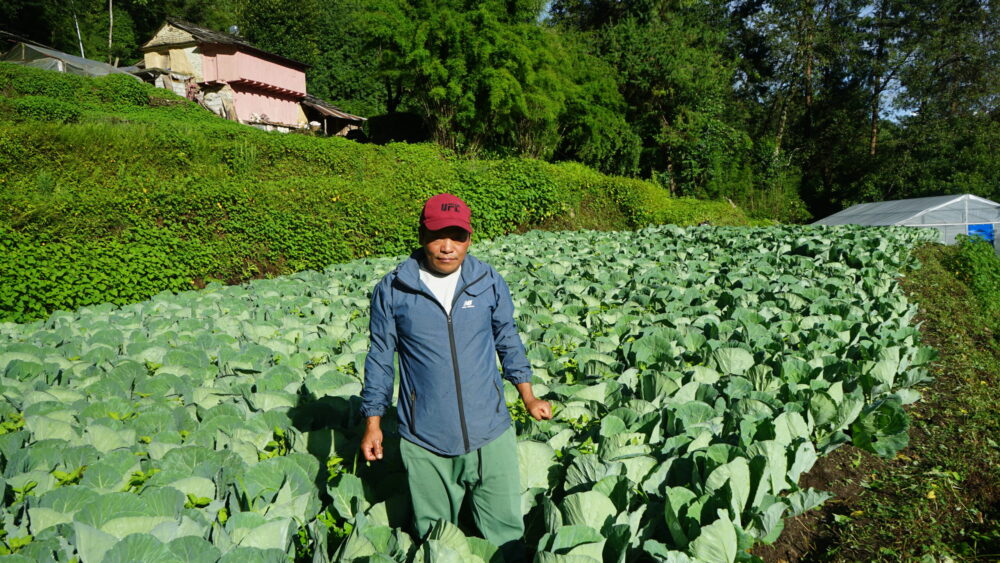
Myagdi. Buddhibir Pun, a resident of Tikot in Annapurna Rural Municipality-7 of Myagdi district, earns up to Rs 700,000 annually from vegetable farming. The 46-year-old Pun, who had cultivated cabbage, greens and potatoes on 15 ropanis of land and kiwi on five ropanis of land, has become self-reliant with self-employment through vegetable and fruit farming. Pun had toiled and toiled in Qatar for five years before starting vegetable farming 16 years ago.
“As per my experience, I can earn a good income by working hard in agriculture,” he said, adding, “I earn Rs 5 to 7 lakh annually by selling fresh vegetables.” Pun, who is also a ward member, is busy in taking care of the vegetable and kiwi farms in the evenings, and spends his afternoons in social work.
Gam Prasad Phagami, a former ward chairman of Annapurna Rural Municipality-7, who hails from Gharamdi, is also involved in commercial vegetable farming after his term ended. He has cultivated cucumber, beans, beans, tomato, cabbage, cauliflower and greens in five ropanis of land.
He has constructed three plastic tunnels for tomato farming. Fagami’s neighbour, Bahalwala ward member Gem Bahadur Pun, has been cultivating fresh and off-season vegetables as well as potatoes commercially. The vegetables and potatoes produced by the farmers of Gharmadi and Tikot are sold in Beni and Pokhara, the capital of the province.
There are more than 50 commercial farmers here. Vehicles carry vegetables to the market. From here, the annual Rs. Potato worth Rs 20 million and cabbage worth Rs 10 million are being sold in the market, ward member Buddhibir Pun said. Tikot and Gharamdi are located at an altitude of two thousand three hundred meters above sea level.
Vegetables produced organically in cold climates are healthy and tasty, which is the choice of consumers. Agriculture Officer Shyam Sharan Kurmi said that Annapurna Rural Municipality has launched vegetable pocket program in Tikot. He said that the program has provided seeds, tunnels and irrigation materials to the farmers for vegetable farming.
Vegetables have been grown using organic methods as an alternative to chemical pesticides and fertilizers, which are considered expensive and adverse to human health. Tikot Tilija Pun, a farmer, said that they have been using cow urine to prevent pests and pests in vegetables. “We use the urine collected in plastic bottles to the roots and roots of the plants if needed,” he said, adding, “Chemical fertilizer has not been brought into Tikot yet.” They have collected urine from cows and buffaloes in every shed of the farmers here.


















प्रतिक्रिया दिनुहोस्