


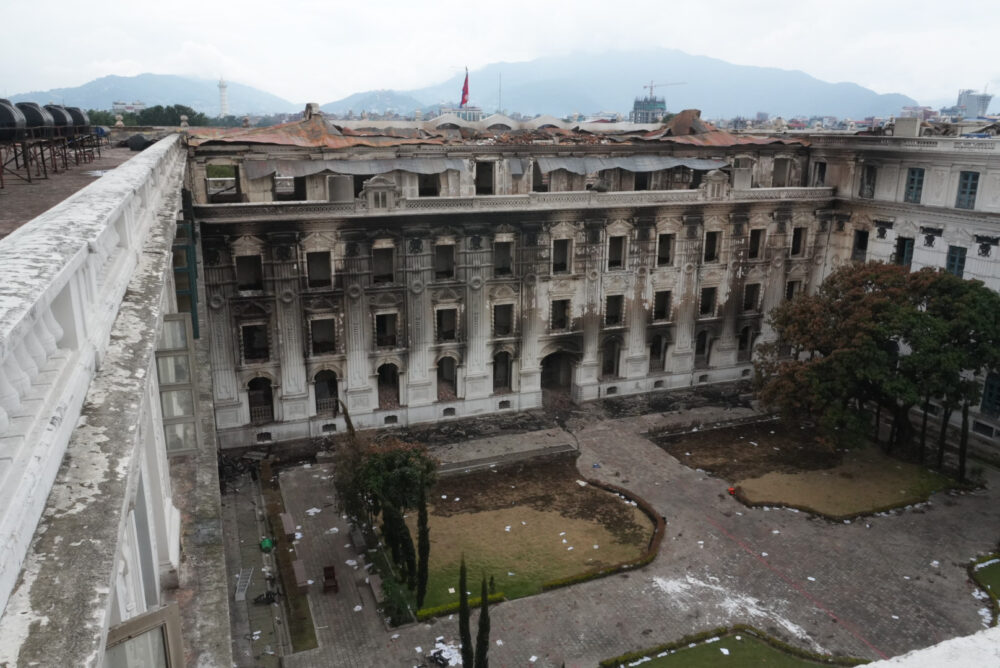
Kathmandu. The New York Times has published an investigative report on the Genji agitation that took place in Nepal on September 23 and 24. The statement reads, “The vandalism and arson that took place on September 23 was not an accidental act but an organized and premeditated act.
The fire destroyed buildings including Singha Durbar, Supreme Court, Ministries, District Administration Office, Police Office and other ward-level buildings. Private residences, schools and business buildings of political leaders were also burnt. According to a minister, the loss on that day could be more than one-third of Nepal’s GDP, according to the New York Times.
More than 110 police stations have been set ablaze in the Kathmandu Valley alone. Within hours of the shooting, “ready-to-use” lists went viral on social media. The lists included the names, addresses and contact details of those said to be “involved in corruption and networkism”. The next afternoon, many of the people’s houses were set on fire, .
Buildings at all levels of the executive, legislature and judiciary have been damaged. According to an investigative report by the New York Times, the main building of Singha Durbar was covered with smoke in half an hour and engulfed in flames within a short time.
According to witnesses, the fire spread rapidly. This raises suspicion that special fuels or chemicals were used inside the building. Richard Hager, an international fire researcher, said: “Hundreds of buildings burning down in a matter of hours is not an accidental response. Such coordination takes months, not weeks. ’
According to Kennethki of Fire Science Forensics Singapore, “How did the fuel get into the building? Why were the security personnel removed? These questions indicate that this is a planned conspiracy. Pawan Dhungana, chief of the Nepal Police Forensic Laboratory, said, “From the pictures, it seems that chemicals like sodium or magnesium were used. But we can’t say for sure until it’s tested. ’
These chemicals are controlled substances. “Ordinary people can’t buy easily. Using such chemicals requires technical skills and access,” the report said.
















प्रतिक्रिया दिनुहोस्