


Bhaktapur. After the famous Durbar Square in Bhaktapur, the attraction of tourists is increasing in Pottery Square area. Pottery Square, which has become the center of tourist attraction, has started to be lured by earthen pots.
The Pottery Square located in Bhaktapur Municipality-4, Talaquo, which has been going on for generations in the settlement of Prajapati community, has been developed as an attractive centre for tourists lately.
The potters, who have been making pottery in Bhaktapur, are busy making earthen pots, pots, incense plates and other items required for the festival.
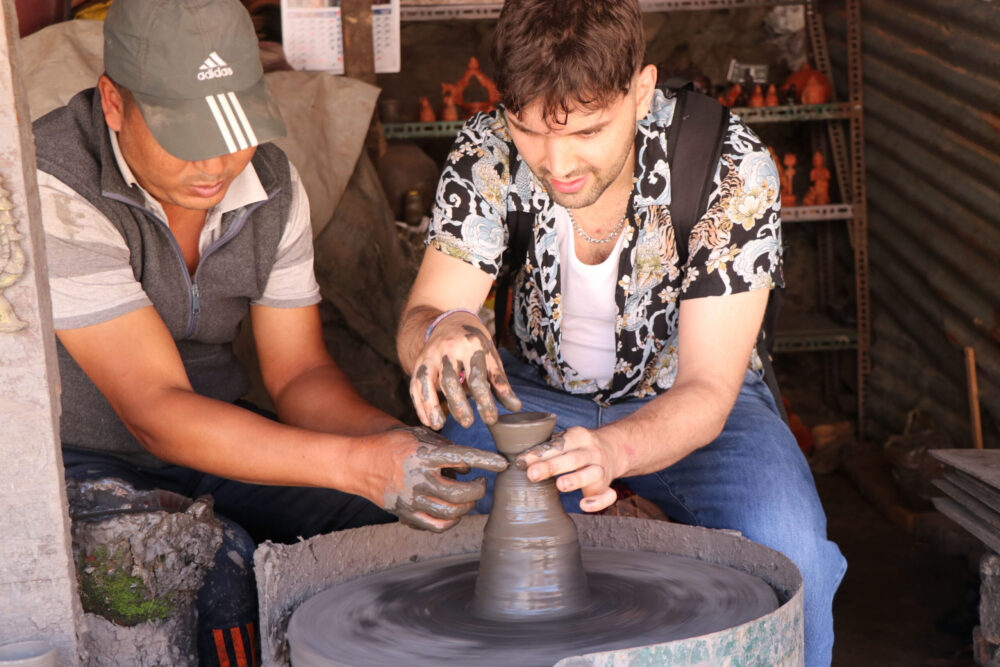
The sight of most of the Prajapati people here teaching the tourists to make earthen pots by putting up signboards of the ‘Porary Training Center’ is very attractive. Binod Prajapati, a local, who has been doing this profession for generations, said that foreigners like various products made from clay. He said that he is also earning extra income by teaching aspiring foreigners to make utensils.
Herina Mark, from Australia, who is learning how to make pottery with her clean hands in the mud and spinning in a spinning electric cycle, said she was happy to learn how to make things out of clay.
Binod said that tourists who spend 10 minutes making clay pots are charged Rs 100 to 200. According to him, it is a source of additional income for the Prajapatis.
81-year-old Lalit Prajapati, who has been involved in the traditional pottery making profession, said that tourists are attracted to the art of pottery.
“Tourists who have seen and learned how to make attractive utensils with the help of electric wheels are enjoying making utensils in the traditional style by rotating the traditional wheel made with the help of sticks in the north corner,” he said.
Lonark Mart, who came to Nepal from the United States of America, said that he was delighted to see the people of the senior Prajapati community making earthen pots in the traditional style by twirling them with sticks. He has captured these scenes in the form of photos and videos on his mobile.
Sajan Prajapati, a local, said that the number of tourists will generate additional income. He said that along with the busy preparation of goods as per the demand from different places for the festival, the tourists are taught to make utensils when they wish.
Most of the tourists coming to Bhaktapur visit Porary Square in this current tourist season. Tourists who reach the group learn how to make utensils at Prajapati Kama, which makes all the earthen pots here.
According to Sajan, although it takes six months to learn the pottery, the tourists enjoy the method of making pottery by playing in the soil for a while. He said that we also give money for learning how to make utensils, so we have been teaching Nepalis along with tourists by putting up a notice board related to training.
Krishna Prajapati, a local, who is busy making Pala, said that the demand for the festival has been high. He said the income of the potters has also increased with the arrival of tourists. He said that the sights of utensils being made, dried and roasted in the kiln are new and attractive to tourists.
The Prajapati community members of Bhaktapur Municipality-4, Bolachhe Talakbo or Porary Square, who make attractive pottery, have been able to make pottery and other materials required for the festival.
“Tihar has arrived, there is a high demand for clay pots, incense and incense. Binod Kumar Prajapati, 39, who has been making pottery for the past 19 years, said that he has been busy with pottery for the past 19 years.
He said that not only the tourists like to make earthen pots, take videos and photos on mobile, but Nepali children and youths from different places also like to make utensils and make them public on social media.
Prajapati said that he has been selling the pottery for Rs 40 per dozen as the price of clay utensils has not increased this year.
According to Binod Kumar, the demand for such materials has decreased after the import of plastic sheets, pots and other materials from India. According to him, the Prajapati community of around 65 families in the district is worried over the lack of price hike.










प्रतिक्रिया दिनुहोस्