


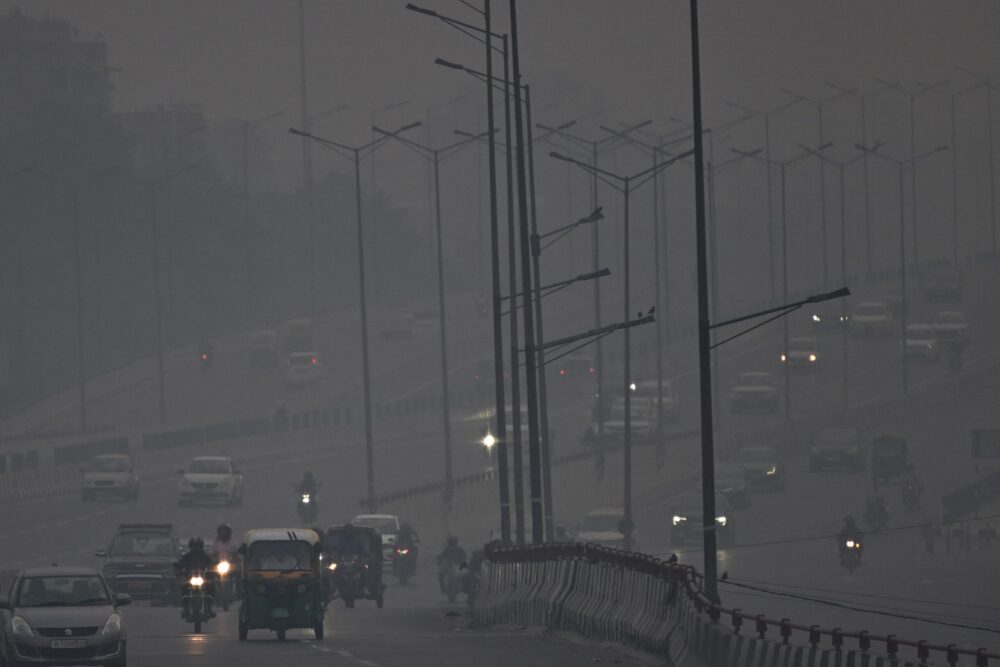
New Delhi. India on Thursday conducted its first cloud seeding trial in the capital New Delhi. The aim of this campaign is to remove harmful smogs and particles from the atmosphere through rain and control pollution in the city.
Cloud seeding is the process of firing salt or other chemicals into a cloud through an aircraft to catalyze precipitation. This technology is already being used by some countries of the world with the aim of reducing atmospheric pollution by artificially raining.
New Delhi’s officials, in collaboration with the Indian Institute of Technology (IIT) Kanpur, started the trial on Thursday afternoon using a Cessna light aircraft in Burari, the northern part of the city.
Delhi Minister Manjinder Singh Sirsa said in a statement, “Today, a test flight of cloud seeding was completed in which chemical particles were fired into the clouds using flares. According to him, this flight validated the aircraft’s capability assessment, equipment endurance, coordination mechanism and readiness required for cloud seeding.
Delhi Chief Minister Rekha Gupta said, “If the weather permits, Delhi will experience its first artificial rain on October 29. He said the project was an “important step to bring back clean air” for Delhiites.
However, it was not immediately clear what chemicals were used in the test. With a population of more than 30 million, New Delhi is considered one of the most polluted capitals in the world. Every winter, the city is covered in thick smoke. Cold air traps pollutants close to the ground, causing crop burning, industrial fumes and traffic emissions to create a mixture of deadly pollution.
A.2.5, a small molecule that can enter the blood and can even cause cancer, is sometimes 60 times higher than the United Nations’ daily health limit.
After the Diwali festival fireworks, the pollution level has increased further this week. According to IQAir, the A.2.5 concentration has reached 56 times higher than the limit. The increase comes after the Supreme Court lifted the ban and allowed “green firecrackers”.
On Thursday morning, the A2.5 level in some parts of New Delhi reached 154 micrograms per cubic metre. This is 10 times more than the recommendation of the World Health Organization.
A study conducted in September concluded that even the historic Red Fort in Delhi is turning black due to pollution. A joint team of Indian and Italian scientists has warned that the Red Fort, a UNESCO World Heritage site, continues to be covered with black crust and is decaying.
Cloud seeding technology, which was developed in the 1940s to reduce drought, control forest fires, and remove fog in air transport, has been used by many countries for decades. China used the same technology to stop rain in Beijing during the 2008 Olympics.
But scientists disagree on the efficacy of the technique. Some research has shown that cloud seeding does not give the desired results and has unexpected effects in areas other than the target area. So whether Delhi’s efforts will succeed or not is yet to be scientifically assessed.















प्रतिक्रिया दिनुहोस्