


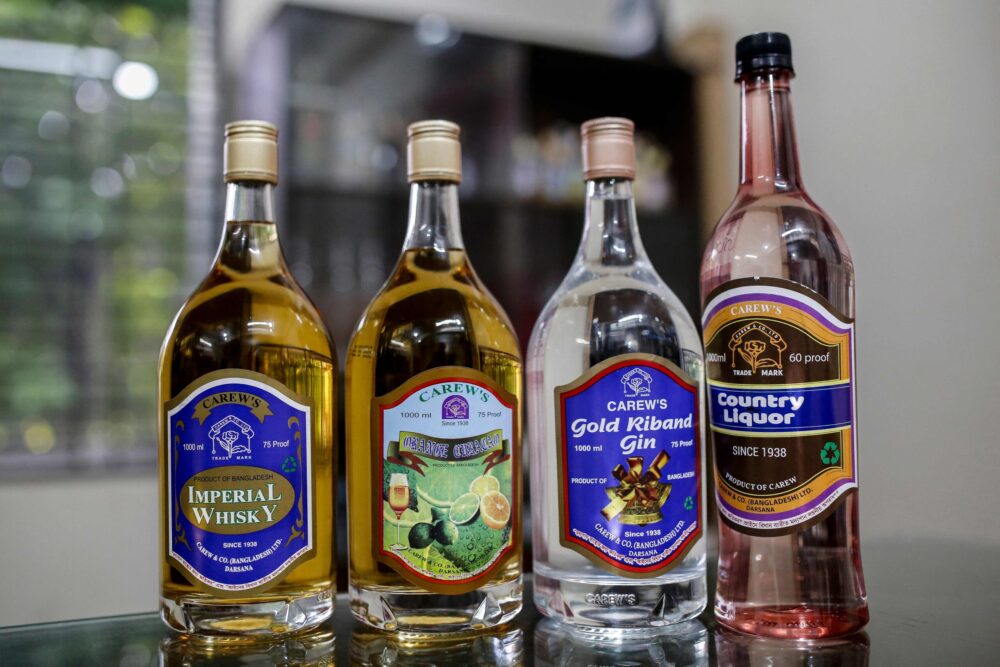
Dhaka. In Bangladesh, the only government-licensed distillery in the country, where Islamist forces are regaining political activity, the aroma of the syrup has permeated the premises of its only government-licensed distillery.
The state-owned company, Cairo & Company, has made an unprecedented profit in the last fiscal year. It is considered an astonishing achievement amidst the country’s strict liquor policy and social prohibition.
The production and sale of alcohol in Bangladesh, the world’s fourth-most populous Muslim country, is strictly regulated. In a country with a population of about 170 million, the vast majority cannot buy or consume its products.
However, Caro & Co, which was founded 87 years ago during the British era, made a profit of $10 million in the financial year 2024-25 and paid taxes, said Robek Hassan, managing director of the company. “This is the highest profit in the company’s history,” Hassan said. ’
Bangladesh has been through political instability in recent years. In August 2024, the people’s movement toppled the government of then Prime Minister Sheikh Hasina. Hasina, who ruled for 15 years after being criticized for allegations of human rights violations, has taken a tough stance against Islamist groups. After his departure to India, Islamist forces in the country have become strong again.
While they have not specifically targeted alcohol, they have called for a ban on cultural activities deemed “anti-Islamic”, such as music and drama festivals, women’s football tournaments and kite-flying festivals. In such a situation, the interim government is now moving the country towards the general elections scheduled for February 2026.
Bottles are filled amid the constant hum of machines in Cairo’s sprawling factory in the Darsana border industrial area. The company’s flagship products are ‘Imperial Whiskey’ and ‘Sarina Vodka’, which are distilled from sugarcane with flavours imported from the Netherlands.
“We don’t encourage anyone to drink,” Hassan said. In Bangladesh, government permission is mandatory to buy alcohol. Alcohol is only available to anyone over the age of 21 and is usually only available to non-Muslims. A medical prescription is required to obtain a license. Narcotics Control Department director-general Hassan Maroof said alcohol is prohibited, but exceptions have been made for some communities.
Such communities include foreign and local workers working in the country’s tea gardens. Cairo’s cheap liquor is popular among some 150,000 mainly Hindu workers. It is estimated that about 10 percent of Bangladesh’s population is non-Muslim (mainly Hindu).
This year, the company’s sugar department incurred losses, but its mills produced fertilizer, vinegar and industrial liquor. Cairo is a major source of legal liquor with Hunter Brewery, the country’s only beer produced by Jamuna Group.
In a country plagued by the problem of illegal moonshine products and dangerous adulteration in imported liquor, these products have become a safer alternative.
Prince Mamun, a 42-year-old fish trader, said he had been consuming Cairo products for two decades. “It is cheaper and more reliable than imported brands,” he said. Mamun also has an official permission to drink for about 20 days a month. “I drink Cairo products without a doubt,” he said confidently.
Shah Alam, 38, an employee at the bottling unit, said he was a staunch Muslim but had never consumed alcohol. But he appreciates the distillery’s contribution to the local community through employment, education and social support.
“I don’t drink anything myself, nor am I involved in sales,” Alam said, “But I can proudly say that what I am doing here is my honest profession.” Thus, the success of Caro & Co. in the face of religious and social restrictions exemplifies the remarkable paradox and unexpected achievement in Bangladesh’s economy.















प्रतिक्रिया दिनुहोस्