


The government infrastructure and property were extensively damaged during the Genji agitation against corruption and other irregularities on September 23 and 24. The buildings of various government buildings inside Singha Durbar, the Parliament Building in Baneshwor, and the Supreme Court were destroyed by the vandalism and arson. Due to the agitation, the then government collapsed. Now, a civilian government has been formed under the leadership of former Chief Justice Sushila Karki. This government has got the mandate to hold the House of Representatives elections on March 4.
The government also has major and other responsibilities to conduct elections. Along with holding the elections on the stipulated date, the reconstruction of the physical damage caused by the agitation should also be taken along. We have moved ahead in a fast manner. I have been entrusted with the portfolios of Energy, Water Resources and Irrigation, Physical Infrastructure and Transport, and Urban Development. The work to be done by these ministries is being done efficiently.
The Ministry of Urban Development has the responsibility to expedite the work as the government physical infrastructures have been damaged in course of the agitation. The ministry is actively working in this regard. During the agitation, vandalism and arson took place from the ward office to Singha Durbar. Currently, the Ministry of Urban Development is collecting data for this. At the same time, the reconstruction work and plans have also been taken forward simultaneously. We don’t have time to do much as we have the responsibility to hold elections on the stipulated date and hand over power. We have set a target to take the reconstruction process forward in the right direction as long as there is time.
According to preliminary data, more than 400 government buildings have been damaged in the agitation. The damage to government buildings has been divided into three main categories. The buildings are divided into three categories: green sticker, yellow sticker (yellow) and red sticker. The green sticker has the physical structures that can be operated with minor maintenance, the yellow sticker has a little damage and needs to be repaired and rebuilt, while the red sticker has the nature of being completely damaged and a new structure needs to be built.
According to preliminary data, more than one hundred and fifty damaged government structures appear to be on green stickers, which is enough to carry out normal maintenance. Most of the government buildings and structures have been used after general maintenance. However, some buildings and structures are still in the maintenance phase. The remaining ones will be finished within a month. There is not much problem with the damaged buildings and structures in this category.
However, there is a problem with the government buildings and structures that are more damaged in the yellow and red stickers. At present, the necessary study and testing is being done by consultants in such buildings and structures. The damage to such structures and buildings is being assessed. In addition, the design of how to reconstruct it is also being done. Cost estimation is also being done by consultants. There are 3-4 consultants working on it. They will also submit a design for reconstruction after a detailed analysis of the damage. After that, there will be an outline of how much will be spent on reconstruction.
We will call for tender once the design for the reconstruction of the damaged structures is approved. After that, the physical reconstruction work will begin. It may take 6 months to a year to start the physical reconstruction of government structures that fall under the yellow category. At present, work is being done to analyze the damage and design of the government structures that fall under such categories.
In the case of the government structure on the red sticker, it may take some more time. It takes time to analyse the damage, design the reconstruction, and estimate the cost. After that, we will go for the tender for the reconstruction. The fire has caused damage to buildings and structures. It has to be tested. The extent of damage caused by the fire to the building’s steel, pillars and other structures should be assessed. Also, it should be seen whether it is suitable for use or not. After all these tests are completed, the reconstruction will be designed accordingly. New buildings and structures are not as easily designed as they are. As a result, damage analysis, damage testing, and design will also take time.
The fire has badly affected the parliament building, various agencies inside Singha Durbar, the Ministry of Health, the Office of the President, among others. It may be necessary to build new buildings and structures. New buildings may need to be built elsewhere as well. A clear blueprint will come after the detailed study is completed.
At present, most of the buildings are being assessed to find out the extent of damage caused by the fire. After receiving the report, it will be known whether to repair, maintain and reconstruct the existing building or to demolish it and reconstruct it completely. Work will be carried out as per the study and test reports. The design and testing work is currently underway. First, there should be a test, the reconstruction will be designed according to the test report.
We will not allow budget constraints
It is not yet clear how much will be spent on the reconstruction of physical infrastructures during the agitation. However, whatever is needed, the government will bear it. We will manage the necessary budget. We will not allow shortages. The government has already launched the ‘Physical Infrastructure Reconstruction Fund’ on September 22 to support the reconstruction efforts. There is a call for national and international support. So far, around Rs 10 crore has been collected. However, there has been relatively little funding. Our campaign to collect funds will continue. Similarly, we will manage the necessary budget for reconstruction through budgetary arrangements.
Government Structure Insurance
The government building has suffered a huge financial loss during the agitation. However, due to the lack of insurance, the government has to bear the cost of its reconstruction. This incident has given a message that the government structure should be insured. However, the insurance of the government structure may not be financially feasible. There are many government buildings and property. In that case, the insurance premium is also very high. It is difficult for the government to pay a large amount of insurance premium every year. In this way, it seems that the cost of loss is less than the insurance premium paid annually. It’s a matter of spending once or every year. In the case of government structures, it seems that it is cheaper to rebuild with one’s own money than to pay a large amount of insurance every year.
For example, the Nepal Electricity Authority (NEA) never insures its transmission lines and distribution lines. This is because the insurance premium is higher than the damage caused to such transmission lines and distribution lines. Therefore, when we are damaged, we directly carry out maintenance and reconstruction. They are not insured. However, hydropower projects are insured.
It seems that it is more beneficial to repair and reconstruct the government buildings and structures with one’s own money when the damage is done than to spend it annually by insuring the physical buildings and structures. However, we have not yet taken a final decision on this. The decision to insure the government structure should be taken after doing a good analysis. In this, the decision should be made according to the situation by looking at the infrastructure and infrastructure. We will also take necessary decision accordingly.
Encourage the affected private sector and investment
}
The government also supports and encourages the private sector affected during the agitation. Buildings, infrastructures, and property of the private sector have been affected during the agitation. The government has already provided concessions to the affected private sector through customs, tax, interest rate, insurance and other means. It is not that the government will do the reconstruction. But the government is ready to do whatever it can.
Similarly, the government is ready to further encourage the private sector. There is enough liquidity in the market right now. Interest rates have also become cheaper. In this situation, the government is ready to encourage the private sector further. It can be addressed through discussion and dialogue.
Similarly, the government is ready to encourage investment. We are also ready to encourage domestic and foreign investment. In the absence of a parliament, it is a challenge to encourage investment by making laws. However, investment can be encouraged by amending policy documents including regulations, rules, by-laws by the Council of Ministers, which is being done by the interim government.
Opens PPA on ‘Take or Pay’
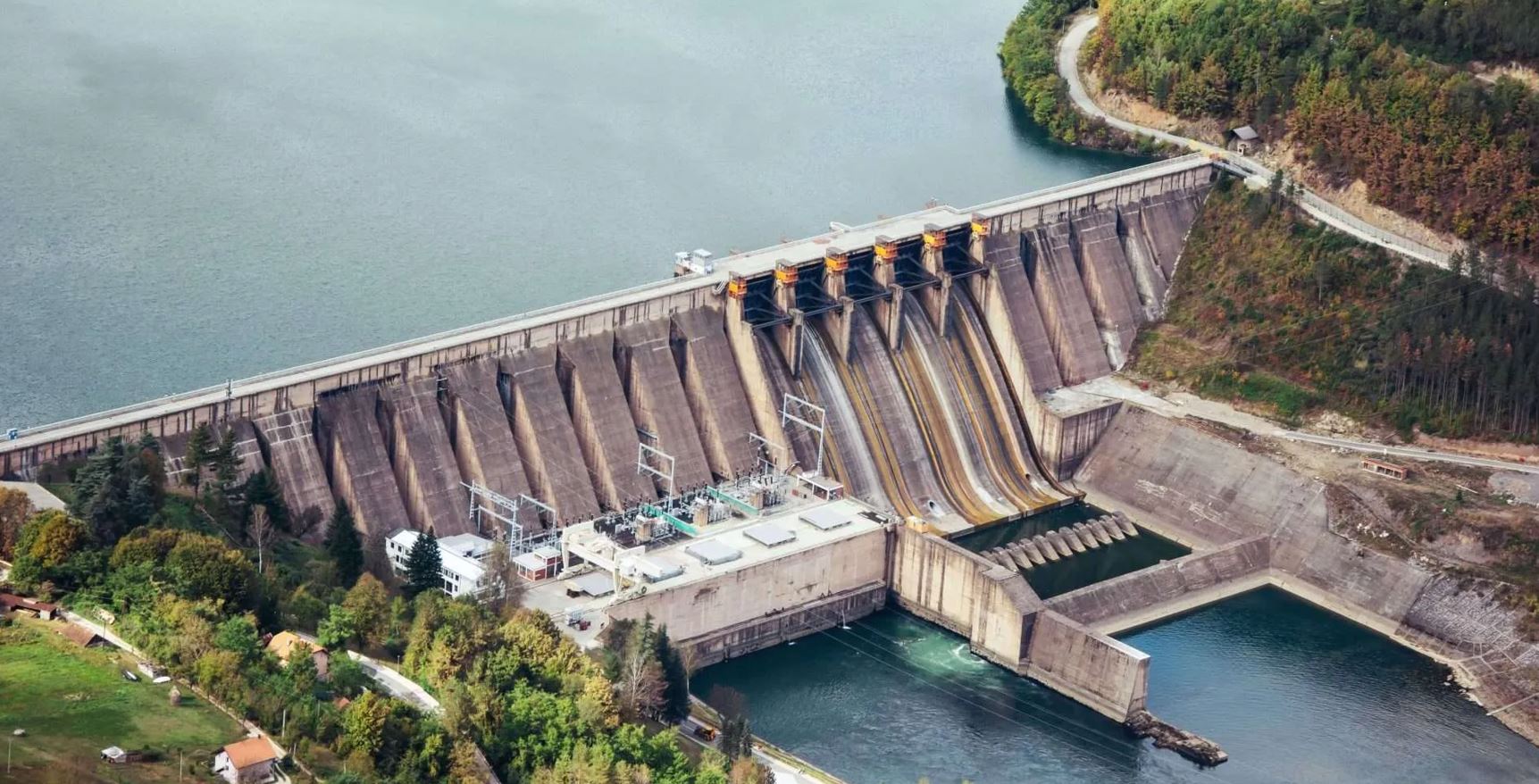
Energy sector is a strong foundation for Nepal’s economic prosperity. Due to the abundance of water resources, a lot of electricity can be generated from them. Recent developments have confirmed this.
Economic benefits can be obtained by internal consumption and export of electricity. Billions of dollars worth of fuel and gas imports can be replaced by electricity. More foreign exchange can be brought in by exporting. Electricity consumption has been increasing in Nepal in recent period. Exports are also on the rise. Therefore, the energy sector should also be encouraged.
For this, market management is also important. In the budget of the current fiscal year 2082÷83, the power sector was disappointed when it was announced to sign power purchase and sale agreement (PPA) on the take and pay model. Only the Nepal Electricity Authority (NEA) has the right to buy and sell electricity in Nepal. In that case, the market guarantee of the project was taken away after the NEA brought the policy of purchasing electricity only when it needed it. This discouraged investment in the energy sector. Naturally, investment does not come when there is no guarantee of selling electricity. Therefore, we are preparing to open PPA in take or pay model. We will open PPA on ‘Take or Pay’ by taking a decision from the cabinet. This will further encourage private sector investment in the energy sector.
Likewise, construction of two more inter-country transmission lines – Inaruwa-Purnea and Lamki-Bareilly on the Indian side has also started. Likewise, the construction of the New Butwal-Gorakhpur interstate transmission line is in the final phase. With the completion of the transmission line, it will be easier to export electricity to India. This also attracts investment in the energy sector.
Overall, the environment for investment in the energy sector has already been created. We are still hopeful of domestic and foreign investment. However, the cumbersome process in this area has to be removed. The problem of tree felling and other issues will also have to be removed. Similarly, the demand for electricity needs to be diversified. At present, the demand for electricity is high in the industrial sector. Now, not only in industrial areas, but also in data centers, charging stations, transportation, kitchens, electricity consumption should be increased. When the market expands, investment is automatically attracted.
(Article by Minister for Urban Development, Physical Infrastructure and Transport, Energy, Water Resources and Irrigation)













प्रतिक्रिया दिनुहोस्