


Kathmandu. Taking loans from banks and financial institutions and not paying them on time. When the payment is not made on time, the employees of the banks and financial institutions come to collect the loan. However, the number of people being beaten and abused has been increasing in recent times.
Employees who want to take loans at the time of taking loans and make various excuses while repaying them, if they do not pay according to the conditions prescribed while taking loans from banks and financial institutions, then they are attacked by the employees to recover the loans as per the law.
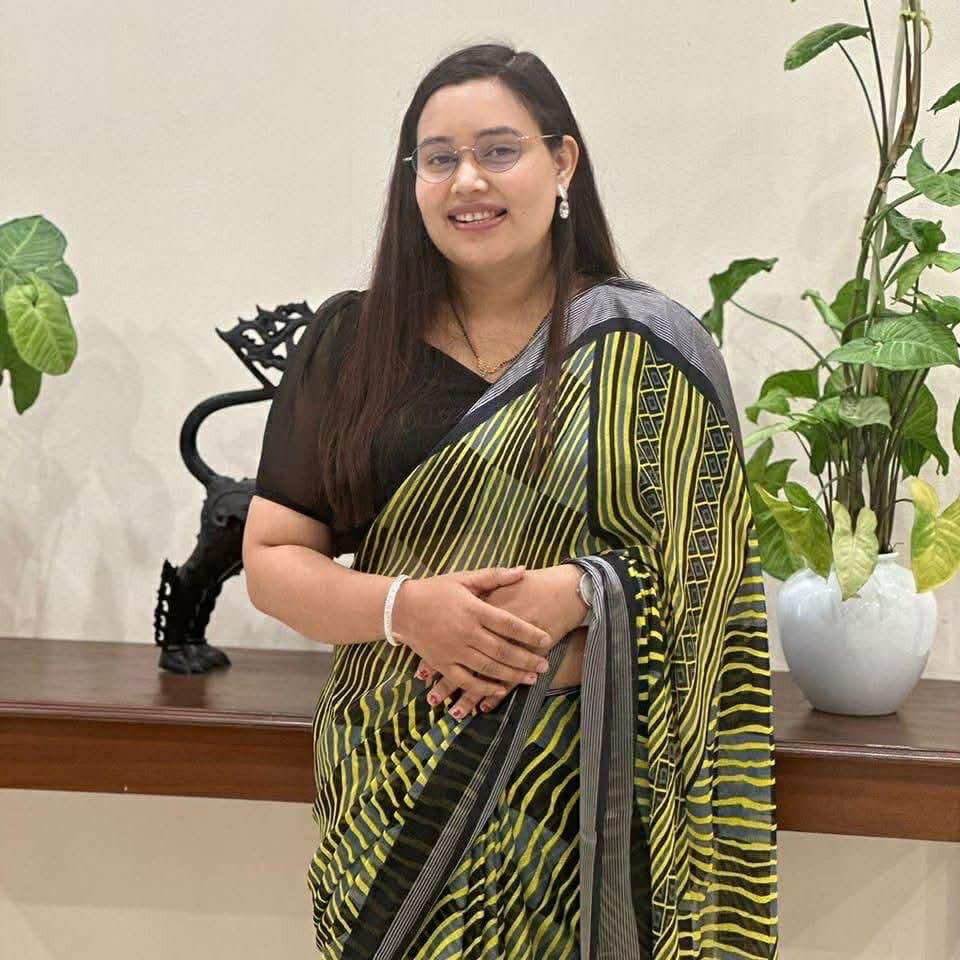
The misbehavior of the employees of banks and financial institutions is not only from the general public but also from the political leadership, which is considered to be the guide in the society. The latest example of this is the excesses committed against the employees of Jyoti Bikas Bank. Rita Kumari Chaudhary is the deputy mayor of Saptakoshi Municipality in Saptari district. He was not elected to the post of deputy mayor in the previous election.
And the employee of Jyoti Bikas Bank became a victim of the same deputy mayor. The incident took place on December 25. On that day, the employees of the Rupani branch of Jyoti Bikas Bank went to discuss the borrower’s request after the borrower had not paid the principal interest for 118 days.
Saptakoshi Integrated Agro Farm in Saptakoshi Municipality-7 had taken SME loan worth more than Rs 10 million. Under the leadership of Deputy Mayor Chaudhary, two employees who had gone from the bank’s regional office Bardibas to discuss the issue of loan interest were systematically garlanded with shoes, smeared soot and manhandled the employees.
Instead of paying the principal interest on the loan taken from the bank, the mistreatment of the bank employees was widely criticized. When the bank employees went to the police to file a complaint against this, they were initially not allowed to file a complaint on political grounds. Later, the police registered a complaint. Police have arrested Ukamant Chaudhary and Sanjeev Chaudhary for their involvement in the incident. Deputy Mayor Chaudhary absconded at the time. The main reason for this incident is the support of political parties.
Bishnu Kumar Karki, the outgoing lawmaker of the Nepali Congress, is another example of a blacklist who has not repaid the loan taken from the bank in the name of a political party. Karki’s bank loan is yet to be repaid for more than three years. According to Kumari Bank sources, Karki and his companies owe more than Rs 500 million to the loan.
It has been two years since he was blacklisted by the Credit Information Center after he failed to repay the loan despite repeated reminders. However, even after being blacklisted, the bank has not been able to proceed smoothly in the loan recovery process. Karki, who has invested in crusher and brick industry, has been running loans in the name of various companies including Manokamana Brick Industry of Nawalparasi, New Manakamana Brick Factory Pvt Ltd of Rupandehi and Roadsit Auto Mart Pvt Ltd of Butwal.
According to a source at the bank, Karki had used political influence to obstruct the auction process of the bank. His relatives threatened to attack the bank team that went to auction the mortgage.
Karki had taken a loan from the then Nepal Credit and Commerce (NCC) Bank, which was later merged with Kumari Bank. He has been blacklisted by the Credit Information Centre since January 3, 2080.
The fact that he was recommended by the Congress for the upcoming election to the House of Representatives despite such serious financial controversies reveals the depth of political patronage. On the one hand, the banks have not been able to raise the loan, on the other hand, the borrowers are in the process of becoming political candidates.
These incidents in the banking sector are just a few examples. Experts in the field say that on the surface, such incidents are widespread. Such incidents are not limited to the banking sector. The cooperative sector is also going through a similar problem.
This is evident from the fact that the cooperatives themselves were blacklisted when the Laligurans Cooperatives initiated the legal process regarding the auction of the securities in the name of Rajendra Pandey. While the defaulters are protected under political patronage, the institution that tries to recover the loan will be liable to action.
A former banker says that in the recent past, borrowers with political clout have disrupted lending rules. “Ordinary citizens will have to face immediate blacklisting, mortgage auction and legal action if they do not repay their loans. But in the case of those with political access, the rules are limited to paper,” he says. According to him, due to political pressure, bank employees are afraid to work openly.
Regulatory bodies such as the Nepal Rastra Bank and the Department of Cooperatives have repeatedly talked about loan discipline, but there has been growing criticism that they have not been able to stop political interference in practice. In the last few years, bankers have had a hard time repaying loans given to politicians. “Loans taken by borrowers in such sectors are neither repaid on time nor can they be easily recovered through legal process,” says a banker.
Banks and financial institutions are afraid to follow even the normal process of loan recovery because of borrowers linked to political parties, people’s representatives or influential leaders. In some cases, employees who go to recover loans have been subjected to violence, threats and humiliation.














प्रतिक्रिया दिनुहोस्