


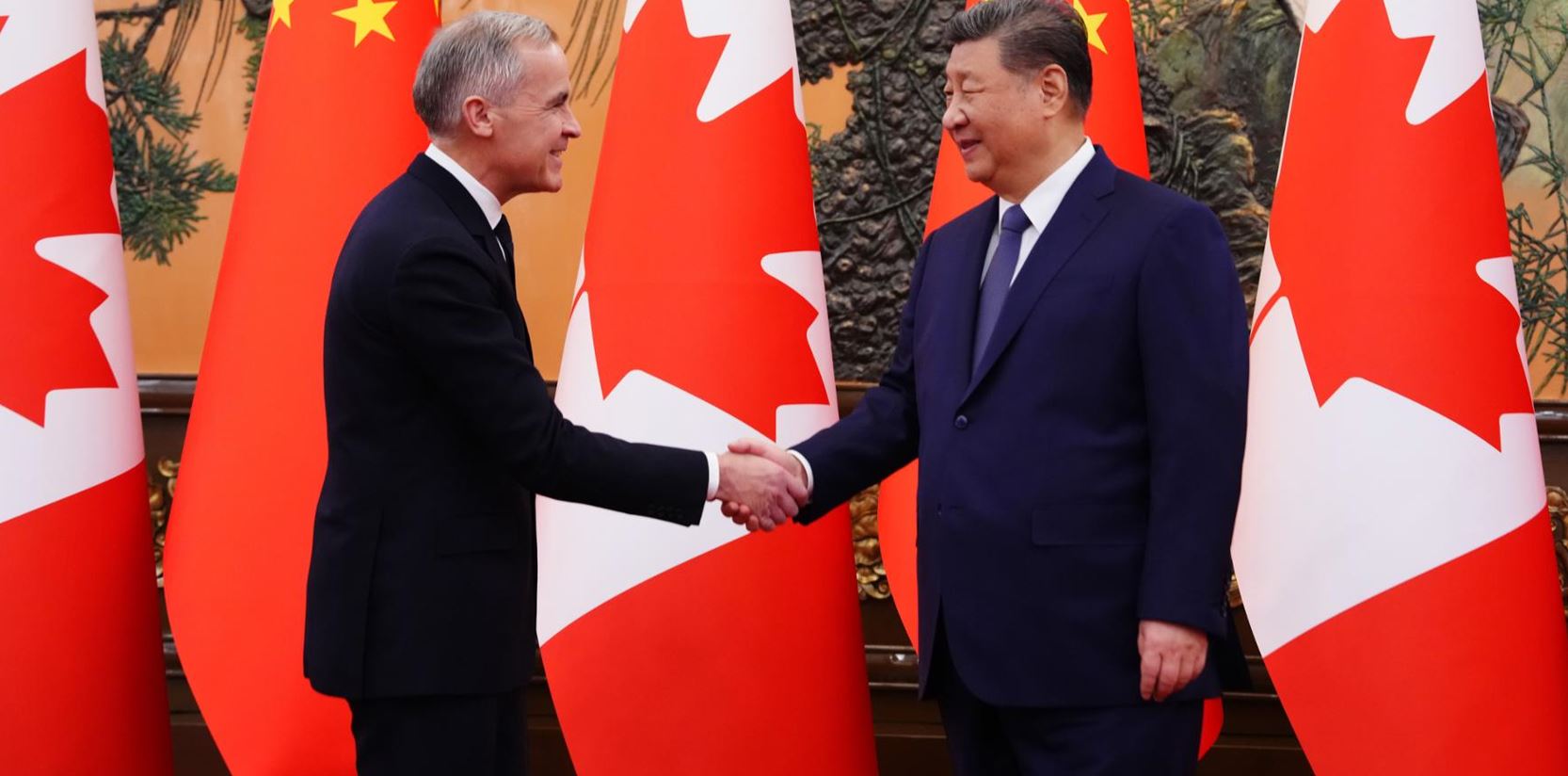
Kathmandu. China, Canada’s top leaders on Friday vowed to improve their strained bilateral ties amid new global challenges.
Chinese President Xi Jinping told visiting Canadian Prime Minister Mark Carney that he was positive and willing to improve relations between the two countries. He said the two countries have been continuously in dialogue on the issue of restoration and resumption of cooperation since their first meeting on the sidelines of the South Korea Regional Economic Summit last October.
“Our meeting last year has pushed China-Canada relations into a new chapter of improvement,” President Xi Jinping said.
Carney, who became the first Canadian prime minister to visit China in eight years, vowed that the good ties with China would help improve governance that is currently under “deep pressure”. Pointing out the need to develop relations as per the new global realities, he called for expanding collaboration in agriculture, energy and financial sectors.
These new realities are particularly linked to President Donald Trump’s so-called “America First” policy. The tariffs he imposed have had a direct impact on the economies of both Canada and China. Ahead of his visit, Carney, who met with several major Chinese companies in Beijing, said Canada was focused on building alternative economies while reducing its dependence on the US during “times of global trade disruption”.
However, there has been no concrete announcement after the meeting between China and Canada on the tariffs imposed on each other. This issue is still a major issue stuck in bilateral relations.
Under Carney’s predecessor, Justin Trudeau, Canada followed the US policy of imposing a 100 per cent tariff on electric vehicles and 25 per cent on steel and aluminum. In retaliation, China imposed a 100 per cent tariff on canola oil and food imported from Canada, and a 25 per cent tariff on pork and seafood. In addition, an additional 75% of canola seeds were harvested last August. A tax of 8 percent was levied. According to industry groups, these import taxes have almost completely shut down the Chinese market for Canadian canola.
Analysts say China hopes Trump’s pressure tactics on US allies such as Canada could encourage them to adopt an independent foreign policy less in line with the US. In this context, the US president has publicly suggested that Canada become the 51st state of the United States, which has sparked further debate in North American politics and diplomacy.


















प्रतिक्रिया दिनुहोस्