


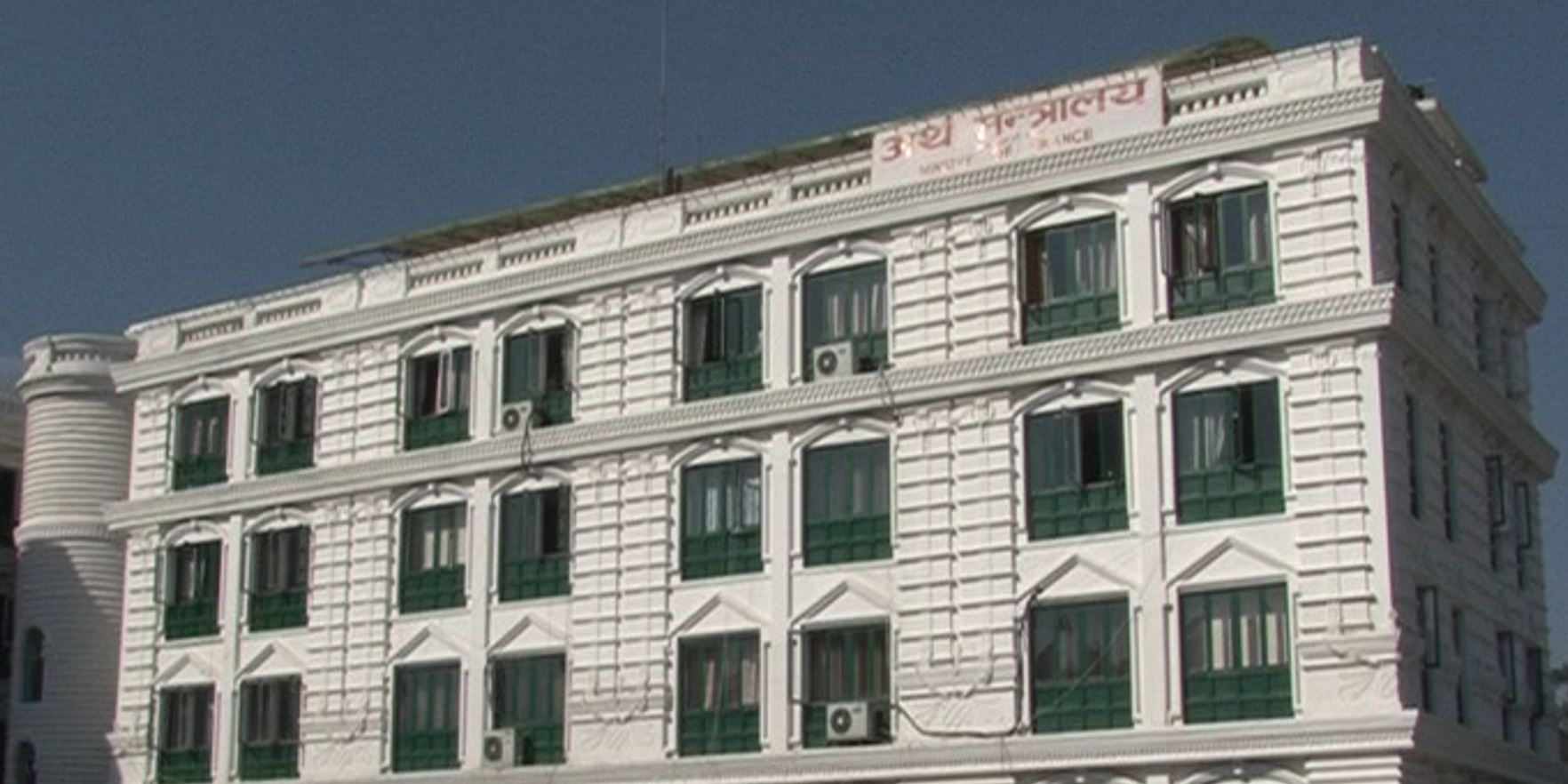
KATHMANDU, Jan 30: The Ministry of Finance has made public the works and achievements made public in the second quarter of the current fiscal year 208/83.
The Ministry has made public a detailed progress report on budget implementation, revenue management, legal reforms, fiscal federalism, financial sector reforms, planning, monitoring and administrative management.
According to the ministry, the annual target by mid-January is 46. 06 percent of the budget has been spent. This was 10 percent compared to the same period last year. That’s 75 percent more.
The government has allocated a budget of Rs 1964.11 billion for the current fiscal year, of which Rs 904.64 billion has been spent till mid-January. Of the Rs 1,180.98 billion allocated under the current heading, Rs 40,000 crore. Of the 82 per cent allocation, Rs 482.10 billion has been allocated and Rs 407.88 billion has been allocated under the capital head. It is said that 66 per cent or Rs 47.54 billion has been spent.
The total current expenditure during this period is three compared to the last fiscal year. Capital expenditure has increased by 35 percent. It has decreased by 86 percent. Similarly, the expenditure on financial management is 53. According to the ministry’s report, it has increased by 29 percent.
According to the report, not only the weak capital expenditure but also the revenue collection has seen a huge pressure. The government has set a target of collecting Rs 14.40 trillion in revenue for the current fiscal year, but it was supposed to collect Rs 711.20 billion by mid-January, but only Rs 581.40 billion has been collected in the current fiscal year. This is 129.80 billion less than the target.
Similarly, the Ministry of Finance has also been found weak in settling arrears. According to the progress report, the ministry had a total arrears of Rs 125 billion out of which only Rs 8 billion was settled and increased to Rs 117 billion during the period. Which is. That’s four percent progress.
The Ministry seems to have given priority to the resource consensus and release focused on the management of the House of Representatives and National Assembly elections. A total of Rs 6.73 billion has been allocated to the Election Commission for the election to the House of Representatives scheduled for March 4.
Likewise, the National Investigation Department (NID) has been sanctioned Rs 28 million and Nepal Army Rs 44.2 million for the purchase of security equipment. The Ministry of Home Affairs and its subordinate bodies have been provided resource consent worth Rs 10.39 billion for the election to the House of Representatives, while the Nepal Army has been given resource consent of Rs 1.94 billion for recurrent expenditure.
Likewise, the Election Commission has been sanctioned Rs 43.1 million 79 thousand for the election to the member of the National Assembly. According to the Ministry, a total of Rs 6.31 billion has been released to the Election Commission till mid-January for the upcoming elections to the House of Representatives.
The online valuation system has been introduced in all customs offices to ensure full compliance of the ‘GATT Valuation’ system towards revenue management. During this period, the dispute related to the Nepal-Mauritius Double Taxation Avoidance Agreement was resolved and the dilemma of tax deduction on the capital gains of the Dolma Impact Fund was addressed.
Similarly, the agreement between Nepal and Mauritius has been scrapped and the agreement reached before the implementation of the Income Tax Act, 2058 BS was informed through diplomatic channels.
The Customs Act-2082 is being implemented and the draft of the Customs Regulations-2082 has been sent to the Ministry of Law. In addition to holding a seminar on customs management, the government has concluded multilateral coordination to control revenue leakage through the monthly meeting of the High Level Central Revenue Leakage Control Committee.
According to the Ministry, a complaint management system has been developed in service delivery and the complaints received through the medium like ‘Hello Sarkar’ have been continuously addressed. Similarly, various agencies have been given consent to revise the rate of non-tax revenue. The provision of pasting postage stamps instead of income stamps in public service delivery documents has been removed. The report also states that the decision to waive capital gains tax for the free transfer of land in the name of individuals of Ram Kumar Sharada Uma Prasad Murarka Hospital of Siraha was also made during this period.
The Alternative Development Finance Mobilization Act, 2081 BS has been registered in the federal parliament for the implementation of laws and decisions. Amendment to Payment and Settlement Act, Customs Regulations, Financial Procedures and Financial Responsibility Regulations, Source Consent Criteria for Multi-Year Projects and Money Laundering Prevention Regulations have been approved and published in the Nepal Gazette.
Similarly, the Ministry has prepared and defended written replies in 58 different writ petitions against the Ministry. The MCC Compact has been made public through the Nepal Gazette and has sent letters to the bodies concerned for the implementation of 26 court orders and verdicts, including income tax exemption, various revenue exemptions, determination of cash transaction limit and ban on foreign currency import.
Letters have been sent to all governments for the implementation of the Third National Public Financial Management Reform Strategy aimed at consolidating fiscal federalism. The decisions of the Council of Ministers related to cutting unproductive expenditure, austerity and reprioritization of projects have been sent to the local level for implementation while 23 decisions have been sent through the meeting of the Inter-Government Financial Council for implementation.
Similarly, the Ministry of Finance has directed the local levels not to collect tax on transportation against the constitution in the last six months and discussed the proposal related to revision of royalty distribution of natural resources. A meeting of the Public Financial Management Reform Directive and Directive Committee has concluded.
The Financial Sector Development Strategy 2082/83-2086/87 has been approved by the Cabinet. According to the report, the government has implemented a ban on cash transactions above Rs 500,000, revision of the Indian currency movement limit, formation of NEPSE restructuring committee, implementation of capital market reform report and release of Rs 9.80 billion as interest subsidy for concessional loans.
Similarly, 91 grievances received through Bigul and Hello Sarkar have been settled, the monthly progress system of annual policy and program implementation has been updated, 323 posts have been cut from the organization and management survey, liability savings worth Rs 220 million and arrears have been settled 6. According to the ministry, 4 percent progress has been made.














प्रतिक्रिया दिनुहोस्