

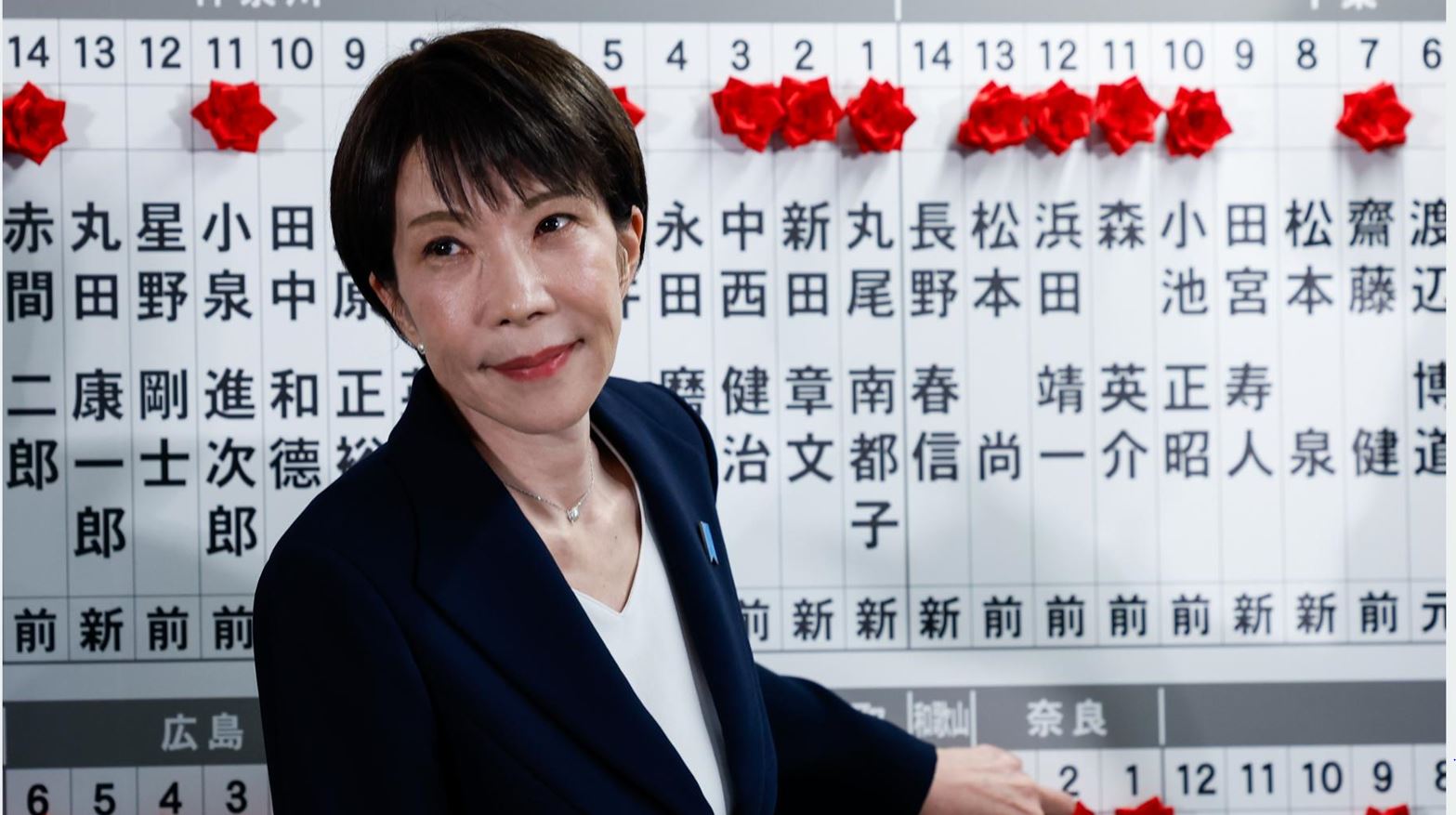
Kathmandu. Japan’s prime minister, Shinne Takaichi, has embarked on a process of converting her personal gains into sweeping conservative changes on security, the economy, immigration and social policies.
After winning a two-thirds majority in parliamentary elections, she is preparing to translate that power into concrete legal and policy action.
On Monday, she initiated the process of reshuffling the cabinet and moving forward with the delayed budget. He is expected to be re-elected as prime minister in a vote next week. In an interview with NHK, she said she believed her efforts would make Japan stronger and more prosperous.
The Liberal Democratic Party won 316 seats and a comfortable majority in the 465-member lower house, according to the results of the vote. This is the highest since the party was founded in 1955. With the alliance with the Japan Innovation Party, the ruling party has a total of 352 seats. At the LDP headquarters, she expressed happiness by pasting a red ribbon on the names of the winning candidates.
Although he does not have an absolute majority in the upper house, strong support from the lower house has enabled Takaichi to push the agenda of expanding the economy and military capabilities. Amid escalating tensions with China and efforts to strengthen ties with the US, she said she would pursue policy goals through dialogue with the opposition. “I’m going to be flexible,” she said.
Despite Takaichi’s popularity, the LDP has been hit by funding and religious scandals in recent years. It was against this backdrop that she called for early elections within three months of taking office. Since taking office in October as Japan’s first female leader, she has adopted an activist style with the slogan “Work, Work, Work” that appears to have struck a chord with young voters.
The opposition parties were divided and could not mount a strong challenge. The new coalition of former coalition partner Komeito and the Constitutional Democratic Party is expected to lose a large number of seats. US President Donald Trump congratulated Takaiichi on his “historic victory” on social media.
In the coming days, Takaichi will pass a delayed budget and implement economic measures to address rising costs and sluggish wages. By December, she aims to revise her security and defence policies to strengthen military capabilities, lift an arms export ban and increase defence spending. Tough policy proposals on immigration and foreign-ownership have received both support and criticism.
Analysts say the move could transform Japan in the long run, but it is likely to intensify debates over civil rights, regional diplomacy and internal polarization.

















प्रतिक्रिया दिनुहोस्