


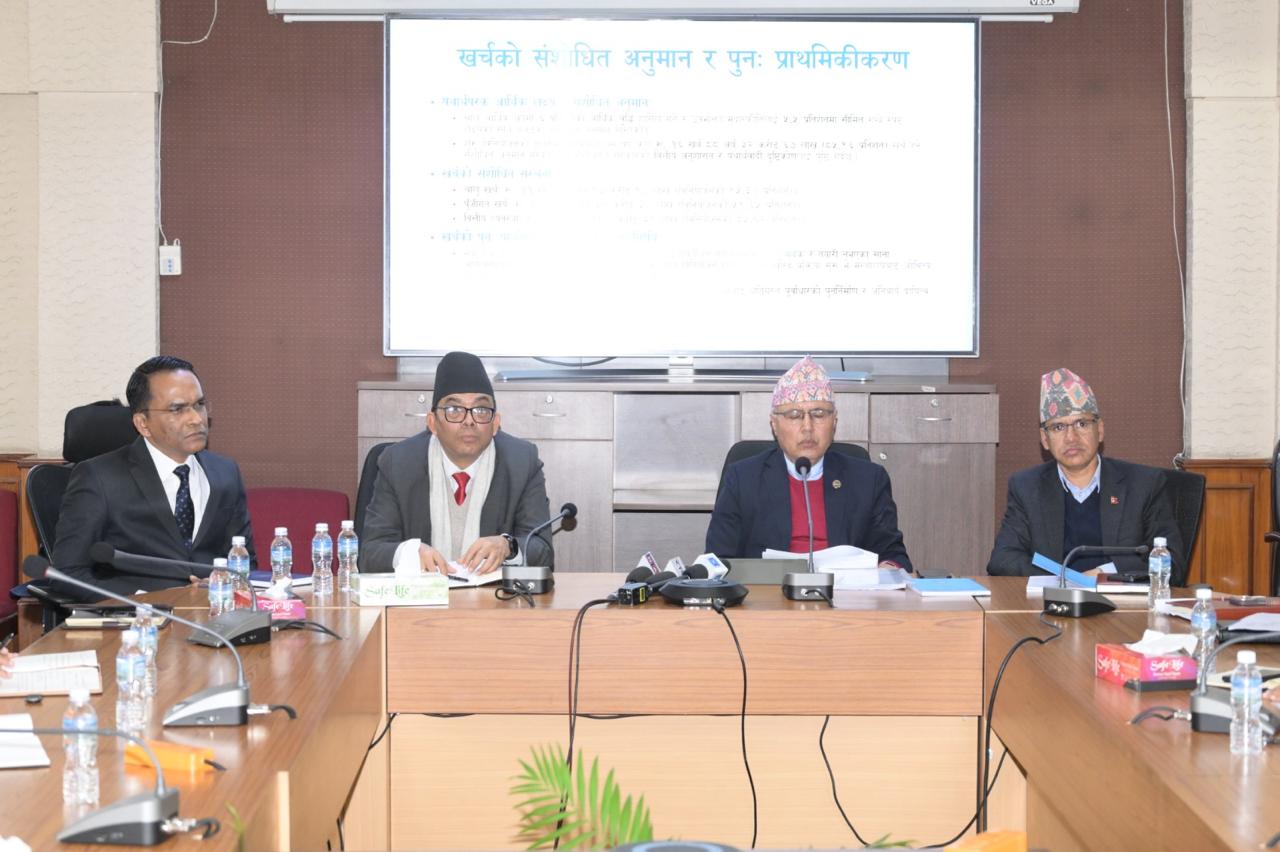
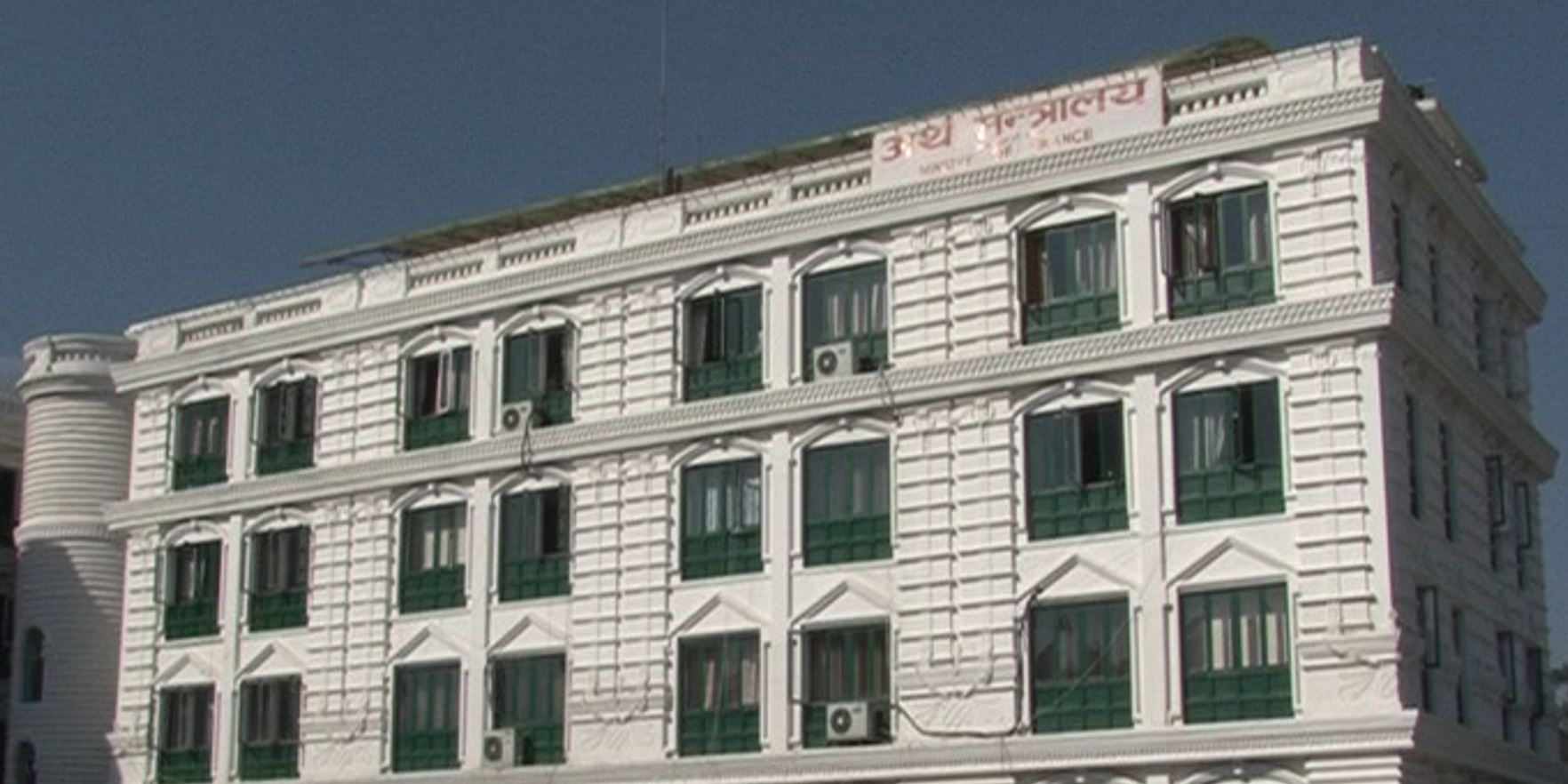
Kathmandu. The budget for the current fiscal year 2082/83 has reduced the estimates of the government’s income and expenditure. Releasing the half-yearly evaluation report of the budget for the current fiscal year today, the Ministry of Finance has reduced the estimates of both income and expenditure.
The government had allocated Rs 1,964.11 billion for the current fiscal year. Out of this, Rs 1180.98 billion has been allocated for recurrent expenditure, Rs 407.88 billion for capital and Rs 375.24 billion for financial management.
As per the revised estimates, current expenditure is estimated to be Rs 1125.97 billion, capital expenditure Rs 243.30 billion and financial management Rs 319.04 billion. The total budget expenditure is estimated to be Rs 1,688.32 billion. This amount is 85.96 percent of the initial allocation. This means that the total revised budget expenditure will decrease by 14.06 percentage points compared to the initial allocation.
In the current fiscal year 2082/83, out of the total budget of Rs 1,964.11 billion, Rs 1480 billion will be mobilized. Of the total estimated revenue, Rs 1315 billion will be used for the budget of the federal government and the remaining Rs 165 billion will be transferred to the provinces and local levels through revenue sharing. According to this, the contribution of revenue to the total budget of the federal government is estimated to be about 67.49 percent.
In the estimated revenue of the current fiscal year 2082/83, the share of tax revenue is Rs 1325.58 billion or 89.57 per cent and the share of other revenue (non-tax) is Rs 154.41 billion or 10.43 per cent. Out of this, direct tax is Rs 407.02 billion and indirect tax is Rs 918.55 billion. In this context, the share of direct tax in the total tax revenue is 30.70 percent and the share of indirect tax is 69.30 percent.
According to the Finance Ministry, the budget has been revised with the target of achieving 6 percent economic growth and limiting consumer inflation to 5.5 percent in the current fiscal year. The unusual situation created after the Jenji agitation of September 7 and 24, the decision of the Council of Ministers to reprioritise the project and reduce the expenditure have been considered as the basis of the revised estimate.
Likewise, the report states that the pressure on recurrent expenditure has increased due to election expenses of the upcoming House of Representatives, social security, dearness allowance of employees and relief to the families of those injured and killed in the agitation.
The report states that the quality of capital expenditure has not improved due to lack of preparedness for the projects, complexities in land acquisition and use of forest area, and delay in payment to contractors. Reconstruction of physical infrastructures damaged by agitation, payment of strategic projects under construction and compulsory liabilities (salary, allowance and pension) have been prioritized in the expenditure.
The Finance Ministry has also adopted a policy to transfer the budget of unprepared, fragmented projects and unproductive programs to prioritized projects by freezing them. Likewise, the government has set a target to control current expenditure by not providing meeting allowance, not taking external consultancy services, restricting foreign travel and not creating new posts.
Top priority has been given to the security bodies and the Election Commission to agree and manage the budget required for the upcoming elections to the House of Representatives scheduled for March 4. The Finance Ministry has stated that efforts are being made to maintain budget balance by optimum utilization of internal resources (revenue and internal loan) in view of the low receipt of foreign assistance and pressure on revenue collection. In order to make the budget system result-oriented, implementation of project bank, expansion of digital payment system and timely reforms in public procurement law would be carried out.













प्रतिक्रिया दिनुहोस्