


Kathmandu. The government has completed almost all preparations for holding the election to the House of Representatives on March 4. The government is preparing for the elections. The candidates are busy wooing the public.
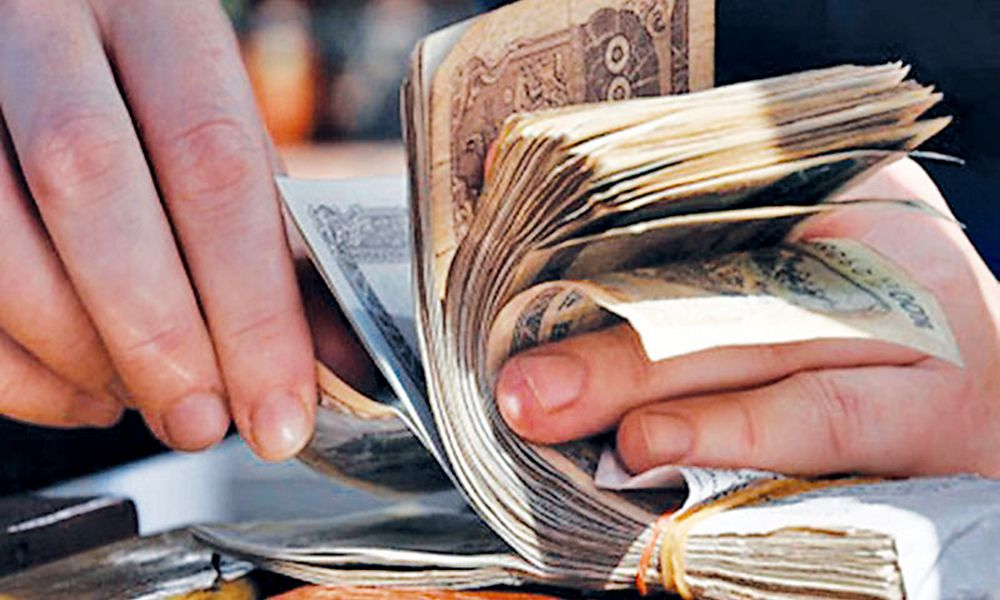
As the election season is approaching, the fear of donations has increased among industrialists and businessmen. The elections held in 2079 elected representatives for the next five years.
The re-election is taking place after the Jenji agitation on September 23 and 24. As the election is approaching, the number of calls from the candidates asking for donations has increased on the phones of industrialists and businessmen.
According to an industrialist, the number of calls asking for donations has increased on a daily basis. Although the number of calls asking for donations has increased, this time the industrialists are not in favor of openly donating as in the previous elections. The private sector has suffered a direct and indirect loss of about Rs 81 billion in the Zhenji movement. The Genji agitation has directly caused a physical loss of about Rs 34 billion to the private sector.
The private sector is now on the verge of being reduced to ashes after the vandals selectively vandalized and set fire to the private sector in the name of Genji. In this situation, the private sector is not in a position to donate to candidates and political parties in the upcoming elections.
However, the number of calls is increasing. According to an industrialist, in the last few days, up to 3 candidates have been calling every hour asking for donations. “Earlier, industrialists used to get calls for donations in the name of candidates and parties,” said an industrialist. ’
There are more candidates from outside the valley than from inside the valley. During the election, industrialists naturally donated money to the candidates in the areas where their industry was located.
The practice of industrialists donating money during the elections to the House of Representatives, provincial elections and local levels is not new. Businessmen have started saying that the private sector, which has been shaken by the Jenji movement, is not in a position to donate openly as it is rising from the dust near the election this time.
Birendra Raj Pandey, president of the Confederation of Nepalese Industries (CNI), said that the private sector is not in a position to support the candidates in this election. “The private sector, which has been in the grip of economic recession for a long time, has been affected. Now the economic activities are slowing down,” he said, adding, “In such a situation, there is no possibility of the private sector donating.” He said that even if they want to support the candidates of any acquaintance, they should support them as per the working procedure issued by the Election Commission.
KATHMANDU: The Election Commission (EC) has endorsed the ‘House of Representatives Member Election Publicity Bank Account (Operation and Management) Work Procedure-2082’ in a bid to make the election expenditure transparent and economical. As per the procedure, the name, address, profession, permanent account number, source of money and details related to tax should be disclosed while receiving more than one lakh assistance. Earlier, the commission had formulated such procedures but it was not implemented.
Industrialists and businessmen have been supporting the candidates and parties in the federal, provincial and local elections. This time, however, the situation is different due to the Genji movement. The election was also held 2 years before the regular time.
Deepak Malhotra, vice-president of Nepal Chamber of Commerce, said that the private sector is not in a position to donate at this time.
“This time, the industrialists are not in a position to donate to the candidates,” he said, adding, “The private sector, which was destroyed by the Genji movement, is slowly rising from the ashes.” In this situation, even if you want to, you can’t cooperate. ’
Malhotra said that after the Genji agitation, industrialists are in a position to not pay even the interest of the bank.













प्रतिक्रिया दिनुहोस्