


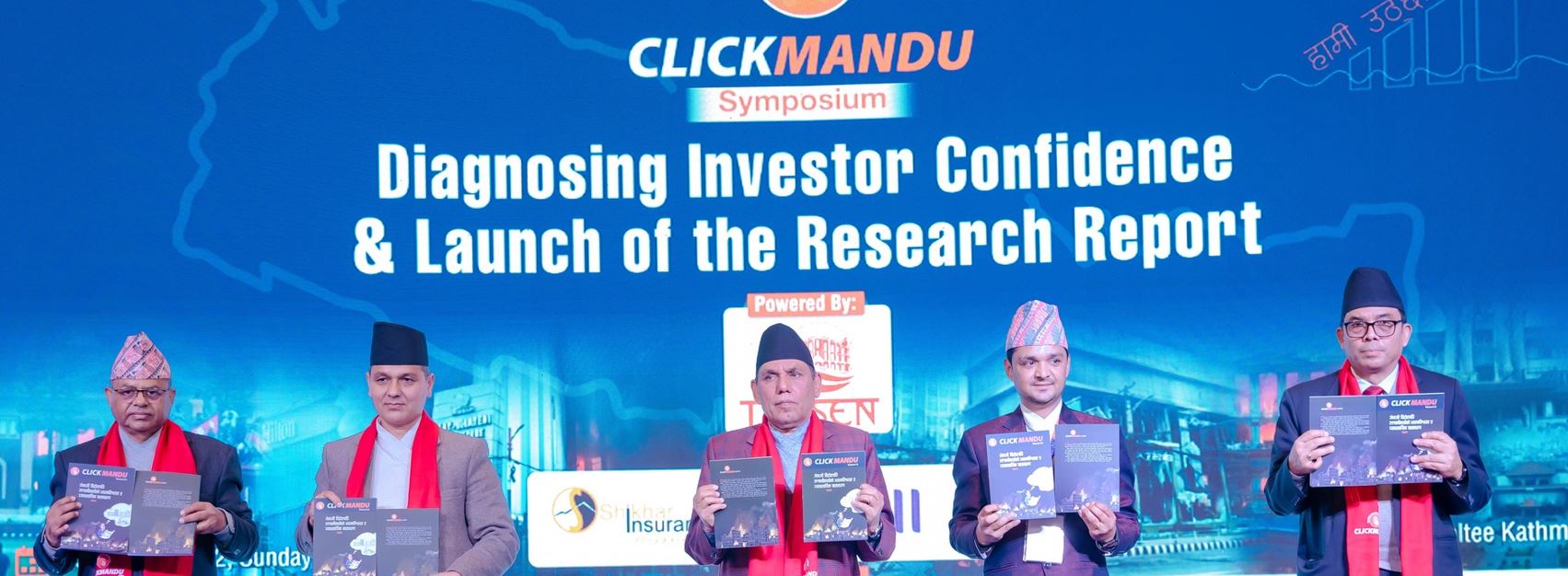
. The private sector has been terrified by the Genji agitation on September 23 and 24. The protests have weakened the morale of 98 percent of the investors.
According to a study, 2 percent of the businessmen have said that their morale has not changed. The study found that 97 per cent of businesses said the investment climate was weak (22 per cent said it was “severely affected”).
According to the report ‘Investor confidence and business environment 2082’ published by Clickmandu.com, this confirms that business confidence has been very weak. However, there is not much reluctance among investors to increase investment or expand the business. According to the study, 8 percent of the entrepreneurs said that they would not increase their investment under any circumstances, while 70 percent of the entrepreneurs were willing to invest in wait and see situation and 21 percent were willing to invest more. This shows that investors are optimistic about the challenges.
The physical or financial damage caused by the Genji agitation of September 23 and 24 has taken a big hit to the businessmen. The private sector has suffered a loss of around Rs 34 billion due to vandalism and arson of industries, banks, business establishments and vehicles during the Genji agitation. The indirect economic loss is more severe than the direct physical loss. Which is about 81 billion rupees. It is estimated that it will have an impact of about 5 percent on Nepal’s GDP.
An analysis of the nature of the losses suffered by businesses due to the Genji protests found that the impact on morale was bigger than the physical damage (arson, vandalism and looting). Among the participants, 67 percent were found to have suffered psychological damage, while 54 percent responded that the market was affected.
Similarly, while analyzing the impact of the financial sector, it is found that loan recovery has been affected, demand for loans has decreased and borrowers with capacity are also dilly-paying installments. The answer has been received that insurance claims have increased significantly.
When asked why businesses were attacked, 69 percent of the participants said that rumors and misinformation were the main reason for attacks on private property. Similarly, 66 percent of those who believe that a negative attitude towards wealth is a reason, while 41 percent believe that personal anger and frustration are the reason for attacking businessmen.
During the study, it was found that there was extreme frustration, insecurity and fear of uncertainty among the businessmen. Many entrepreneurs have developed the feeling that doing business in Nepal is a mistake. Entrepreneurs are going through post-traumatic stress as they see the business they built with their own investment and hard work collapse in front of them.
The confidence of the private sector is at an all-time low. New investment plans have been put on hold and some entrepreneurs have even started thinking about “capital flight”. The possibility of receiving foreign investment has further diminished as the message sent out that Nepal has become an unsafe destination for investment.
Entrepreneurs have felt that a wrong narrative has developed in the society to see entrepreneurs as ‘profiteers’ or ‘exploiters’ instead of being called charioteers of economic development for creating jobs and contributing to revenue. The media, political parties and the education system have failed to develop a culture of respecting entrepreneurship, which has led to a negative attitude towards the private sector.
In the aftermath of the Jenji uprising, the government has brought some temporary relief packages to maintain peace and security, listen to the private sector and give some hope to the investors. The achievements of creating an environment of security and trust from the point of whether the country will survive or not have become ‘bandages’. The business world seems happy with the role of the finance minister and other ministers who listen to and understand the private sector.
However, the lack of inter-agency coordination, the lack of evidence and the fact that the party is protecting the perpetrators of crime in the name of protest instead of taking action seems to be weakening the morale of the private sector. Unless private property is protected and the rule of law is guaranteed, it will be very difficult to regain business confidence that has been eroded by mere discussions and assurances.














प्रतिक्रिया दिनुहोस्