


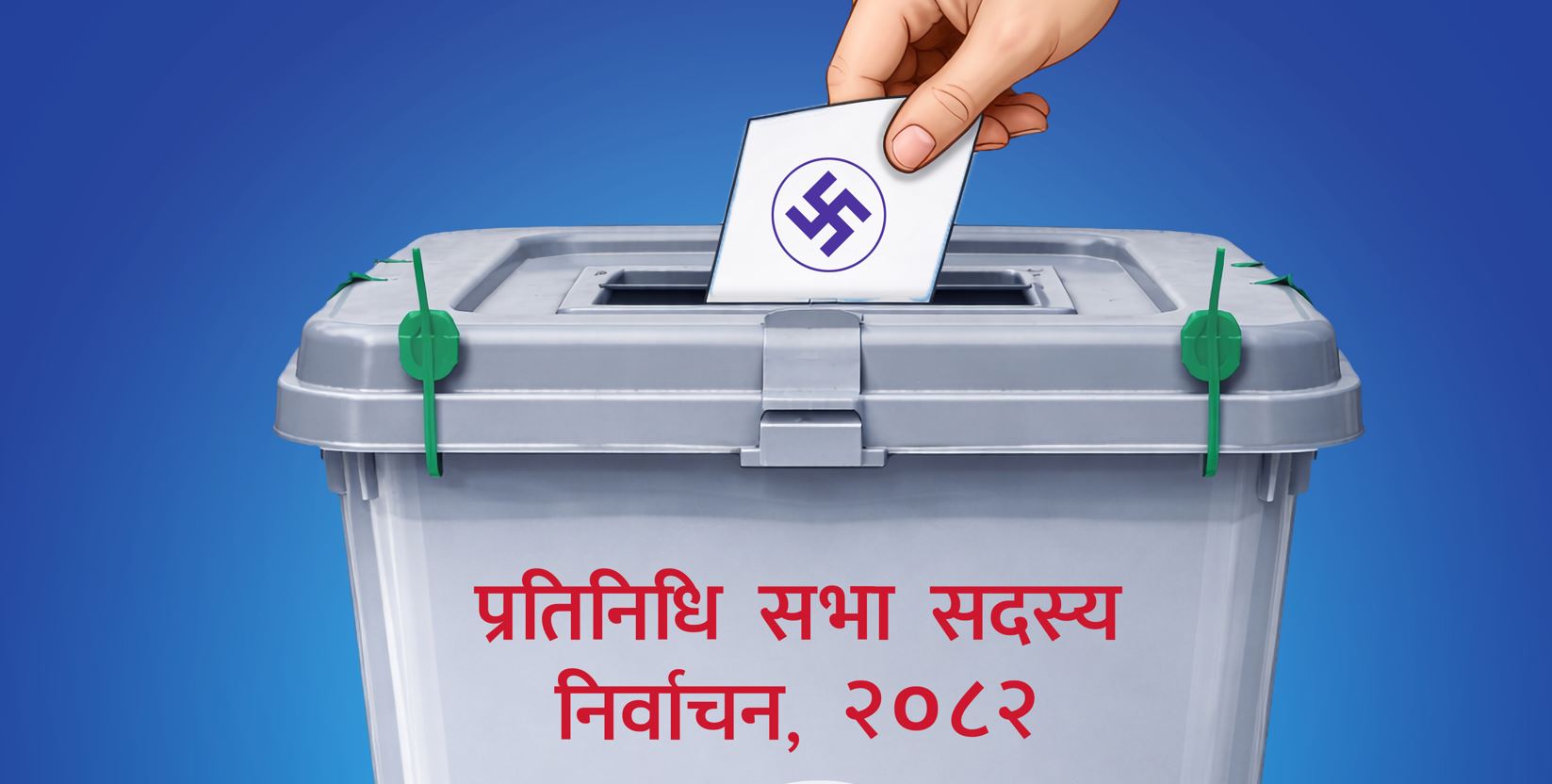
Kathmandu. The political parties, which have not played a decisive role in terms of the number of seats in the previous parliamentary elections, have come up with their own agendas to woo the voters.
KATHMANDU — The political parties that have registered their candidacies under the first-past-the-post and proportional representation (PR) system for the House of Representatives elections scheduled for March 4 have issued election manifestos and started their election publicity.
A total of 120 political parties have applied for the election, of which 65 are contesting under the first-past-the-post (FPTP) category (61) and 63 under the proportional representation (PR) category for 57 political symbols.
After the announcement of the elections, some political parties have split while some parties have been seen in the field by uniting with each other. Some political parties have campaigned in alliance with the election symbol of the election.
Nagarik Unmukti Party, Janata Samajbadi Party and Rastriya Mukti Party are vying under the leadership of veteran former minister Ashok Kumar Rai with the election symbol of the common ÷single mill machine. According to Rai, around one hundred candidates have filed their candidacies under the first-past-the-post (FPTP) category from three parties.
According to Rai, the manifesto has given first priority to strengthening the country’s independence, sovereignty, integrity and national unity. “The manifesto has included the issues of protecting, developing and strengthening the federal democratic republic, restructuring the federal structure in a scientific way on the basis of identity and capability, enforcing the protected area and special area mentioned in the constitution by formulating an Act and establishing the local level as a community development unit by making it non-partisan,” he said.
The policy manifesto states that political, economic, social and administrative reforms would be carried out for the progressive outlet of the country as per the demands of the new generation, the policy of social reform economy based on the social responsibility of the state, private sector and community, creating investment-friendly environment for the mobilization of domestic and foreign capital and technology, implementing a policy of multi-purpose people’s participation and integrated development for the utilization of water resources and mobilizing the earnings of the citizens in foreign employment in hydropower and entrepreneurship sectors ।
Joint General Secretary of Janadesh Party Nepal, Jasmine Ojha, said that the Janadesh Party and the Aam Janata Party have signed an electoral alliance using the symbol (mobile phone) and the candidacies are being held in more than 80 electoral constituencies. He said that he could not file candidacy in many constituencies due to the newly established office. According to him, the Janadesh Party has been spearheading organizational expansion campaign across the country.
The People’s Party has also issued a 13-point commitment. Nepal plans to set up a special fund to support the families of martyrs and injured who have sacrificed their lives for political change and to allocate a special budget for economic policies on climate change.
“We have set a target of 6.5-7.5 per cent GDP growth, creating 500,000 jobs in the agriculture and tourism sectors in coordination with the federal, provincial and local governments, and forming a special economic court to provide justice to the victims of the cooperatives,” said Ojha, who is also the coordinator of the manifesto drafting committee.
The Communist Party of Nepal (united) has fielded its candidates in 109 constituencies under proportional representation and 35 under first-past-the-post (FPTP) category. KATHMANDU: The faction led by CPN (Unified Socialist) leader Ghanashyam Bhusal has merged with the Communist Party of Nepal (United). The party’s election symbol is Hasiya. General Secretary Kedar Chandra Sharma said that they have attended the meeting as the three political parties have not been able to work in favour of the people.
“The policies have zero tolerance towards corruption, lawmakers should not be made ministers, lawmakers should be limited to legislative works, Prime Minister should have only two terms, ministers should not be allowed to serve more than four terms, entrepreneurship promotion, employment creation, radical changes in education sector and 70 per cent training and vocational education,” he asserted. The party has given high priority to the three-pillar economic policy.














प्रतिक्रिया दिनुहोस्