


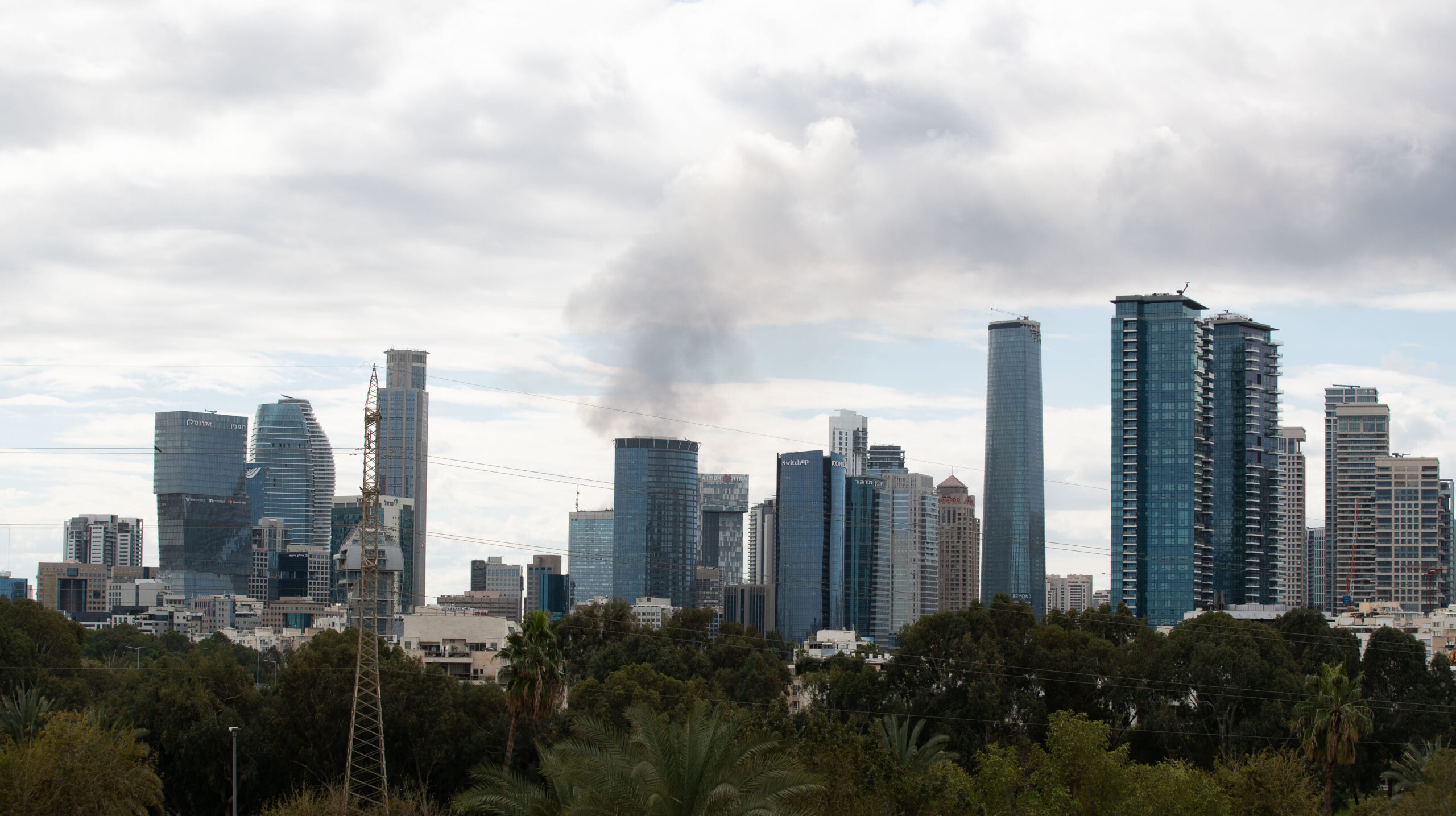
Kathmandu. New explosions and smoke have spread in Dubai, Doha and Manama after the Iranian attack in the Gulf on Sunday morning. This has increased regional tensions and fears of a wider conflict.
Iran’s crackdown on military and civilian infrastructure across the Gulf comes as part of a retaliation for attacks by the United States and Israel targeting Iran’s top leaders and top officials.
AFP journalists heard explosions in Dubai, Bahrain’s capital Manama and Qatar. Eyewitnesses saw thick black smoke rising on the morning horizon south of Doha. After some time, another wave of explosions echoed in Dubai.
The security of the United States and long-term allies in the Gulf has been threatened. On Saturday, Iran fired 137 missiles and 209 drones into Abu Dhabi and Dubai, according to the United Arab Emirates Defense Ministry. Flames and smoke were seen in The Palm and Burj Al Arab from the attack. At least one person has died and seven others have been injured at Abu Dhabi airport. Dubai Airport and Kuwait’s international airport have also been affected.
In Qatar, Iran fired 65 missiles and 12 drones, most of which were blocked, but eight were wounded and one was in critical condition, officials said. Smoke billowed from homes of the US Navy’s Fifth Fleet in Abu Dhabi and Bahrain on the first day of Saturday, witnesses said. US military bases in Kuwait have also been targeted.
The oil- and gas-rich Arab monarchies, which host U.S. military bases, have been directly affected by the Iranian invasion. Footage of drones and shrapnel falling into a residential building in Manama has gone viral on social media, showing smoke and flames from high-rise buildings.
Saturday’s unprecedented attacks also targeted the US military base in Qatar’s al-Udeid, Saudi Arabia’s eastern province and Riyadh. The incident has further increased the challenge of maintaining security and peace in the Gulf region and has drawn the attention of the regional and international community.












प्रतिक्रिया दिनुहोस्