From digital jobs to investing in crypto, the size of the economy will increase to $100 billion in five years.
लगानी न्यूज
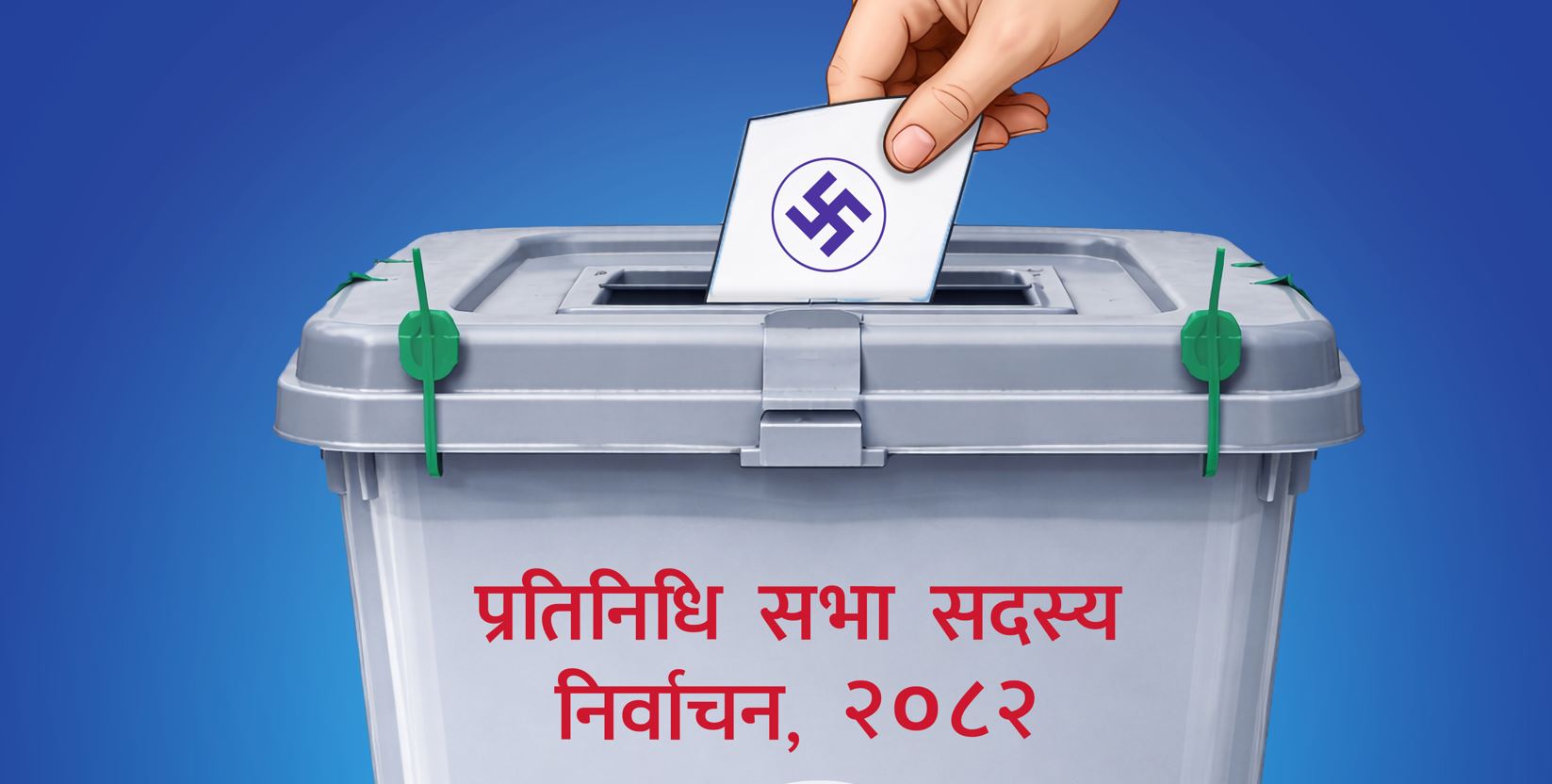
. The Rastriya Swatantra Party (RSP) is preparing to form a new government after it became the largest party in the 2082 parliamentary election. In its election manifesto unveiled before the elections, the RSP had made economic reforms focused on productivity growth, regulatory reforms, investment-friendly environment, digital economy and financial sector reform as its major agendas. Now, it is a matter of natural concern how the implementation of these commitments will proceed after the formation of the government. The RSS has examined the economic agenda of the RSP pledge.
Productivity Enhancement and Enterprise-Friendly Environment{
The manifesto has mentioned that economic prosperity and productivity will be increased along with stability as the main basis of economic progress.TAG_OPEN_div_127 The path to long-term prosperity is to achieve high quality, competitive and sustainable production by making maximum use of limited time, capital and resources. For this, there is a need for effective coordination of risk-taking private investment and competent, transparent and facilitative public roles.
The election manifesto has made it clear that the private sector will play a leading role in job creation, supply of goods and services, revenue contribution and investment capital flow and the role of the government will be only that of a regulator and facilitator.TAG_OPEN_div_125 Likewise, the party has also pledged to create the most enterprise-friendly business environment that encourages innovation, entrepreneurship and healthy competition by ending policy exploitation and artificial barriers.
The party was conscious of the fact that it would fall into the low-income trap in the long run if structural economic transformation could not be achieved within the next 10-15 years by converting youth-centric demographic dividend into an opportunity.TAG_OPEN_div_123 Therefore, productivity enhancement, skill development, capital formation and technology-based industrialization will be promoted as national priorities.
{{TAG_OPEN_strong_69}Regulatory Reform and Social Market Economy
The pledges also include the creation and strengthening of professional, transparent and powerful regulatory bodies free from political interference to control malpractices such as cartels, unhealthy competition, rent-seeking, and policy exploitation.TAG_OPEN_div_120 Nepal’s realistically adapted, balanced and sustainable economic model would be adopted within the framework of a social market economy that promotes innovation, fair competition and social responsibility in a balanced manner, ending the unfair nexus between politics and regulation.
} Liberal economic policies that promote private sector mobility, innovation and creativity and equitable redistribution of national income through public education, health, transport, housing and social security will be balanced in the promissory note. The welfare state is not limited only to the distribution of benefits but also aims to transform the form of growth and create the basis for long-term economic, social and environmental balance.
Growth targets and legal reforms
About TAG_OPEN_div_115 two dozen Acts that were hindering economic progress or becoming irrelevant were announced to be repealed. It aims to reduce the cost of production, improve business environment and attract domestic and overseas investment in priority areas of economic growth by systematically repealing or reforming cumbersome laws and regulatory procedures.
The first party, the Rastriya Swatantra Party (RSP), has set a target to establish Nepal as a ‘respectable middle-income country’ by maintaining an average economic growth rate of seven percent annually (at constant prices) in the next five years.TAG_OPEN_div_113 Based on this, the per capita income will exceed ¥ 3,000 within five to seven years and the size of the economy will be close to ¥ 100 billion. It is stated that independent analysis, report of High Level Economic Reform Suggestion Commission, and suggestions from the Confederation of Nepalese Industries (CNI) and Federation of Nepalese Chambers of Commerce and Industry (FNCCI) would be taken on the basis of decision on which acts and regulations to repeal or amend them.
Tax Policy and Exchange Rate Review
As a party that adopts a liberal economic policy with social justice, it is said that all tax burdens will be reduced with the guarantee that there will be no revenue reduction on the basis of improved understanding with the private sector. Tax laws and regulations will not be enforced in a retrospective manner and planned tax evasion will be prevented. For the bright future of middle-class families and children, a policy of revising the income tax limit on the basis of ‘family burden’ will be adopted.
Institutional savings programs will be encouraged by making a legal provision that a certain amount can be deducted from taxable income for education, health and nutrition expenses. The manifesto also states that the system will be studied and reviewed with the participation of distinguished international academics as the exchange rate has been stable with the Indian rupee for the last three decades.
Investment, Public Institutions and Project Management
}
It is stated that the one-TAG_OPEN_div_105 stop service center will be implemented with the provision of not having to visit other agencies after submitting the file in one place for the promotion and facilitation of domestic and foreign investment. Arrangements will be made to register the business through digital medium in easy, fast and free of cost. The party has also pledged to reform the structure of the Revenue Tribunal and abolish the Department of Revenue Investigation and establish a skilled professional unit with a majority of chartered accountants to control corruption.
Public enterprises will be classified and some will be merged, some will be taken to the private-public model, some will bring in strategic partners and decentralize others, and some will move forward with the option of bringing the ownership of immovable property in the name of the government. The public projects will be implemented in mission mode with clear objectives, defined budget and timelines, and arrangements will be made not to transfer the chiefs and deputed employees until the project is completed.
The manifesto also mentioned that a result-oriented, time-bound action plan would be implemented to complete the national pride projects that have been stalled for the past 12 years within the next two years and in the next five years, 10 new projects of diversified sectors would be included in the list of national pride and would be forwarded in a ‘fast track’ model TAG_OPEN_div_101 ।
Financial Sector Reforms
} The entire non-banking financial sector will be brought under the direct and powerful supervision system of the Nepal Rastra Bank by replacing the arbitrary and lax regulation of the cooperative and microfinance sector. Similarly, cooperatives and microfinance companies with a turnover of more than Rs 500 million will be mandatorily brought under strict regulation by the Rastra Bank and a high-powered ‘second-tier regulator’ will be set up for the systematic operation of small institutions.
In order to end duplication and ‘debt trap’ in the flow of loans, the Rastriya Swatantra Party (RSP) has stated in the promissory note that both cooperatives and microfinance will be linked with the ‘Credit Information Centre’ to ensure that loans are disbursed only on the basis of their actual capacity.TAG_OPEN_div_96 It is stated that the automatic system of taking only a few percent premium by linking the interest rate to the base rate will be implemented and the high interest rate and unfair service charge will be eliminated.
Savings Security & MeterInterest End
}
Within a hundred days of the formation of the government, small savings will be returned to their savings accounts and an ‘Integrated Savings Security Fund’ will be set up by the state to protect the savings of the savers.TAG_OPEN_div_93 It will also pave the way for the reconciliation to the directors or management parties who are ready to return the savings as per the policy of ‘not closing but listening’. Defining metered interest and unfair transactions as economic crimes, it said that all its networks will be dismantled legally and structurally within the next five years. The affidavit also made public that a high-powered ‘Speedy Justice Taskforce’ would be formed to conduct a judicial investigation into all the illegal tamasuks and kapali tamasuks committed in the past and return the land and property of the victims.
Capital Markets and Digital Economy
In order to make the capital market transparent, safe and investment-friendly, NEPSE will be made internationally accredited and a zero-tolerance policy against insider trading and market manipulation will be implemented.TAG_OPEN_div_90 Debt market and bond market would be developed by encouraging pension funds, insurance and mutual funds to invest actively, a policy would be made easy for NRNs to do business in NEPSE and the commodity exchange market would be brought into operation at the earliest.
The policy states that the concept of ‘Economy without borders’ will be placed at the center of the National Economic Strategy, taking into account the unique geography and situation of Nepal and digital transformation will be made the main basis for transforming the economy dependent on labour exports into a service-export-oriented and knowledge-based economy.TAG_OPEN_div_88 For this, policy reforms, infrastructure development and public-private investment would be increased through the formulation of a revised and expanded Digital Nepal Framework.
In its election manifesto for the last election, the Rastriya Swatantra Party (RSP) had announced an ambitious plan to make the information technology (IT) sector the main economic base of the country, surpassing remittances, which is considered the backbone of Nepal’s economy.TAG_OPEN_div_86 The government has announced the IT sector as a national strategic industry and aims to make it the largest export-oriented sector in the country. The Rastriya Swatantra Party (RSP) has set an ambitious target of increasing the export of information technology sector to ¥ 30 billion in the next 10 years. To achieve this goal, the party has decided to form an autonomous ‘IT Promotion Board’. For the development of this sector, arrangements will be made to provide special income tax concession, simple policy to attract foreign investment and take profit back home and concessional loan by collateralizing intellectual property.
TAG_OPEN_strong_62 Digital parks in all seven provinces, five lakh jobs
}
RSS has announced a plan to construct state-of-the-art digital parks in all seven provinces to develop Nepal as a ‘Global Tech Hub’.TAG_OPEN_div_83 The goal is to ensure employment to five lakh youths directly. For this, a huge investment will be made in communication infrastructure, data center, cloud services, and cybersecurity, emphasizing on building a digital ecosystem.
‘Cashless Society’ and priority to indigenous startups{
}
The Rastriya Swatantra Party (RSP) has put forward a plan to build a ‘cashless society’ by linking all financial transactions on a unified digital platform, recognizing Nepal as a ‘digital-first country’.TAG_OPEN_div_80 This will help control corruption and revenue leakage, the promise states. The party has also pledged to immediately remove the legal and technical hurdles of the ‘International Payment Gateway’ to connect domestic startups to the global market.
AI and Nepal’s Potential in Crypto
The RSP aims to transform Nepal from a country that exports only crude power to a country that exports artificial intelligence (AI) and computing power.TAG_OPEN_div_77 A high-voltage data center will be set up near the hydropower project considering Nepal’s clean energy, cold climate, and geographical structure suitable for operating a data center. RSP claims that ‘Green GPU Computing’ service can be exported to Asia.
Within a year, a clear national policy on the regulation of cryptocurrencies and consumer protection will be brought based on a global study, and the possibility of crypto mining will be pursued as a pilot project.TAG_OPEN_div_75
{{TAG_OPEN_strong_59}Digital Employment and ‘Remote Work’
The Rastriya Swatantra Party (RSP) has said that it will ensure that foreign companies can stay in Nepal and work for foreign companies by embracing the changes in the global labor market.TAG_OPEN_div_72 For this, remote work and digital employment will be legalized by amending the Labor Act. In addition, a policy arrangement for special visa and residency will be made to attract ‘Digital Nomad’ (Nomad Digital Employees).



















प्रतिक्रिया दिनुहोस्