


Kathmandu. In Nepal, the burden of blindness among women is higher than that of men. According to the study, women have a 1.3 percent higher risk of blindness than men.
Cataracts, age-related macular degeneration (AMD) and dry eyes are more common in women than men. Although eye problems are more common in women, women have very little access to treatment.
The results of the research show that the problem of blindness is more in women than men due to various economic and social reasons. There are more than 40,000 blind people in Nepal and around 60 percent of them are women. ”
More than half of the people with visual impairment are women. Poverty, lack of awareness, lack of transportation, inability to take decisions, increased family responsibilities and financial dependency are some of the reasons for women’s lack of access to eye health.
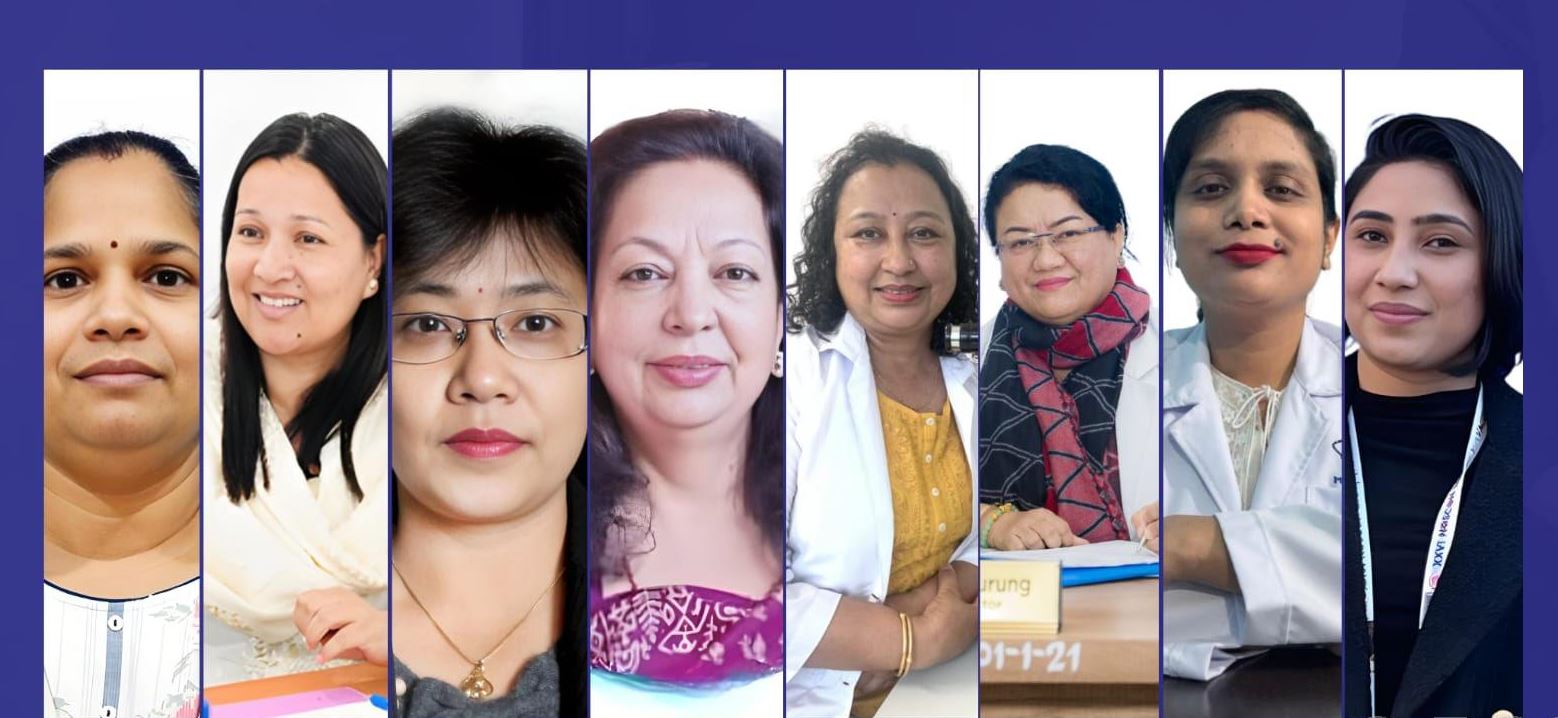
Outstanding Women’s Leadership: Inspiring Contributions to Eye Health
Women have been playing a significant role in the health sector, especially in the expansion of eye health services and in the reduction of blindness. Women Chief Medical Directors, Medical Directors and Women Chairpersons of Hospital Management Committees have been playing inspirational roles in institutional development, quality service delivery, human resource production and community outreach.
Prof. Dr. Sabina Shrestha (Chairman of Hospital Management Committee, Kirtipur Eye Hospital){{TAG_OPEN_strong_101 TAG_CLOSE_strong_101}}
}
Prof Dr Sabina Shrestha is a senior ophthalmologist and a doctor with expertise in the field of pediatric ophthalmology. As the chairperson of Nepal Netra Jyoti Sangh, Kirtipur Eye Hospital Management Committee, she has been playing a leading role in hospital management, institutional strengthening, service expansion and quality enhancement.
Prof Dr Shrestha, who completed MBBS from Bangladesh, completed MD in ophthalmology from the National Academy of Medical Sciences. She also received a fellowship in pediatric ophthalmology from Venue Eye Institute and Research Centre, India. Under his leadership, Kirtipur Eye Hospital has prioritized quality and accessible eye service and expanded community-oriented programs.
His active participation in eye care programs, eye camps, public awareness campaigns and community outreach has helped to reach eye care services in rural and remote areas. She says, “Pediatric ophthalmic diseases and visual impairments should be diagnosed and treated in time.” For this, eye check-ups should be further expanded in the community and schools. ”
She is the recipient of various national and international awards including ‘Lifetime Achievement Award’ presented by Nepal Nepal Aphthalmic Society in 2025. She has been active in literature, painting and music along with medical service, “Women power is the basis of change. It is our dedication and leadership at home, workplace and society that creates a bright future. Instead of fighting for women’s rights, they should advance themselves through their efficiency, let’s move forward with confidence and cooperation, on the journey of success by giving. Her dedication, leadership skills and commitment to social responsibility have established Dr. Shrestha as a strong example of women leadership and blindness reduction campaign in Nepal.
Dr. Sulaxmi Katuwal (Chief Medical Director, Eye Health Program, Rapti and Bahadurganj)
}
Dr. Sulaxmi Katuwal is an excellent ophthalmologist in the field of eye health. According to him, she has performed more than one lakh surgeries so far. This includes 91,000 SICS, 5,000 Phaco, 1,000 oculoplasty and 3,000 others. She has also provided OPD services to more than 10 lakh eye patients.
She has been actively participating as a team leader in various surgical camps for the reduction of blindness in remote and inaccessible communities. “The 21st century is an era of women empowerment. Today, there is no field that women cannot do. Women’s empowerment is essential for the development of the family and society. Only the support and understanding of the family in the society can strengthen women’s empowerment. The power of women can never be underestimated. ”
He completed his MBBS from Tver State Medical University in Russia in 1999 and MD degree in ophthalmology from the National Institute of Medical Sciences in 2007. In 2011, he completed his Phaco-Emulsification Training in Coimbatore and in 2014 he completed Oculoplasty Fellowship from Tilganga Institute of Ophthalmology. Dr Katuwal, who started her service as an ophthalmologist at Rapti Eye Hospital in 2007, has been working as the deputy medical director and medical director since 2015.
Prof. Dr. Sushila Patel Choudhury (Chief Medical Director, Lumbini Institute of Ophthalmology){{TAG_OPEN_strong_99 TAG_CLOSE_strong_99}}
}
Chief Medical Director of Nepal Netra Jyoti Sangh, Lumbini Institute of Ophthalmology, Prof Dr Sushila Patel Chaudhary is a senior ophthalmologist and a doctor in the treatment of cornea.
She has performed surgeries on more than 40,000 eye patients and provided treatment services to about 200,000 patients. She has published 18 scientific articles in national and international journals.
She also played a key role in treating eye patients who sustained eye injuries during the 2024 Bangladesh insurgency. “Even in challenging and sensitive circumstances, I went to Bangladesh with high professional competence, patience and humane dedication to provide eye care in Bangladesh,” says Dr. Bhandari. ”
Her contribution to the community through hospital management, quality surgical services, production of manpower and operation camps in rural areas has established her as a capable woman leader. “Women have been fulfilling their role with full dedication and tireless hard work in every sphere – workplace, home and community,” says Prof Dr. Chaudhary. A woman’s strength lies in her resilience, commitment and constant effort. ”
Dr Chaudhary completed her MBBS from King George’s Medical College, Lucknow and MD (Ophthalmology) from BP Koirala Institute of Health Sciences, Dharan. She received her specialized fellowship training in cornea and external diseases from Aravind Eyecare System and KSEI Eye Institute.
Currently, he is working as the Chief Medical Director of Lumbin Institute of Ophthalmology and has contributed significantly to the production of ophthalmic manpower in Nepal as the Academic Program Director of the Institute for more than five years.
Dr. Babita Gurung (Medical Director, Himalaya Eye Hospital){{TAG_OPEN_strong_98 TAG_CLOSE_strong_98}}
}
Dr Babita Gurung, medical director of Nepal Netra Jyoti Sangh, Himalaya Eye Hospital, Pokhara, is an experienced ophthalmologist. She has performed surgeries on more than 17,000 eye patients and provided eye care services to more than 153,000 patients. She has been providing training and guidance to various health workers and doctors as well as providing services through various eye surgery camps.
Dr Gurung has established herself as an outstanding woman leader due to her contribution to the community through hospital management, quality eye care services, production of human resources and operation camps in rural areas.
She has published several research articles in national and international journals. “Investing time, resources, guidance and investment in women is not a loss, it’s a gain for society,” she says. The need of the hour is to end gender-based violence and establish equal access to education and economic opportunities. Progress and prosperity for all is possible only through building a just society. ”
Dr Gurung completed her MBBS Degree from USTC, Bangladesh in 2001 and MD (Ophthalmology) from BP Koirala Lions Centre for Ophthalmology, Kathmandu in 2009. She also received fellowship training on cornea and keratoplasty at Tilganga Institute of Ophthalmology from April to July 2015. He has been working as an associate professor at Pokhara University since 2022.
She has been working at Himalaya Eye Hospital, Pokhara since 2009. He has been working as the Medical Director from February 6, 2025 as the Chief of the Department of Emergency Services and Surgery Camp Management and Deputy Medical Director.
Dr. TAG_OPEN_strong_97 Pushpa Giri (Chief Medical Director, Bharatpur Eye Hospital)
}
Chief Medical Director and Associate Professor Dr Pushpa Giri is an ophthalmologist at Nepal Netra Jyoti Sangh, Bharatpur Eye Hospital. She has performed more than 20,000 eye restoration surgeries and provided OPD services to more than one lakh patients. She has provided sight to more than five thousand rural residents and provided treatment services to thousands of patients through more than one hundred surgery camps.
She has also published research papers in national and international journals on diabetic retinopathy, corneal disease, refractive surgery and cataract surgery.
Under his leadership, the hospital has made remarkable progress in strengthening clinical services, expanding outreach programs and expanding services in remote areas. He also contributed to capacity building for eye health in Cambodia.
“Women in the health sector are not only service providers but also agents of change. When we empower women, the nation becomes stronger. I respect the strength, patience and compassion of women who are fighting to make healthcare accessible to all. ”
Dr. Giri, who has been discharged as the Chief Medical Director of the hospital since May 14, 2024, completed her MBBS from College of Medical Sciences, Chitwan in 2006 and MD (Ophthalmology) from the same institution in 2013.
She joined Bharatpur Eye Hospital under the network of Nepal Netra Jyoti Sangh in 2015 and contributed to clinical service, teaching and community eye health. She has been promoted to Assistant Professor at the National Academy of Medical Sciences (NAMS) in 2020 and Associate Professor in 2025.
Realizing the need for corneal services, she has completed a fellowship training in corneal and external ophthalmology from the world-renowned LAICO (Arbind Eyecare System). After this, she started collecting corneal tissue in collaboration with Tilganga Institute of Ophthalmology and established a full-fledged eye bank at Bharatpur Eye Hospital.
Dr. Reema Shah (Medical Superintendent, Bardiya Eye Hospital){{TAG_OPEN_strong_96 TAG_CLOSE_strong_96}}
Dr Reema Shah is a young ophthalmologist. He has been working as a Medical Superintendent at Nepal Netra Jyoti Association, Bardiya Eye Hospital, Sano Shree Taratal since July 21, 2025. She has performed 300 cataract surgeries, 180 pterygium surgeries and 70 minor surgeries and has provided OPD services to more than 12,500 patients. With enthusiasm, dedication and commitment to quality service, Dr. Shah has been involved in the campaign to reduce blindness by strengthening eye health services in the rural areas.
“I want to honour the progress, resilience and strength of women. My work as an ophthalmologist is centered around vision. But vision is not just a medical term, it is also a symbol of foresight, determination and determination that women show on a daily basis. Let’s empower each other by promoting equal opportunities in every sphere of life. ”
In 2018, Dr Shah completed MBBS from Shahid Suhrawardy Medical College Hospital, Bangladesh, University of Dhaka and obtained MD degree in ophthalmology from BP Koirala Institute of Health Sciences in 2024. She has been active in expanding her services at the community level and has been providing free health camps in the rural areas of Bangladesh and Nepal.
Dr. Babyka Phuyal (Medical Superintendent, Palpa Lions Lakaul Eye Hospital)
Dr. Babyka Phuyal is a young ophthalmologist. She completed her MBBS from Kist Medical College, Tribhuvan University and MD in ophthalmology from Kathmandu Medical College, Kathmandu University.
Currently, she is working as a Medical Superintendent at Nepal Netra Jyoti Sangh, Palpa Lions Lacoule Eye Hospital and is actively working against preventable blindness in rural and remote areas. So far, she has performed more than 1,500 cataract surgeries and performed hundreds of pterygium and emergency surgeries. She has been providing OPD services to more than 100 eye patients on a daily basis and has been conducting two or three surgeries every month in the rural areas of Palpa, Gulmi and Arghakhanchi.
As a Medical Superintendent, she has been leading the hospital’s clinical supervision, administrative management, quality assurance, patient safety, and strategic planning. She is working to improve the quality of life of people with visual impairment through community collaboration, awareness raising and preventative approaches. She says, “Every day while serving in rural Nepal, I experience the transformative power of vision. It is my commitment that women in remote areas should have access to quality eye care. Let women break down barriers and move forward, empower each other and build a brighter future. ”
Manju Kandel, (Chairperson of Hospital Management Committee Dr. Vinod Neeta Kandel Eye Hospital)
}
Social worker Manju Kandel is known as an outstanding woman leader in community eye health service and blindness reduction campaign in Nepal. Currently, she is also the co-treasurer of Nepal Netra Jyoti Sangh central executive committee and has been continuously leading the hospital management committee of Nepal Netra Jyoti Sangh, Dr Binod Nita Kandel Eye Hospital, since Kartik 14, 2006.
She has played a leading role in reducing blindness, conducting free eye camps, expanding community-based awareness programs and increasing access to services in rural areas. During his tenure, the hospital was upgraded from primary eye centre to secondary level hospital. Chairman Kandel said, “The hospital has started surgery services with retinal subspecialty and Feco technology. ”
“The hospital management committee and the entire hospital family will always be committed to building a healthy and prosperous society through empowered women by ensuring equality, respect and safe environment for all women and girls.” With foresight, commitment and service, she has set a strong example of women leadership in the field of eye health and has contributed to take the campaign to reduce blindness to a new height.













प्रतिक्रिया दिनुहोस्