

Kathmandu. Parliament is the place to shape the destiny and future of the country and its people. It is here that the representatives elected by the people meet and formulate the laws, policies and programs necessary for the governance of the country.
In a democratic system, the sovereignty of the people is considered to be the biggest strength. This power is exercised by the people through elections. In the elections, the citizens elect the right people to represent themselves and send them to the parliament, who will take the responsibility of making the voice of the people to the government, incorporating the problems and needs of the people in the policy making and charting the path of the overall development of the country.
Education, health, employment, development, social justice, economic policy and other issues are discussed in the parliament and policies that affect the future of the country are decided through these discussions. Therefore, the parliament is not only a place for political debate but also an important place to build the long-term future of the nation.
In recent years, women’s participation in such places has been expanding. From the President of Nepal to the Prime Minister and the Chief Justice, women have already fulfilled their leadership responsibilities.
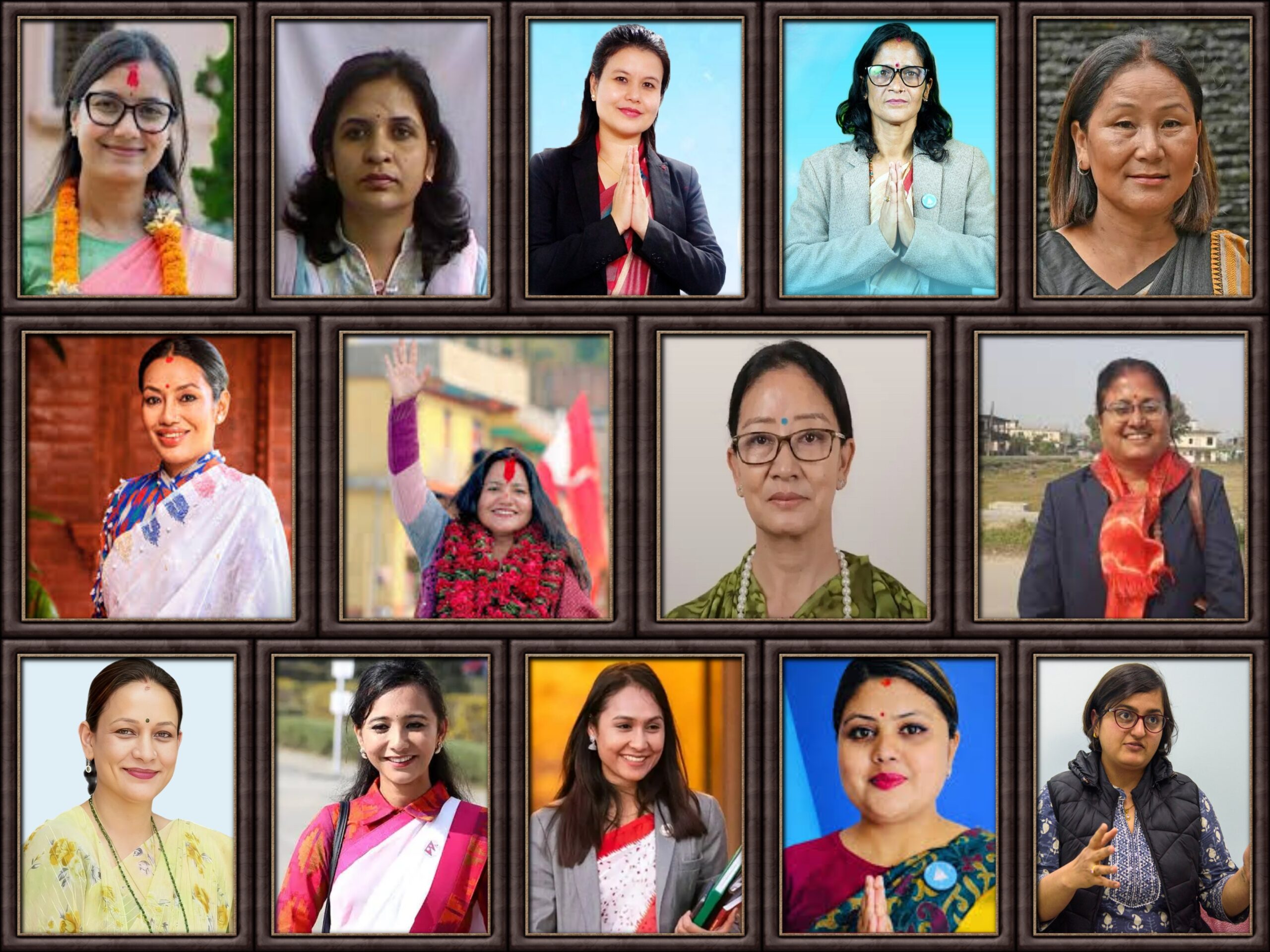
13 women from the Rastriya Swatantra Party (RSP) and one woman from the Nepali Congress have been elected to the House of Representatives in the elections held on March 4, 2002. These women, who come from a variety of walks of life, from doctors, lawyers, management experts to social activists, are expected to present leadership in a way that is different from traditional political practice.
In the context of International Women’s Day, we have presented here about the women’s parliament that has already come into the limelight and is entering the country’s policy-making ground:
This time, Sobita Gautam and Dr. Toshima Karki, Rubina Acharya, Ranju Darshana Neupane, Nisha Dangi, Nitima Bhandari (Karki), Bina Gurung, Asha Jha, Komal Gyawali and Indira Rana Magar are participating in the event. Likewise, Basana Thapa of the Nepali Congress has also entered the parliament.
Sobita Gau TAG_CLOSE_strong_73 tam is one of the most popular young TAG_OPEN_strong_73 leaders of the RSP. Born in Dolakha, she was active in social campaigning since childhood. She came to Kathmandu for higher education and studied rural development and law. She has worked as a lawyer and television presenter and has been active in youth campaigns.
After the establishment of a new political party, Rastriya Swap Party, she joined the party and won the House of Representatives election 2079 as a candidate from Kathmandu-2. Gautam, who entered the parliament at a young age, has been continuously raising voice for good governance, transparency and participation of youths in the parliament. She was also elected from Chitwan-3 in the 2082 House of Representatives election held after the Jenji movement. She has been elected from Chitwan by a huge margin against NCP leader Renu Dahal.
Similarly, another influential female face of the RSP is TAG_OPEN_strong_72 Dr. Toshima Karki. She is a surgeon by profession and has made a good name in the medical field. She has been active in health care reform, doctors’ rights and health care reform and entered politics with the same agenda.
In the 2079 BS election, Karki was elected from Lalitpur-3 with a huge margin. She was known as a leader who represented a new generation in Parliament. She has been consistently raising her voice in the parliament on the issue of health sector reform. She had previously served as the Minister of State for Health and Population.
She also won the 2082 House of Representatives elections from the same constituency after the Jenji movement. She defeated her rival Raj Kaji Maharjan of Nepal Communist Party (NCP) in the constituency with a huge margin.
Rubina Acharya TAG_CLOSE_strong_71, who TAG_OPEN_strong_71 emerged from Morang of Koshi Province, is also known as a representative leader of the new generation. She studied management and was active in social campaigns and youth-related activities for a long time. She was elected to the House of Representatives from Morang constituency-6 in the election held March 4, 2002. Earlier, she was close to Bibeksheel Sajha Party founded by Ujjwal Thapa. Born in Biratnagar-4, Rubina spent her childhood in Biratnagar.
In the House of Representatives election, she entered the House of Representatives defeating her rival Dr Shekhar Koirala. She has been pledging to play an active role in the parliament, prioritizing the issues of local development, employment and good governance.
Indira Rana Ma TAG_CLOSE_strong_70 gar, who was TAG_OPEN_strong_70 born in 2027 BS in Arjundhara of Jhapa, is visiting the parliament for the second time. She graduated with a master’s degree in sociology and chose the field of humanitarian service. His meeting with the famous litterateur Parijat had determined the direction of his life. When she left home to study in Kathmandu, Parijat gave her protection.
Indira, who volunteers with Parijat’s human rights organization, saw firsthand the plight of the children of prisoners during her visit to the prison. This scene had a profound effect on him. So before entering politics, she formed Indira Rana’s non-governmental organization ‘Bandi Sahayata Nepal’ (PA Nepal).
As its president, she launched a campaign to provide education, rights, and a safe childhood to the young children of women serving prison sentences. Active in this field for 3 decades, she has rescued hundreds of children. She won the election in 2082 BS defeating Devraj Ghimire of CPN-UML.
Ranju Neupane TAG_CLOSE_strong_69, a local TAG_OPEN_strong_69 resident of Maitidevi, Kathmandu, is an emerging personality from an alternative political movement. In 2074 BS, she contested as an independent candidate for the post of Mayor of Kathmandu Metropolitan City. She has completed her bachelor’s degree.
Darshana, who entered politics from Bibeksheel Nepali Party, has filed her candidacy on January 7 from the Rastriya Samajwadi Party with the election symbol ‘Ghanti’. Earlier, she had decided to file her candidacy for the FPTP after criticism against her in the proportional representation list of the RSP. She is contesting from Kathmandu-1 with a huge number of votes. She won the election defeating Nepali Congress’ Prabal Thapa Chhetri. She is 14 days pregnant. She voted in person the day before her son’s birth and won on the day of her son’s birth.
Similarly, Nisha Dangi TAG_CLOSE_strong_68, who is TAG_OPEN_strong_68 active in social campaigns and civic concern activities, is also known as a representative leader of the new generation. She has been involved in social and political campaigns and has been active in politics in recent years. Dangi, who was elected member of the House of Representatives from the Rastriya Swatantra Party (RSP) under the proportional representation system in 2079, has been elected as a first-past-the-post candidate this time. She defeated Nepal’s Keshav Raj Pandey by a huge margin.
Bhandari (Karki) is also a name associated with policy debate and social campaigns. She has been active in the issues of women empowerment, good governance and social justice and is now active in national politics. She is contesting the election from Sarlahi-2 as a candidate of Rastriya Samajwadi Party (RSP) defeating Nepali Congress leader Shambhu Lal Shrestha by a huge margin.
Bina TAG_CLOSE_strong_66 Gurung, who is TAG_OPEN_strong_66 active from Gandaki Province, entered politics by being active in social activities at the community level. Her activism on women’s leadership development, local development and social participation is noteworthy. She won from Kaski-3 defeating Nepali Congress leader Manoj Gurung.
Asha TAG_CLOSE_strong_65 Jha is a political leader who has been active in women’s rights and social justice issues.TAG_OPEN_strong_65 She is said to have started politics with the objective of raising the issues of women and community in the Madhes region at the national level. She won from Rastriya Prajatantra Party (RSP) Morang-5 defeating Nepali Congress candidate Phul Kumar Lalwani by a huge margin.
Social activist Ashika Tamang is currently in the House of Representatives from the street debate. Rastriya Swatantra Party (RSP) from Dhading Constituency No. Tamang, who is contesting from Province 1, defeated CPN-UML’s Bhumi Prasad Tripathi to win the election. Ashika Tamang was born in 2037 BS in Malekhu, Dhading. Growing up in a rural environment, she has closely observed the basic problems and deprivation faced by ordinary Nepalis.
Pushpa Kumari Chaudhary is a leader of the Rastriya Swatantra Party and a member of the House of Representatives. She is known as a woman politician from the Tharu community in the Terai region. She entered politics by being active in social service and community rights issues. She won from Saptari-1 defeating Swabhiman Party’s Sumit Kumar.
Similarly, Komal Gyawali {{TAG_OPEN_strong_62 TAG_CLOSE_strong_62}} is also a leader who is active in social campaigns and civic concern activities. With the rise of a new political force, she has also become active in national politics. She won Kailali-1 from the RSP in the post-election after the Jenji movement. She defeated Janak Raj Chaudhary of Nepali Congress.
Basana TAG_CLOSE_strong_61 Thapa, who was TAG_OPEN_strong_61 born in Kathmandu Metropolitan City-9 in May 2037, is contesting the parliamentary race for the first time. Nepali Congress had fielded Basana from Dailekh constituency-1. She is contesting against Rabindra Raj Sharma of CPN-UML, Ammar Bahadur Thapa of Nepali Communist Party and Nanda Kishor Basnet of Rastriya Swatantra Party. Earlier, she had contested for the post of deputy mayor of Narayan Municipality in Dailekh district in the local level elections held in 2074. She lost to CPN-UML’s Sabitri Malla.
Similarly, 54-year TAG_OPEN_strong_60-old Gauri Kumar TAG_CLOSE_strong_60 i of Samsi Rural Municipality-Sangrampur of Mahottari district is contesting from Mahottari-4. She is also in the top position with a huge number of votes. According to the counting of votes, she has received 26,890 votes till 12 noon on Sunday. Surendra Kumar Yadav of Janata Samajbadi Party is close to him. He has garnered only 6,308 votes so far. Yadav’s journey to the parliament is also certain.
She is the daughter of Ram Ekbal Raya Yadav and wife of Shivaji Yadav. Academically, she has completed her studies up to the certificate level in the Faculty of Science. Gauri Kumari Yadav has been associated with the Rastriya Swatantra Party (RSP) representing a new political stream in her political career.













प्रतिक्रिया दिनुहोस्