


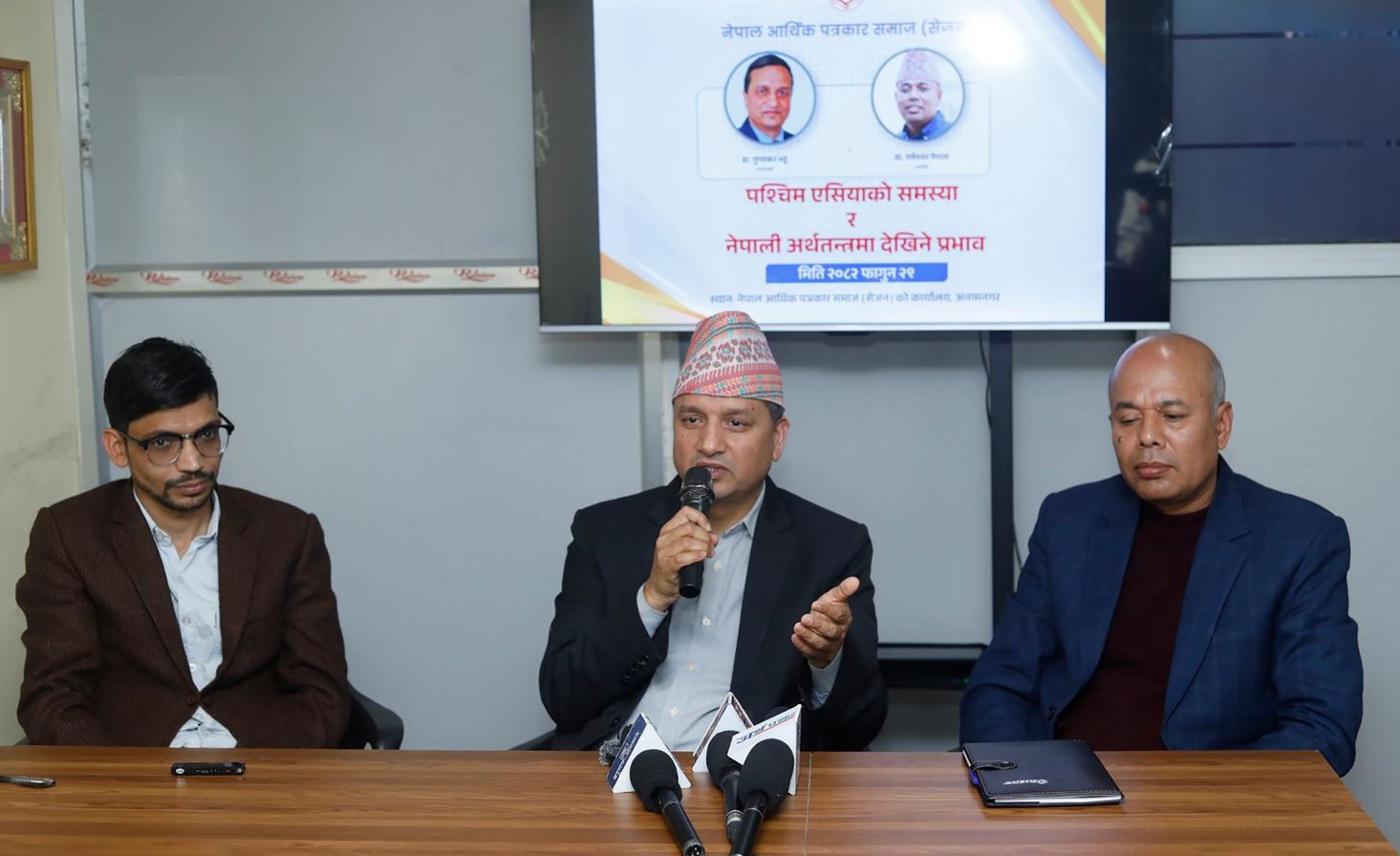
Kathmandu. KATHMANDU: The Middle East countries, which are the major sources of remittance and fuel in Nepal, have pointed out the possibility of a serious crisis in the country’s economy and energy sector due to the tension that has developed in recent period.
At an interaction on ‘West Asia Problems and Impact on Nepal’s Economy’ organized by Society of Economic Journalists Nepal (SEJON) here today, experts from the economic and migration sector drew the attention of the government to take up preparedness works at the earliest to avoid the crisis.
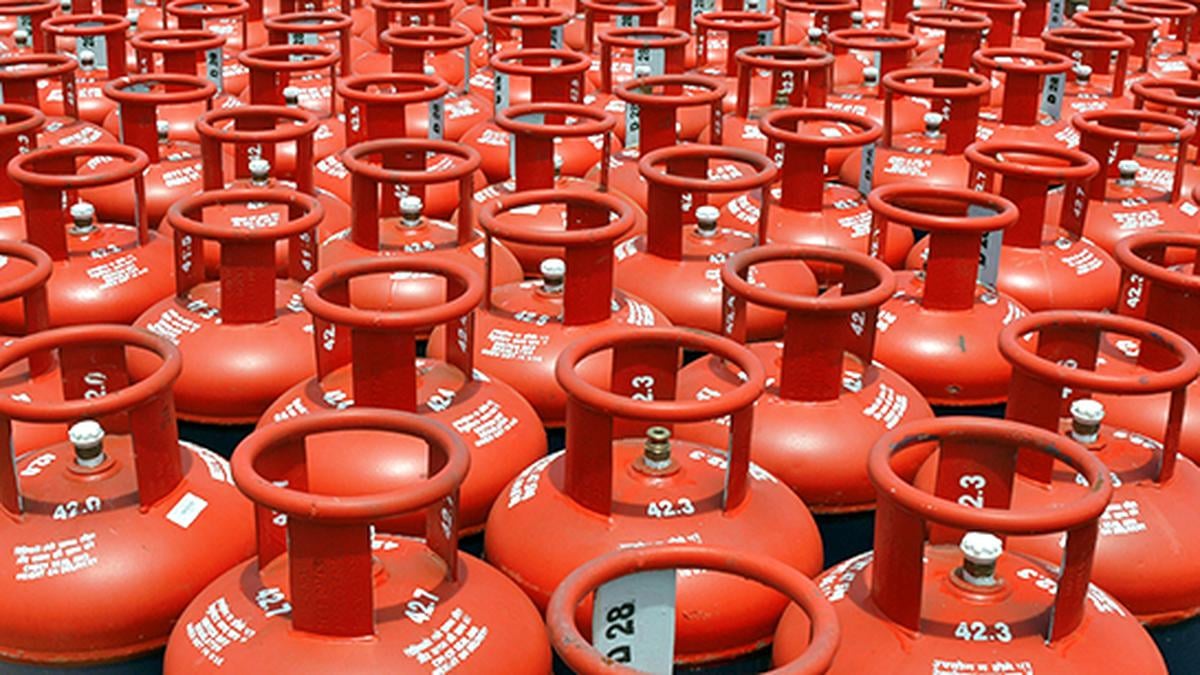
They predict that the global energy crisis is deepening amid US÷Israel-Iran tensions, which will affect countries like Nepal which are remittance-dependent economies and dependent on imported fuel the most. There have been comments that if the conflict escalates in the Middle East region, there will be shortage of petroleum products, employment of Nepali workers will be cut off and remittance will decrease, which will have a negative impact on the livelihood of Nepalis.
Similarly, former executive director of Nepal Rastra Bank, Dr Gunakar Bhatta, said that the tension seen in the Middle East in recent period could pose challenges to Nepal’s energy and food security. “Now, Nepal should pay attention to energy and food security, keep proper stock of daily essentials including petroleum products and make efforts for their management,” the PM observed.
Stressing that the new government should formulate plans and programmes to deal with the global crisis, former executive director Bhatta stressed the need for effective mobilization of government institutions responsible in the supply chain. According to him, the shortage of petroleum products in India will automatically affect the Nepali market at a time when Nepal is completely dependent on India for petroleum products.
Rameshwor Nepal, an expert in the field of labour migration, said that the remittance, employment and security of Nepali workers could be challenged if the tension in the Middle East countries was increasing. Stating that the workers in the Middle East were in the midst of a lot of stress lately, he said that the government has not been able to assure the workers in the affected countries about their safety.
“The government was able to respond to the developments that have developed but it could not assure them,” he said, adding, “The government cannot just tell its citizens to stay safe when the situation has come to rescue the workers in sensitive areas.” ”
There are around 2 million Nepali workers working in the Middle East and Gulf countries. The government is making preparations to secure the Nepali workers there and to rescue them if needed. Experts are worried that Nepali workers who have lost their legal status in the Gulf countries will be more affected by this. There are mainly Nepali workers in construction, security and service sectors in these countries.
More than 1,500 Nepali youths go to the Gulf region every day for employment. It is estimated that Nepali youths may lose employment opportunities as the Middle East countries are getting entangled in conflict.
SEJON Chairman Bhagwat Bhattarai said that there is a large number of Nepali workers in the Middle East region and the interaction was held with the stakeholders and experts to shake the government about the economic and social impact of the recent developments in Nepal.
















प्रतिक्रिया दिनुहोस्