


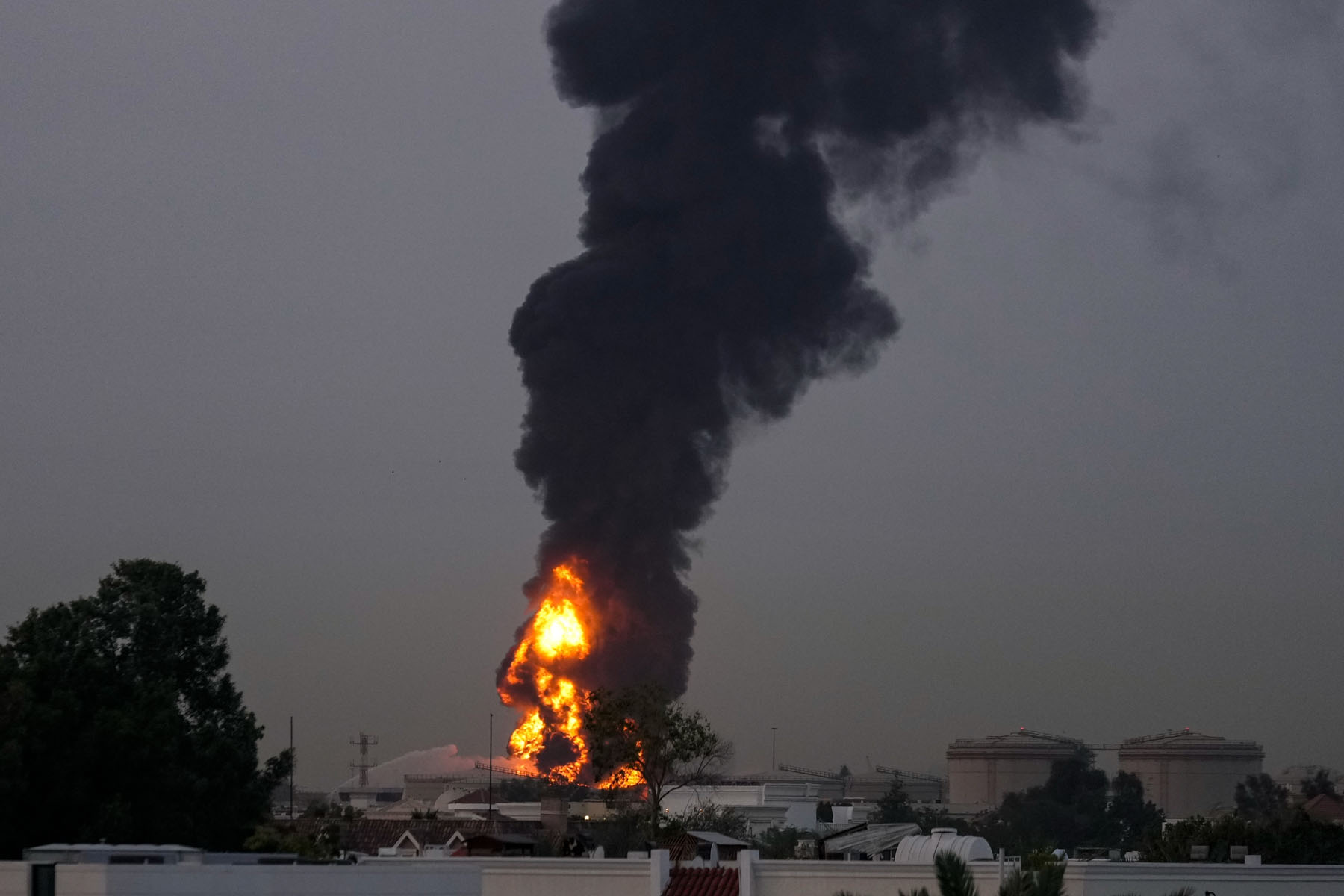
Kathmandu. The ongoing conflict in the Middle East is getting more complicated. On the one hand, military offensives are intensifying, and on the other, diplomatic initiatives appear vague and contradictory. The role of regional and international powers, along with the exchange of direct strikes between Israel and Iran, has made the course of the war even more uncertain.
The Israeli military said on Thursday that it had launched a wave of attacks on various places in Iran, especially in central cities like Isfahan. In response, Israel activated its air defense system after Iran launched a missile attack. Doctors said two people sustained minor injuries in the Kafr Qassem area.
There is also a new debate about the purpose of the war. Pakistan’s Defense Minister Khawaja Asif has taken to social media to indicate that the reopening of the Strait of Hormuz has moved to the center of the war. The closure of this waterway is of high strategic importance as it will have a big impact on international energy supply.
The impact of the war has also been seen in the global economy. Oil prices have soared, while the stock market has seen mixed reactions. Brent crude rose 1% to $103.25 a barrel and West Texas Intermediate rose 1.2% to $91.41. With Asian markets volatile, investors are awaiting a possible diplomatic solution.
China, on the other hand, said it had little hope for the situation to improve. Chinese Foreign Minister Wang Yi has signalled to a return to talks with his Turkish and Egyptian counterparts, indicating that both Iran and the United States are willing to return to talks. However, this claim does not contradict the statements of other parties.
US President Donald Trump has accused Iran of being involved in talks but is afraid to admit it publicly. According to him, Iranian negotiators have not been able to talk openly for fear of danger from their own side. But Iran’s Foreign Minister Abbas Araghchi has categorically rejected talks, saying the current policy is based on “deterrence”. He said that holding talks would be like admitting defeat.
Meanwhile, the US has claimed that it has inflicted heavy damage on Iran’s military capabilities. US military officials say two-thirds of Iran’s missile and drone production facilities have been destroyed and strike capability has dropped by 90 percent.
There have also been instances of escalating regional tensions. Kuwait has arrested six people suspected of being linked to Iran-backed Hezbollah who were planning attacks inside the country. Iran’s parliament speaker Mohammad Bagher Ghalibaf has warned that some enemies are planning to seize Iranian islands with regional support.
In a joint statement, the Gulf states — Saudi Arabia, the United Arab Emirates, Qatar, Kuwait, Bahrain and Jordan — called on Iraq to end attacks by Iran-backed groups on its soil.
Meanwhile, the Lebanon-based Hezbollah group has denied any ceasefire talks with Israel. The group’s leader, Naeem Qasim, said such talks would amount to surrender. The group said it had carried out more than 80 attacks in recent days, while at least eight people were reported to have been killed in Israeli strikes in southern Lebanon.
The US side said talks were ongoing, despite claims to the contrary. According to the White House, the US and Iran are in talks and have shown some progress, although the details have not been made public.


















प्रतिक्रिया दिनुहोस्